Major US Banks Set to Deploy Tokenized Deposit Platform by 2027, Reports WSJ
America's banking giants are preparing to roll out a tokenized deposit platform in early 2027 as they face mounting pressure from stablecoin firms making inroads into traditional financial services.

A coalition of America's most prominent financial institutions is preparing to introduce a tokenized deposit platform during the opening months of 2027, marking a strategic response to intensifying competition from blockchain enterprises making headway into the conventional finance sector.
According to CEO David Watson's statements to The Wall Street Journal, The Clearing House—a payments infrastructure operator owned by major banks—will manage the platform, which is designed to bridge conventional payment systems with digital asset technology to enable round-the-clock settlement capabilities.
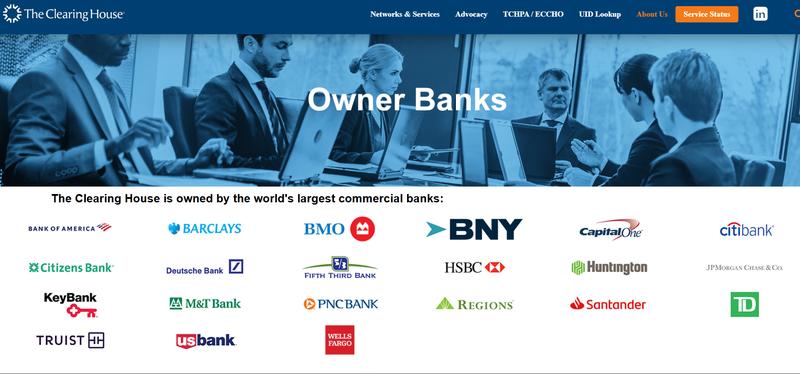
Major US financial institutions including JPMorgan Chase, Bank of America, Citibank, Barclays, BNY and Wells Fargo are among the co-owners of The Clearing House, as listed on the organization's official website.
This strategic initiative demonstrates how traditional banking institutions are working to retain deposits within the boundaries of regulated banking systems while simultaneously providing the rapid settlement speeds and programmable features that have positioned stablecoins as appealing options for settlement operations and treasury management.
The Clearing House was contacted by Cointelegraph for additional commentary but did not provide a response before this article went to press.
Traditional US banking institutions have actively opposed legislative proposals for the US cryptocurrency market that would enable stablecoin providers to distribute yield to their holders, a feature comparable to conventional bank deposit interest payments.
This development follows statements made by JPMorgan CEO Jamie Dimon in late May, as covered by Cointelegraph, where he declared that the banking sector would persist in opposing the current iteration of the Digital Asset Market Clarity Act (CLARITY) and emphasized that cryptocurrency firms seeking to provide yield-generating products should pursue banking charter applications.
Dimon's remarks came on the heels of a May committee decision to move the CLARITY Act forward within the Senate Banking Committee, though the legislation must still navigate approval from both congressional chambers before reaching US President Donald Trump for signature.
The initiative demonstrates that major banking institutions are "reacting to where value is already moving," according to Carl Grimstad, CEO of Lydian, a digital asset infrastructure solutions provider, who further commented:
"This announcement shows that 24/7 programmable settlement is becoming increasingly important."
Despite banks conducting tokenization experiments within restricted testing environments, public blockchain infrastructure has facilitated value settlement on a worldwide scale, Grimstad noted, emphasizing that the critical question centers on how value transfer will function across what is becoming an "increasingly fragmented mix of bank ledgers, public chains and digital assets."
Wall Street participants accelerate tokenization initiatives
Additional major Wall Street banking institutions are likewise expediting their tokenization programs.
The New York Stock Exchange (NYSE) announced a collaboration with Securitize, a tokenization platform provider, on March 24 to build blockchain-powered trading systems for Wall Street, facilitating the creation of tokenized representations of stocks and exchange-traded funds (ETFs).
Just days before that announcement, on March 18, Nasdaq received regulatory approval from the US Securities and Exchange Commission (SEC) for its experimental program supporting the exchange of tokenized versions of heavily-traded stocks and securities.
In January, the Intercontinental Exchange (ICE), which serves as the parent organization of the NYSE, unveiled blueprints for a tokenized securities marketplace engineered to support continuous 24/7 trading operations, immediate settlement processing, stablecoin-backed funding mechanisms and onchain settlement functionality.
Meanwhile in Asia, South Korea's Ministry of Economy and Finance revealed a pilot initiative on April 16 that will leverage tokenized deposits for executing governmental operational expenditures, with comprehensive implementation scheduled for the fourth quarter of 2026, as Cointelegraph previously reported.