Major Financial Institutions Impose Stricter Controls on Employee Prediction Market Activity Amid Insider Trading Concerns
Major financial institutions on Wall Street, such as Goldman Sachs and Morgan Stanley, are implementing new restrictions on staff participation in prediction markets like Polymarket and Kalshi due to growing insider trading concerns.

Major financial institutions on Wall Street are implementing limitations on staff participation in prediction market platforms amid concerns that employees could potentially leverage privileged information to trade event-based contracts.
According to a CNBC report citing individuals with knowledge of the situation, Goldman Sachs has prohibited its staff members from participating in event contracts that relate directly to the institution, encompassing areas such as financial markets, macroeconomic developments, electoral outcomes, and geopolitical matters.
Sources who requested anonymity from Morgan Stanley also informed CNBC that the financial institution maintains protocols concerning prediction market participation by its workforce, while a representative from Bank of America indicated that the institution was developing new restrictive guidelines for staff regarding prediction market activity.
These developments add to mounting concerns about insider trading within prediction markets, which have captured the interest of the White House and members of Congress, who have put forward legislative proposals designed to limit political prediction market participation by government employees.
When Cointelegraph reached out to Goldman Sachs to inquire about the catalyst behind these preventive measures, a representative from the financial institution chose not to provide a statement.
During May, the US Justice Department alongside the Commodities Futures Trading Commission (CFTC) revealed that Michele Spagnuolo, a software engineer at Google, generated $1.2 million in profits on Polymarket following his access to confidential information through his employment.
Wisconsin Representative Bryan Steil put forward legislation on June 18 designed to prohibit specific public servants from "wagering on public policy issues and political outcomes," though the proposal did not reference officials within the White House.
A significant controversy emerged in January when a military service member reportedly earned over $400,000 through wagers on the ouster of Venezuelan President Nicolás Maduro, who was subsequently removed from power and apprehended by US military forces.
Polymarket seeks broader US access
At the same time, Polymarket is pursuing regulatory clearance to provide margin trading capabilities for users in the United States, which would allow them to place bets on various events while putting up less capital initially.
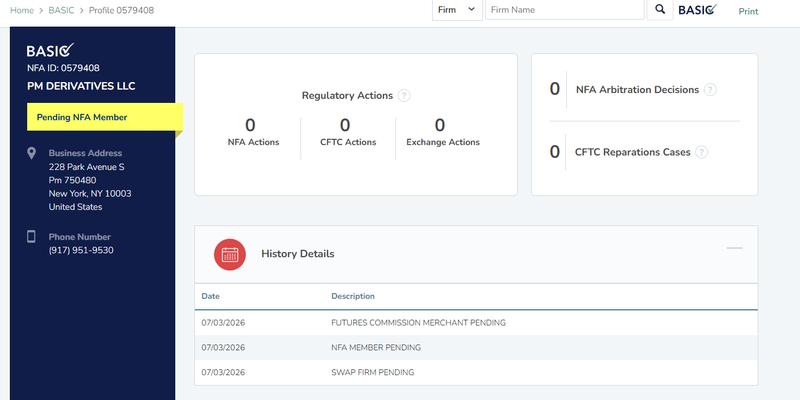
The prediction market platform submitted a request to obtain futures commission merchant status via its affiliated entity, Coming Home GBA LLC, based on a July 3 submission to the National Futures Association (NFA).
This submission represents Polymarket's most recent effort to broaden its presence in the US market and draw additional participants. Cointelegraph contacted Polymarket seeking a statement regarding this development. The platform must also secure approval from the CFTC before it can permit non-fully collateralized trading options for its user base.
The primary competitor to Polymarket has already secured regulatory approval from US authorities to offer margin trading capabilities, following its affiliated company, Kinetic Markets LLC, obtaining NFA authorization during March.
On June 20, Polymarket achieved an unprecedented $713 million in daily taker volume, based on data from Dune. This achievement occurred more than seven days following the commencement of the World Cup on June 11.
During June, Kalshi similarly recorded unprecedented monthly trading activity totaling nearly $9.4 billion, driven by heightened engagement across prediction market platforms due to the 2026 FIFA World Cup.