Major Bitcoin Holders Shed $337M Per Day During Q1 2026
Large-scale BTC investors, including whales and sharks, have crystallized $30.9 billion in losses throughout the year, mirroring patterns from the 2022 downturn, while blockchain analytics suggest further price declines ahead.

According to Glassnode data, Bitcoin (BTC) investors with holdings between 100 and 10,000 BTC crystallized losses averaging $337 million daily throughout the first quarter of 2026, marking the most challenging three-month period since 2022.
Key takeaways:
- Following the last comparable period of whale loss realization in 2022, Bitcoin's value declined by more than 20%.
- Holders with extended positions are offloading at a deficit, signaling capitulation and suggesting potential for additional price deterioration.
Major BTC holders crystallized $30.91 billion in losses during 2026
The Realized Loss metric monitors the aggregate dollar amount of losses that become permanent when Bitcoin is transferred on-chain at prices lower than the original acquisition cost. Two distinct wallet categories are displaying capitulation signals in 2026.
These include wallets containing 100–1,000 BTC, dubbed "sharks," which typically represent medium-tier investment funds or high-net-worth individuals, alongside those holding 1,000–10,000 BTC, categorized as whale-tier participants.
During the first quarter, Bitcoin's shark cohort (yellow) crystallized losses averaging $188.5 million per day, whereas whale participants (orange) accounted for an additional $147.5 million in daily losses.
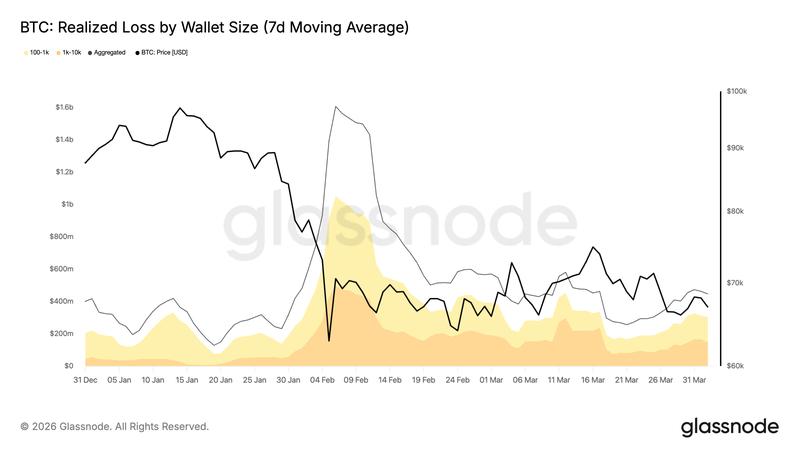
Collectively, these substantial market participants have crystallized approximately $30.91 billion in realized losses year-to-date in 2026.
The magnitude of realized losses experienced by these affluent Bitcoin holders during Q1 2026 represents one of the most extreme periods documented, exceeded only by Q2 2022's approximately $396 million daily average.
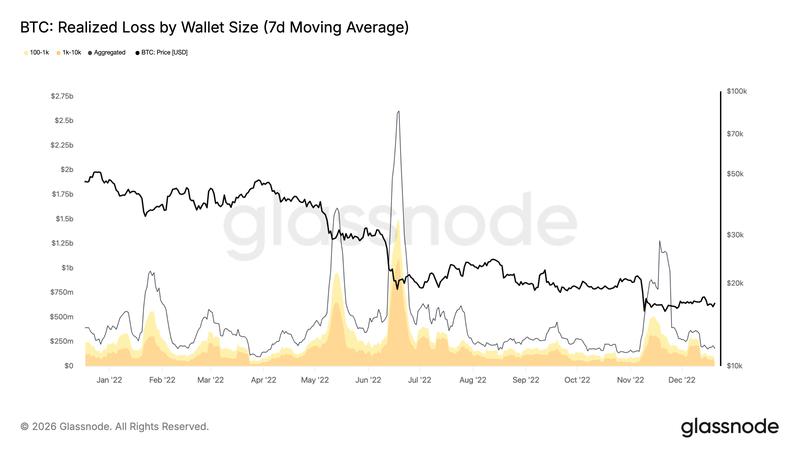
During Q2 2022, Bitcoin's valuation plummeted by more than 50%, followed by an additional 20% decline before year-end. The downward trajectory continued as the Terra ecosystem's implosion, Celsius network's withdrawal freeze, and Three Arrows Capital's bankruptcy unleashed widespread fear throughout the cryptocurrency markets, eliminating liquidity and eroding investor confidence.
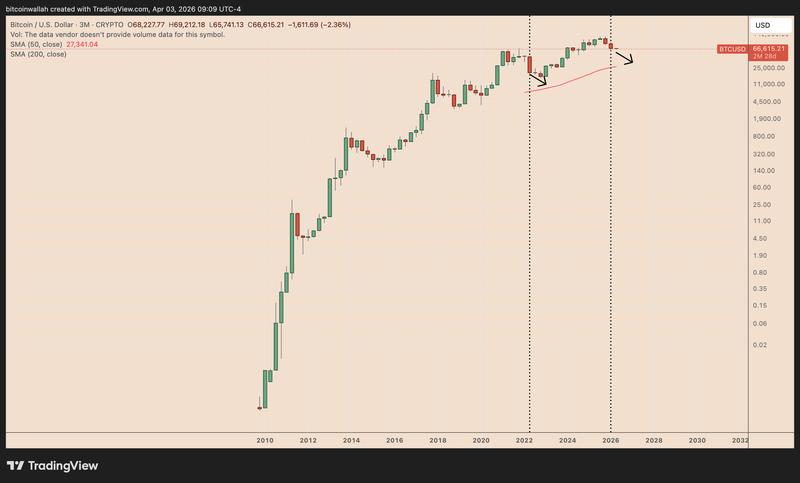
The headwinds affecting Bitcoin in 2026 originate from distinct catalysts, encompassing inflation anxieties stemming from the Iran conflict, concerns regarding quantum computing security vulnerabilities, and wider turbulence within the AI-dominated risk asset sector.
Consequently, whale and shark participants are liquidating positions at a loss presently because they anticipate further Bitcoin price deterioration as macroeconomic uncertainties intensify. This market psychology increases the probability of a bear market resembling 2022's trajectory, potentially finding a floor during Q4 2026.
Long-term Bitcoin holders contribute to bearish outlook
Additional evidence suggesting Bitcoin's downturn may persist emerges from Glassnode's Long-Term Holder Realized Loss metric, which measures losses crystallized by market participants who maintained their holdings for a minimum of six months prior to selling.
This metric continues to register elevated levels around $200 million daily on a 30-day moving average basis beginning from November 2025.
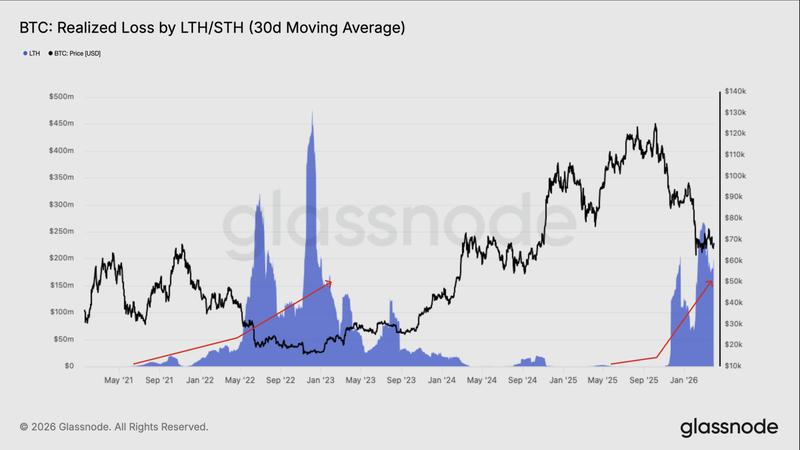
"A significant decline toward thresholds beneath $25M per day would constitute a more persuasive indication of exhaustion in disposal pressure," stated Glassnode analysts in their weekly analysis released on Wednesday, further noting:
"A prerequisite for the base formation that historically precedes a sustainable bull market transition."
Collectively, these adverse forces have already generated predictions for a more substantial BTC price correction, with certain market analysts identifying the $40,000–$50,000 zone as a probable support level.