Institutional OTC Prediction Market Access Launched by BitGo and Susquehanna
Institutional investors gain the ability to execute event-based contract trades backed by cryptocurrency collateral through a new offering, emerging amid heightened U.S. regulatory oversight of prediction market platforms.

Susquehanna Crypto and BitGo, a platform specializing in digital asset custody and trading services, have announced a partnership designed to provide institutional clients with over-the-counter access to prediction markets. This collaboration enables these investors to execute trades on event-based contracts by utilizing cryptocurrency or stablecoins maintained in custody.
The announcement made on Tuesday revealed that trade execution will be facilitated through BitGo's platform infrastructure, while Susquehanna will serve as the liquidity provider. This arrangement enables family offices, hedge funds and other major investors to complete bilateral transactions without the need to transfer assets away from the platform or liquidate their holdings, which may include Bitcoin or stablecoins, into fiat currency.
The positions are secured by cryptocurrency collateral and formalized through derivatives-style documentation, with the minimum threshold for trade sizes set at $100,000.
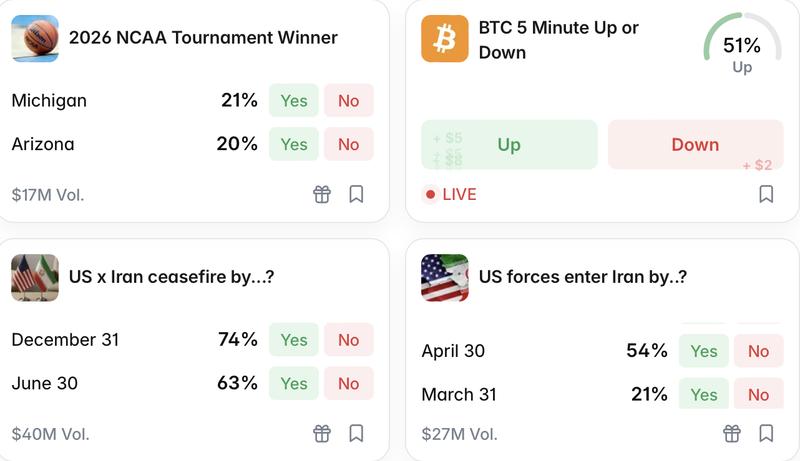
Contracts traded on prediction markets are tied to outcomes of events occurring in the real world, with contract prices representing the market's collective assessment of the likelihood of a particular result. These contracts can encompass a wide range of subjects, from sporting events and geopolitical developments to more specialized outcomes such as near-term Bitcoin (BTC) price fluctuations or meteorological conditions.
Although these markets have experienced growth as mechanisms for valuing event-driven risk exposure, institutional investor participation has been constrained due to deficiencies in custody solutions, collateral management infrastructure and execution capabilities, BitGo stated.
Prediction markets face growing regulatory pressure in US
This product launch arrives during a period when prediction markets are encountering escalating legal obstacles across the United States, where a minimum of 11 states have initiated actions targeting platforms such as Kalshi, contending that these platforms function as unlicensed gambling operations.
A state court in Nevada imposed a temporary prohibition on Kalshi on March 20, supporting gaming regulatory authorities who maintained that the platform provides unlicensed wagering on event outcomes. This ruling came after a federal appeals court decision issued on Thursday that rejected Kalshi's emergency petition to suspend the proceedings.
Meanwhile, authorities in Arizona have pursued criminal charges against entities associated with Kalshi, claiming the platform accepted wagers on both elections and sporting events in contravention of state statutes. Kalshi co-founder and CEO Tarek Mansour, however, characterized the charges as a "total overstep," maintaining that his platform's operations are distinct from gambling activities and alleging that the state is seeking to circumvent established judicial procedures.
In other jurisdictions, legislative bodies are working toward incorporating prediction markets within current gaming regulatory structures. Proposed legislation in Utah would categorize specific event-based contracts as gambling activities, while Pennsylvania lawmakers are drafting a bill that would assign oversight of the sector to the state's gaming regulatory authority, which includes implementing a 34% tax on revenue.
It should be noted that not all state actions targeting prediction market platforms have been successful. A federal judge in Tennessee blocked an attempt by the state in February to shut down Kalshi's operations, determining that its event contracts are governed by the Commodity Exchange Act and therefore fall under the regulatory jurisdiction of the Commodity Futures Trading Commission (CFTC) rather than state authorities.
Prediction markets have additionally come under examination regarding potential insider trading concerns following several suspiciously timed wagers that seemed to forecast significant events. As a response to these concerns, both Kalshi and Polymarket implemented new limitations on Monday designed to restrict the exploitation of non-public information and prohibit participants who possess direct influence over event outcomes from engaging in trading activities.
On the federal regulatory front, authorities are examining possible regulatory frameworks. The CFTC released an advance notice of proposed rulemaking on March 12, inviting public commentary on the appropriate regulatory approach for prediction market contracts.