Institutional Bitcoin Demand May Surge Through Lending and Yield Opportunities, Rootstock Reports
An analysis from RootstockLabs explores how institutional market participants might leverage Bitcoin for lending purposes, collateral applications, and corporate treasury optimization as mainstream acceptance grows.

According to a fresh analysis published by Bitcoin infrastructure developer RootstockLabs, the cryptocurrency's upcoming surge in institutional interest may stem from lending activities, yield-generating opportunities, and corporate balance-sheet optimization, pushing its utility beyond merely serving as a store of value.
According to RootstockLabs' calculations, merely 1.5% of the total Bitcoin (BTC) supply is currently engaged in lending activities and Bitcoin-native financial services, whereas institutional investors that can be identified control approximately 3.9 million BTC. Activating a greater portion of these institutional reserves could generate supplementary demand for the digital asset while its maximum supply remains unchanged.
The research pinpoints two developing areas of financial application: creating income streams from current Bitcoin positions via lending arrangements and structured credit products, and deploying Bitcoin in conjunction with fiat-based obligations to enhance corporate treasury operations. According to RootstockLabs' perspective, both avenues have the potential to motivate institutional players to purchase and hold larger quantities of BTC.
The analysis presents a theoretical example where institutional Bitcoin reserves increase twofold to reach 7.8 million BTC. Under a scenario where 5% of these reserves generated a 5% yearly yield, the collective institutional sector would produce 19,500 BTC annually. This calculation illustrates possible income from current positions rather than serving as a projection for fresh Bitcoin acquisition.
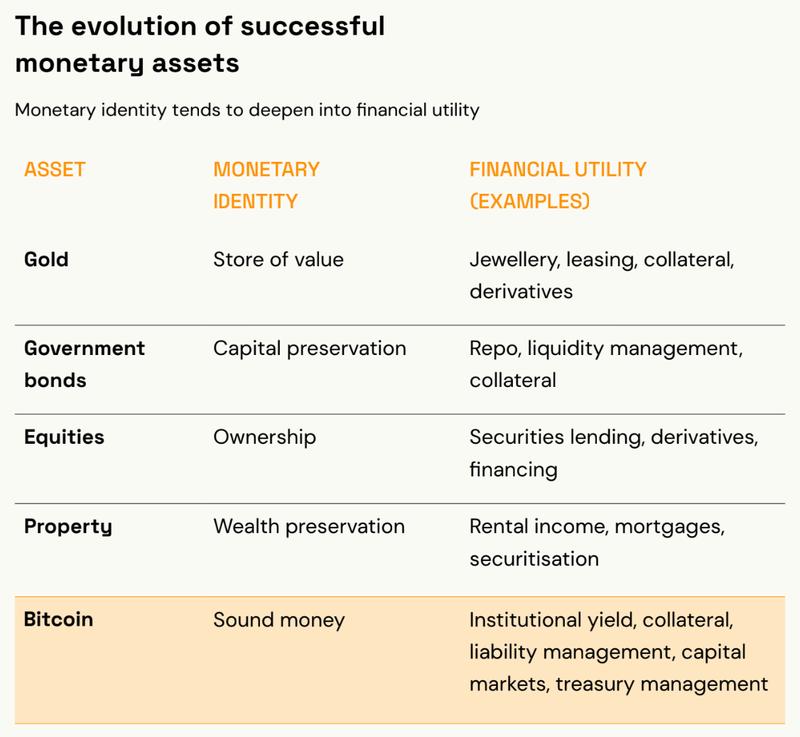
Making a parallel with gold, the analysis contends that effective monetary assets cultivate supplementary demand streams that extend beyond their initial function as value repositories. Just as gold discovered applications in jewelry manufacturing and electronic components, RootstockLabs envisions Bitcoin's subsequent utility emerging via financial market mechanisms.
Could Bitcoin's financialization introduce new risks?
When questioned regarding the potential dangers linked to Bitcoin's increasing financialization, Tony DiCarlo, director of institutional propositions at RootstockLabs and author of the report, recognized the legitimate worries but contended that Bitcoin's fundamental architecture provides significant benefits. He told Cointelegraph:
Yes, financialisation carries real risks. Fractional reserves, rehypothecation and excess leverage can grow around any scarce asset. Bitcoin's traits reduce some of that risk as collateral is verifiable on-chain, liquidation rules are programmable and the supply of collateral cannot be diluted.
According to DiCarlo, borrower default scenarios, custody infrastructure vulnerabilities, and legal enforcement challenges continue to pose concerns, while Bitcoin's price volatility compounds the risks associated with leverage.
That said, he contended that financialization's advantages might substantially exceed these dangers, citing MARA's $750 million in Bitcoin-collateralized financing to support funding for an intended power generation facility purchase in Ohio. This financial structure enables MARA to preserve ownership of its Bitcoin portfolio while simultaneously deploying it as collateral for tangible infrastructure investments.
DiCarlo further recognized that widespread institutional participation might lead to Bitcoin holdings becoming concentrated within a limited number of custodial entities. Although spot Bitcoin exchange-traded funds have served as a primary catalyst for institutional market entry, "shareholders own shares, not coins," he noted, cautioning that a handful of major custodians might ultimately control the majority of Bitcoin.
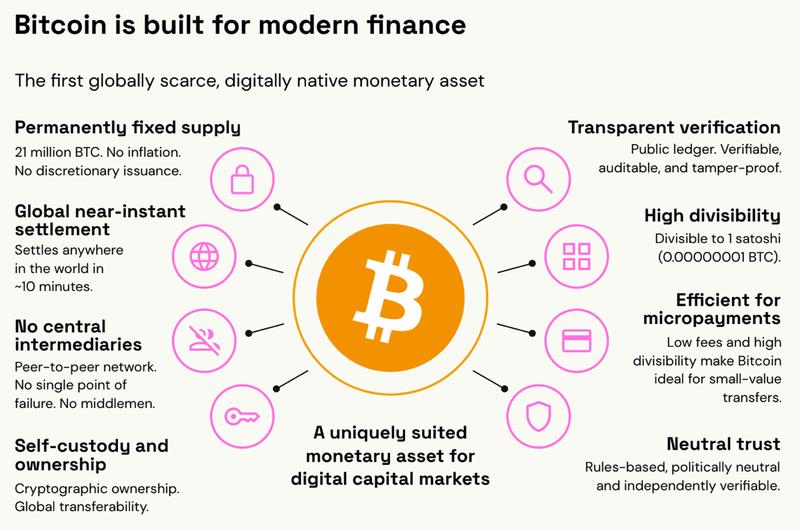
Despite these considerations, DiCarlo emphasized that Bitcoin's decentralized foundation continues to represent a core strength, permitting asset holders to maintain custody of their investments and facilitating financial service delivery with reduced intermediary involvement, which could potentially diminish counterparty exposure and transaction costs.
Bitcoin's defining trait is that nobody owns it and you don't need an intermediary to use it. Holders keep control of their keys and because there are fewer middlemen, financial services built on Bitcoin can carry less counterparty risk and fewer fees. Those advantages draw users in and they reward the builders who design around them.