Human Trafficking Operations See 85% Jump in Cryptocurrency Usage: Chainalysis Report
According to Chainalysis, while cryptocurrency adoption within trafficking networks is on the rise, blockchain technology's inherent transparency may offer unprecedented insight into these operations, providing valuable assistance to law enforcement agencies.

Cryptocurrency transactions flowing to networks suspected of human trafficking saw an 85% surge throughout 2025, though blockchain analytics firm Chainalysis suggests that the transparent nature of blockchain technology could prove instrumental in dismantling these criminal operations.
In a Thursday report, Chainalysis revealed that total transaction volumes directed toward suspected trafficking networks, predominantly operating out of Southeast Asia, climbed to "hundreds of millions of dollars across identified services."
The company noted that these services demonstrate "close alignment" with scam compounds, online gambling operations, and money-laundering networks targeting Chinese-speaking populations, all of which have experienced significant expansion in recent times.
The crypto-enabled human trafficking activities monitored by Chainalysis encompassed Telegram-based international escort services, labor placement agencies that abduct individuals and coerce them into working at scam compounds, prostitution operations, and distributors of child sexual abuse material.
Payment methods involving cryptocurrency showed considerable variation, with stablecoins serving as the nearly exclusive payment mechanism for international escort services and prostitution operations.
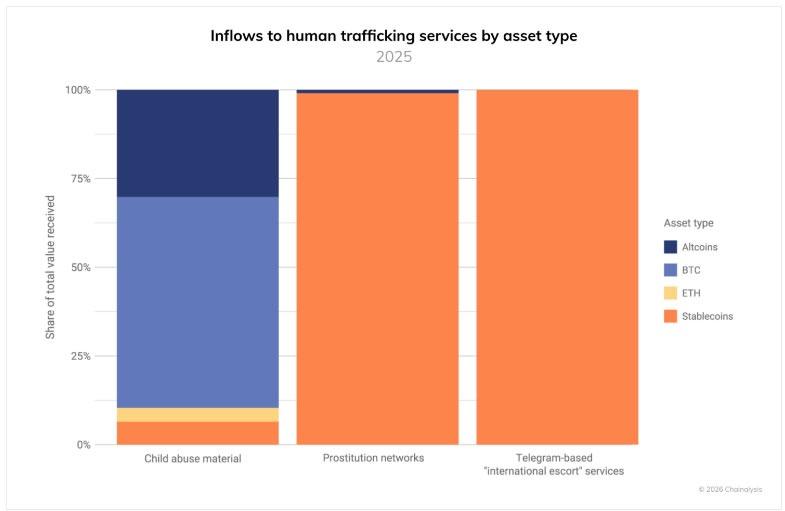
Blockchain could help track traffickers
According to Chainalysis, blockchain technology offers law enforcement the ability to identify and dismantle trafficking operations by analyzing identifiable transaction patterns, implementing compliance monitoring systems, and targeting strategic chokepoints at cryptocurrency exchanges and illegal online marketplaces.
Unlike cash transactions that leave no trace, the transparency of blockchain technology provides unprecedented visibility into these operations, creating unique opportunities for detection and disruption that would be impossible with traditional payment methods.
According to Chainalysis, compliance teams and law enforcement agencies should look for indicators such as substantial, recurring payments to labor placement services, wallet clusters demonstrating activity spanning multiple categories of illegal services, and consistent stablecoin conversion patterns, among other red flags.
Chainalysis noted that law enforcement agencies achieved multiple victories against trafficking operations throughout the previous year, citing German authorities' successful shutdown of a child sexual exploitation platform, an operation that benefited significantly from blockchain analysis.