Historic Bitcoin pattern signals potential 130% surge, but 2026 conditions may invalidate forecast
An uncommon Bitcoin bottoming indicator that emerged in 2023 has reappeared, yet the current macroeconomic landscape of 2026 raises doubts about its reliability. Will Bitcoin's price overcome challenging conditions?

An indicator of a Bitcoin (BTC) market bottom that emerged in 2023, preceding a 130% price surge throughout 2024, has triggered once more during this week, creating speculation that the cryptocurrency's valuation could be approaching another positive turning point.
Simultaneously, the wider landscape encompassing liquidity conditions, exchange-traded fund (ETF) capital movements, and macroeconomic indicators has transformed compared to the situation two years prior, implying that the trajectory ahead might not replicate the dynamics of the earlier market cycle.
Bitcoin bottom indicator emerges amid weak momentum
According to data compiler Swissblock, Bitcoin has currently recorded 25 straight days within its "extreme high risk" territory, representing the longest continuous period ever documented and surpassing the 23-day maximum observed in 2023. Throughout history, prolonged periods within this territory have corresponded with final-stage price corrections or market bottom formations.
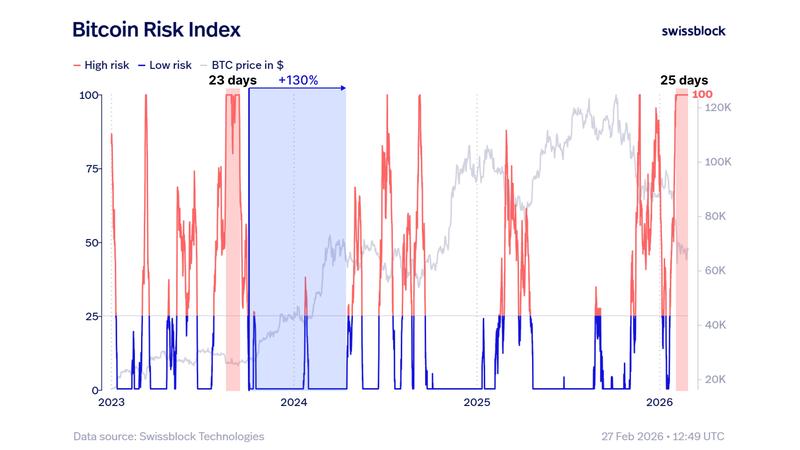
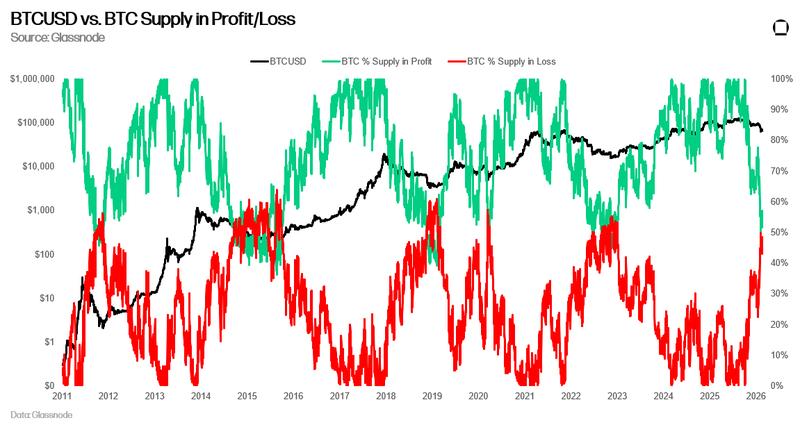
Michaël van de Poppe, founder of MN Capital, additionally highlighted the BTC compared to supply in the profit/loss metric, which demonstrates the price engaging with thresholds that have historically indicated market bottoming sequences. During 2023, the transition from elevated risk to reduced risk occurred simultaneously with the beginning of a significant upward expansion.
Market participant positioning remains misaligned with an upward trajectory. According to RugaResearch, 30-day apparent demand keeps oscillating between positive and negative territory. Although the downward pressure from sellers has diminished, consistent purchasing demand has failed to establish its supremacy.
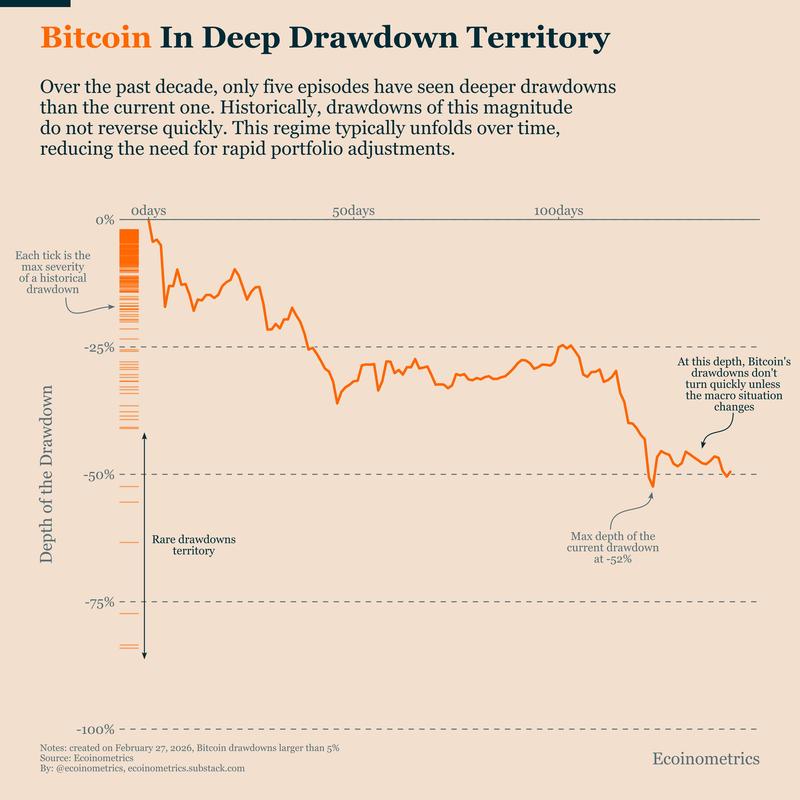
Extended Bitcoin corrections require substantial time
The data from ETF capital movements strengthens the conservative outlook. Beginning in August, aggregate inflows directed toward gold ETFs have exceeded spot Bitcoin ETF flows when measured on a 90-day rolling window. Throughout this identical timeframe, Bitcoin investment vehicles have registered negative flows on a 90-day average rolling measurement, presently positioned at –$2.06 billion.
The inflation dynamics provided additional perspective. According to Ecoinometrics, the headline Personal Consumption Expenditures (PCE) currently registers approximately 2.9% on a year-on-year basis, with core measurements near 3.0% and core services exceeding 3.4%. The Federal Reserve uses PCE as its primary target, and the latest pattern has failed to demonstrate a definitive downward trajectory. In the absence of monetary easing anticipation, the potential for liquidity expansion appears constrained.
The valuation thresholds establish the parameters of the discussion. According to Willy Woo, Managing Partner at CMCC Crest, any near-term recovery rally approaching $70,000 to $80,000 will probably encounter another wave of distribution pressure, given that "the broader regime is heavily bearish with both spot and futures liquidity deteriorating".
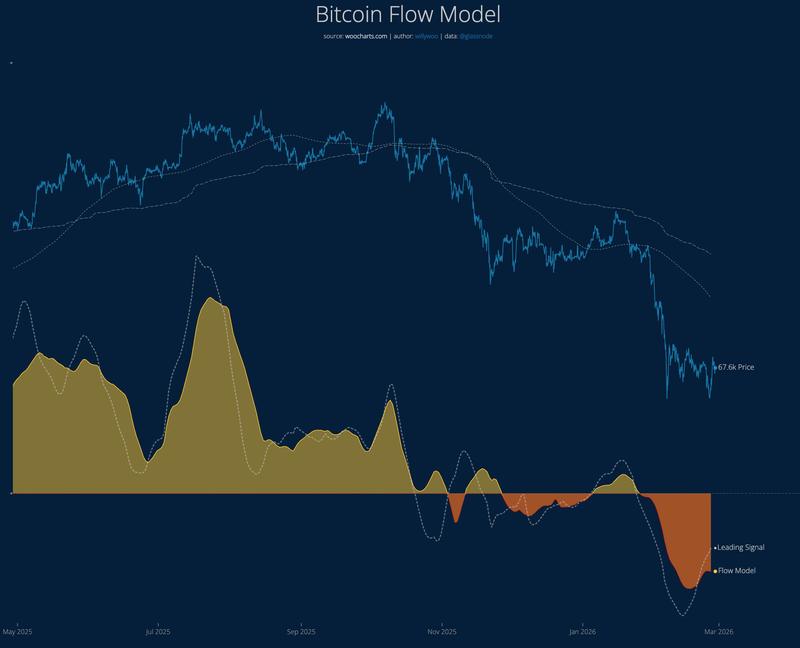
According to Woo, the $45,000 threshold corresponds with the previous bear market cycle. Beneath that level, $30,000 and $16,000 represent the historical support zones, which are associated with the maintenance of longer-duration trend lines.