Government Bond Yield Surge Points to Bitcoin 'Supercycle' Ahead: Market Expert
Escalating yields on government bonds combined with untenable national debt burdens will trigger investors to abandon fiat-based assets in favor of Bitcoin, a market analyst predicts.

Climbing government bond yields indicate an approaching "structural" transformation that will trigger a Bitcoin "supercycle" characterized by ascending valuations, as market participants abandon depreciating assets in favor of one immune to inflationary pressures, according to Shang Wu, who serves as a senior research analyst at cryptocurrency trading platform BitMEX.
The 30-year US Treasury yield surpassed the 5.14% threshold on Tuesday, concurrent with the Bank of Japan's 10-year government bond yield reaching 2.8%, Wu noted.
Such elevated yields cannot be maintained over extended periods and will compel governmental authorities to make a choice between devaluing their national currencies and experiencing a "sovereign debt collapse," the analyst explained.
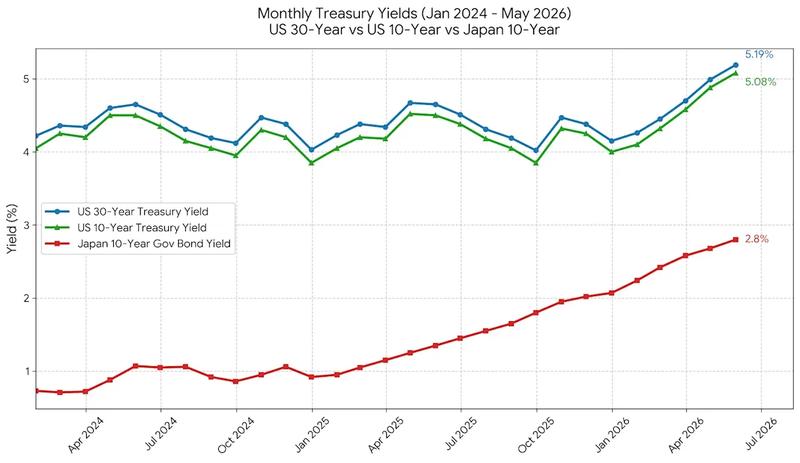
"Central banks are backed into a corner. They must choose between a sovereign debt collapse and debasing their currencies," Wu said. According to the analyst:
"For Bitcoin, the upcoming volatility will be chaotic in the short term, but it serves as the ultimate structural tailwind for a long-term supercycle."
This assessment arrives at a time when the US national debt has exceeded $39 trillion, while escalating geopolitical tensions pose a threat of increased government expenditures, and the continuing conflict in Iran is driving energy costs higher, resulting in a corresponding inflationary pressure increase.
Rate hike won't solve problem, it will simply bankrupt the government
Monetary authorities conventionally deploy elevated yields as a mechanism to suppress inflation through limiting credit availability; during periods of expensive borrowing, both consumers and investors reduce their borrowing activity, leading to declining asset valuations.
Nevertheless, the $39 trillion US national debt, which persists in expanding due to ongoing deficit expenditures, renders inflation control through interest rate increases impossible, since elevated rates would simultaneously escalate the government's debt servicing obligations, Wu explained.
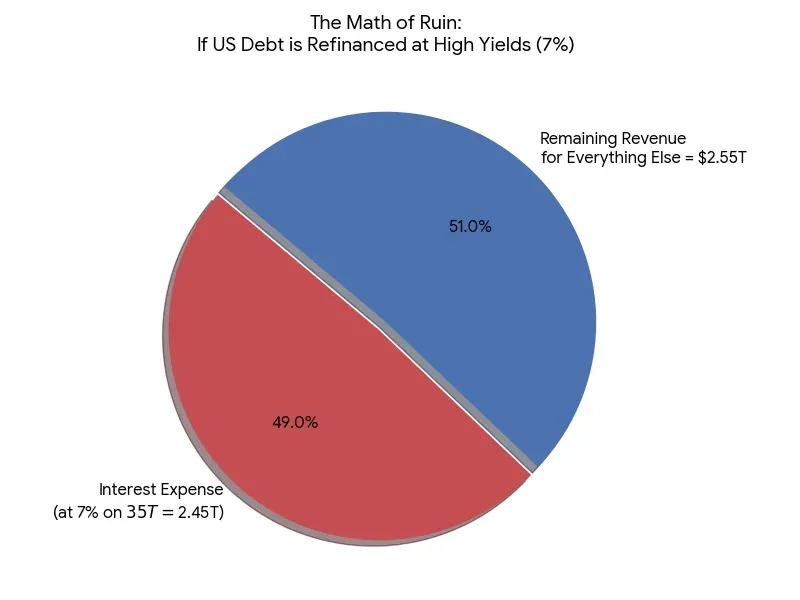
"With the national debt at $39 trillion, keeping rates at these levels means the annualized interest expense of the government will soon consume the entire federal tax base," according to the analyst.
Wu along with other experts, including macroeconomist Lyn Alden, contend that governmental and central banking institutions will seek to obscure quantitative easing measures by introducing liquidity through alternative mechanisms such as yield curve control and unannounced buybacks of US government debt.