First Banking Institution Joins EU's Blockchain-Powered Securities Trading Platform
In a groundbreaking move for digital finance, Amina has emerged as the inaugural regulated banking institution to partner with 21X, the European Union's distributed ledger technology-based marketplace for tokenized securities functioning under the DLT pilot framework.
In a development that signals growing convergence between digital assets and conventional financial markets, Amina, a cryptocurrency banking institution regulated in Switzerland, has partnered with a distributed ledger technology-based settlement infrastructure for tokenized securities that operates under the European Union's DLT pilot framework.
The financial institution, which operates from its headquarters in Zug, Switzerland, made the announcement on Monday, revealing its new role as a listing sponsor on the EU-regulated marketplace 21X, thereby establishing itself as the platform's inaugural fully regulated banking participant.
According to Amina's statement, this strategic partnership will enable the bank to assist corporations in launching tokenized securities on the 21X platform, leveraging its collaboration with Tokeny, a technology provider based in Luxembourg that specializes in the creation and administration of tokenized financial instruments.
The strategic alliance is designed to overcome a significant obstacle preventing institutional embrace of tokenized assets by establishing connections between regulated financial institutions and the process of issuing and exchanging tokenized securities.
The platform 21X secured its infrastructure authorization under the European Union's DLT pilot framework in December 2024, granting it permission to operate a regulated marketplace for distributed ledger technology-based securities within a controlled regulatory testing environment.
A lack of interoperability of tokenized asset platforms was cited by Baker McKenzie's European Financial Services practice in June as one of the main obstacles to the adoption of tokenization among financial institutions. Scale will only be achieved when numerous market players are transacting with each other on common or interconnected platforms.
Yves Mauchle, Zurich partner at Baker McKenzie
Launched in 2023, the DLT regulatory framework provides market infrastructure operators with opportunities to test blockchain-based trading mechanisms and settlement procedures for financial instruments within a protected regulatory sandbox environment. The initiative is designed to assist regulatory authorities in assessing how distributed ledger technology could integrate with existing financial market infrastructure.
While the program has seen initial participation, it has encountered criticism from market participants who caution that the existing restrictions could hinder the ability of European blockchain-based markets to achieve scale and maintain competitiveness with other global jurisdictions. Questions remain about whether involvement from regulated financial institutions like Amina will catalyze broader adoption of the framework.
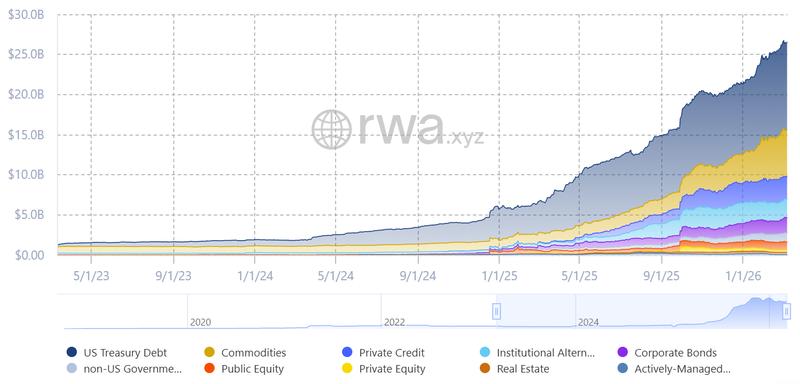
Strong growth of tokenized real-world assets
This announcement arrives at a time when financial institutions are progressively allocating resources toward blockchain-based infrastructure for tokenized assets. Within the United States, major institutions such as BNY, Nasdaq and S&P Global have recently provided support for the Canton Network's expansion, while Europe continues experimenting with regulated blockchain-based trading platforms like 21X operating within the EU's DLT pilot framework.
During February, a coalition of eight EU-regulated digital asset enterprises called upon government officials to expedite digital asset regulatory frameworks, expressing concerns that the European bloc could lose ground to the United States and other competing jurisdictions in the race to develop tokenized financial marketplaces.
That said, encouraging progress is indeed occurring across the landscape. In September, cryptocurrency trading platform Kraken introduced tokenized securities trading capabilities for its European client base via its xStocks service, which provides distributed ledger technology-based representations of securities listed on US stock exchanges.
Following two months after that development, tokenization infrastructure provider Ondo obtained regulatory authorization in Liechtenstein to provide tokenized equities trading services to investors throughout Europe.