Fed's September Rate Increase Expectations Reshape Markets: Bitcoin's Weekly Outlook
BTC investors confront challenging monthly closing dynamics beneath critical resistance levels while market sentiment shifts toward a more aggressive Federal Reserve stance for September.
As September approaches, Bitcoin (BTC) continues its struggle against significant resistance levels while financial markets adopt an increasingly hawkish outlook regarding Federal Reserve monetary policy.
Key points:
- Financial markets now assign approximately 60% probability to a Federal Reserve rate hike occurring in September, with employment statistics scheduled for release this week.
- Crude oil markets have seen fresh volatility triggered by additional US military actions against Iran alongside a historic oil supply agreement between the US and Venezuela.
- Bitcoin trades beneath a critical resistance zone under $86,000 as the August monthly candle approaches its close.
Expectations for September rate increase resurface following Jackson Hole
The upcoming week promises multiple releases of US employment data, with each report potentially influencing market expectations regarding future Federal Reserve policy adjustments.
The Federal Reserve found itself under heightened scrutiny following last week's Jackson Hole economic symposium, where new chair Kevin Warsh delivered his inaugural keynote address. Warsh maintained his typically reserved approach to policy signals, stating that forward guidance — a mainstay of Fed communications for many years — has "overstayed its welcome."
Regarding inflation metrics, Warsh characterized present data levels as excessively elevated, notwithstanding July's below-forecast readings for both the Consumer Price Index (CPI) and the Personal Consumption Expenditures (PCE) index.
Each of these broad inflation measures have fallen significantly from their highs of a few years ago, but progress through the past couple of years has been more modest, and while this summer's PCE and CPI readings were better than expected, they do not tell me that underlying trends have meaningfully improved.
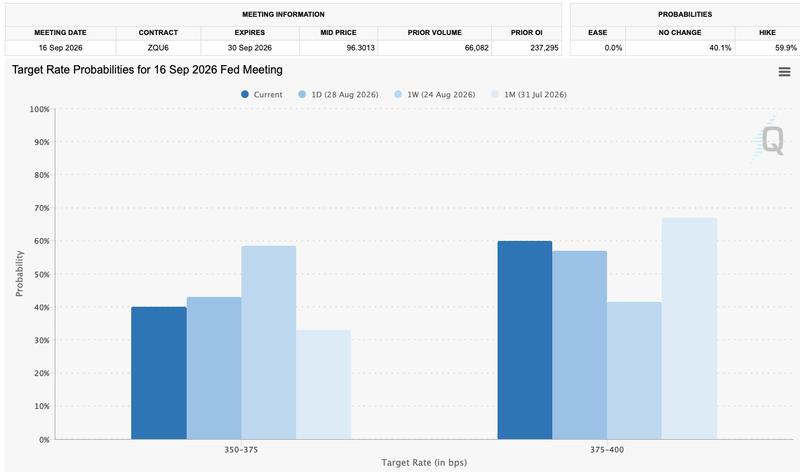
Financial markets reacted by increasing their projections for interest-rate increases, shifting back to majority probability for a 0.25% rate hike during the Fed's September policy meeting, according to CME Group's FedWatch Tool data. Current probability figures stand just beneath 60%, representing a significant increase from the previous week's 41.4%.
Rate increase expectations may face moderation, though, depending on labor market figures. August nonfarm payrolls statistics are scheduled for Friday's release. Economic forecasts project the addition of 50,000 jobs during the previous month, a stark contrast to June's 23,000 job loss.
Employment figures from the private sector will arrive ahead of nonfarm payrolls on Wednesday, with initial jobless claims data following on Thursday.
"All eyes are on the labor market," stated trading resource The Kobeissi Letter in X commentary, emphasizing that these would constitute the final major employment reports prior to the September rate determination.
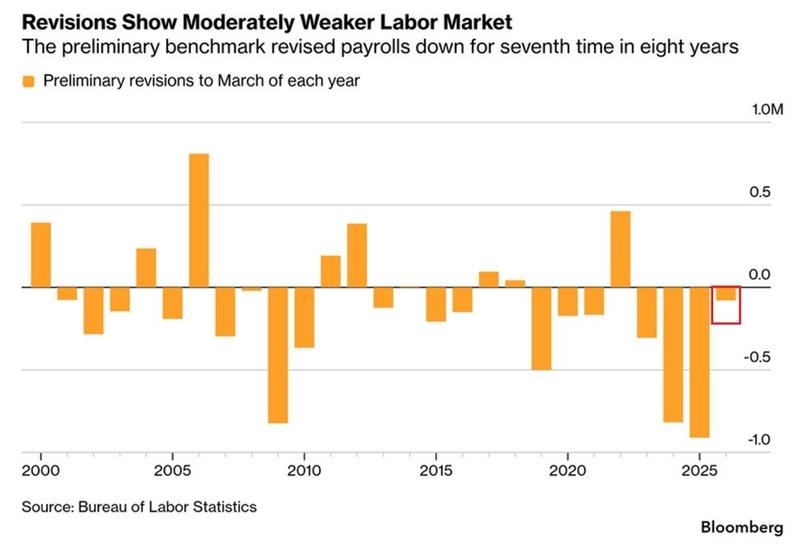
Kobeissi highlighted substantial downward adjustments to employment figures, suggesting that deteriorating labor market conditions might create obstacles to Federal Reserve policy tightening efforts. Referencing Bureau of Labor Statistics (BLS) information, it noted an additional 79,000 jobs eliminated in the twelve-month period ending March of this year.
"This follows last year's record -911,000 revision and marks the 4th consecutive annual downward adjustment, matching the streak that ended in 2010 after the 2008 Financial Crisis," the commentary continued, characterizing the labor market as having been "weaker than initially reported for years."
Crude oil prices surge amid US-Iran tensions escalation
Energy markets occupy center stage for macroeconomic volatility entering the week due to a convergence of geopolitical developments.
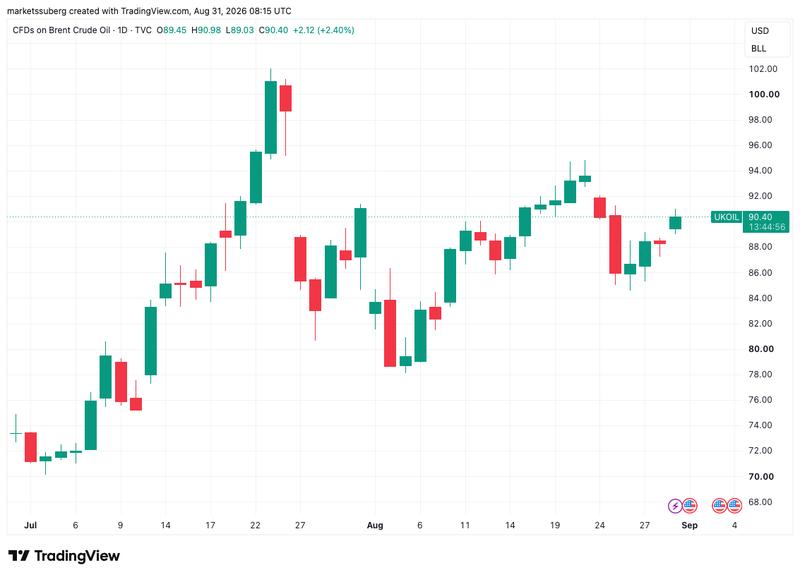
Additional US military strikes targeting Iran propelled Brent crude prices back over the $90 per barrel threshold on Monday, approaching seven-day highs. US WTI crude surpassed $85 per barrel, registering a 2.5% increase at the time of writing.
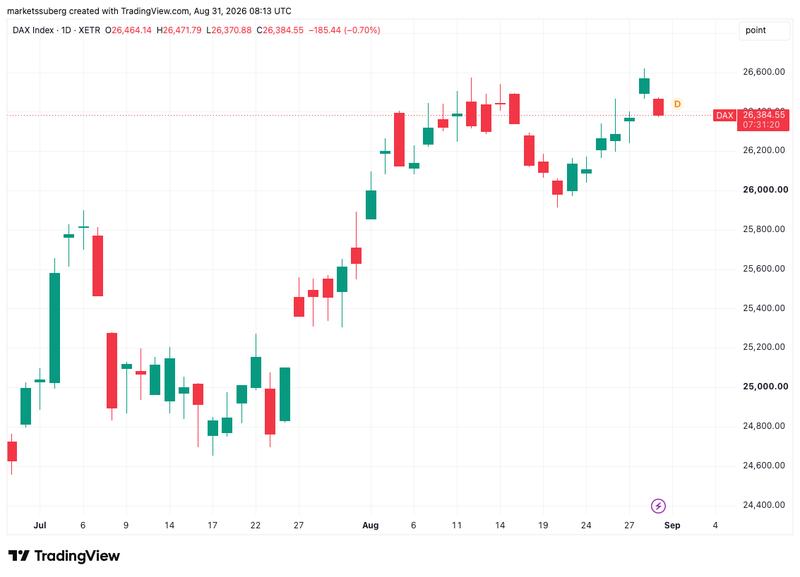
European equity markets experienced downward pressure resulting from these developments, with Germany's DAX declining 0.7%. US president Donald Trump suggested that Iran's Kharg Island oil facility faced renewed targeting. Through a Truth Social posting, Trump shared an AI-generated video seemingly depicting the bombardment of oil infrastructure, characterizing the island as "being blown to smithereens."
The military actions followed reports of a substantial energy agreement providing the United States with considerable control over Venezuelan oil reserves. Figures from Venezuela's interim president Delcy Rodriguez cited by CNBC and other outlets referenced daily oil production targets of 1.5 million barrels, with total involved reserves reaching 65 billion barrels, presently valued at approximately $5.4 trillion.
Through a Truth Social message, Trump characterized the acquisition as the "biggest oil deal in history."
Bitcoin contends with multiple 50-week trendline indicators
Bitcoin experienced late-session selling pressure heading into Sunday's weekly closure, including a brief descent below its 50-week exponential moving average (EMA) positioned at $77,269, according to TradingView data.
Price action successfully defended this trend line, which had been previously identified as crucial support, for a consecutive second week. Following its recent upward movement, BTC succeeded in recapturing the moving average with a weekly close for the first instance since November 2025.
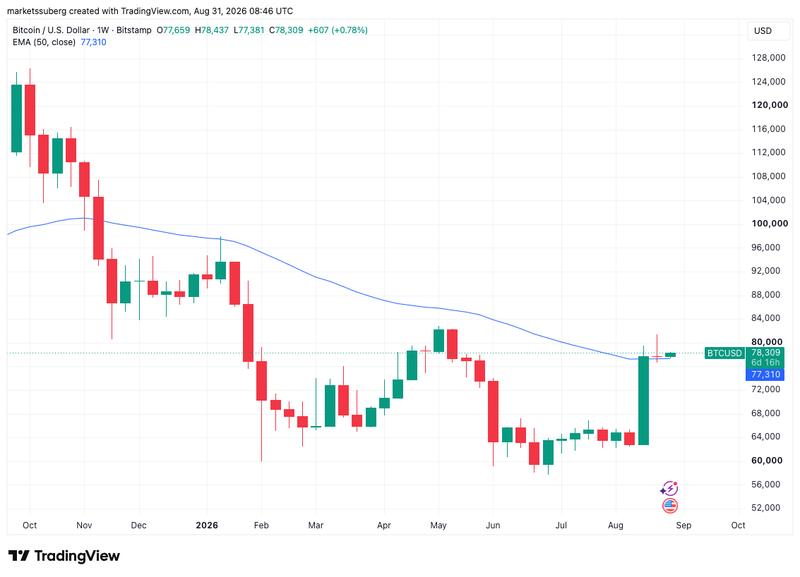
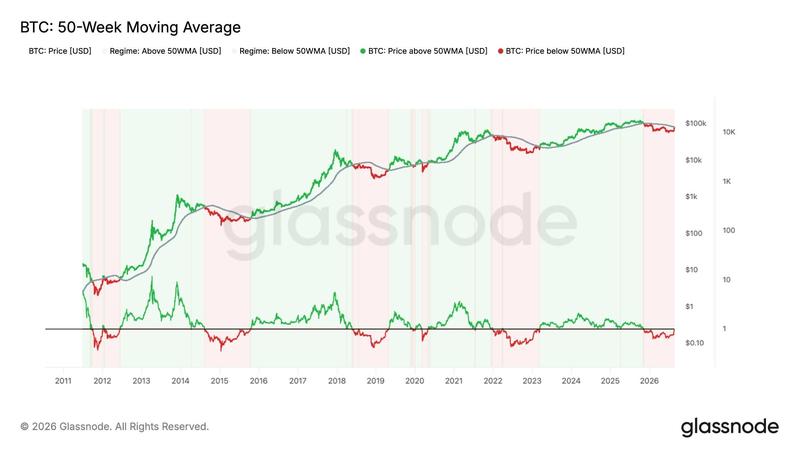
In his most recent market analysis posted on X, Rafael Schultze-Kraft, cofounder of cryptocurrency analytics platform Glassnode, highlighted the corresponding simple moving average (SMA) at $80,307. At this level, BTC/USD has yet to achieve a reclaim on weekly time frames — a development that has historically preceded further price appreciation, according to his analysis.
August monthly candle close confronts formidable resistance
Approaching the conclusion of August, Bitcoin bulls encounter a critical challenge as monthly percentage gains for BTC/USD approximate 25%.
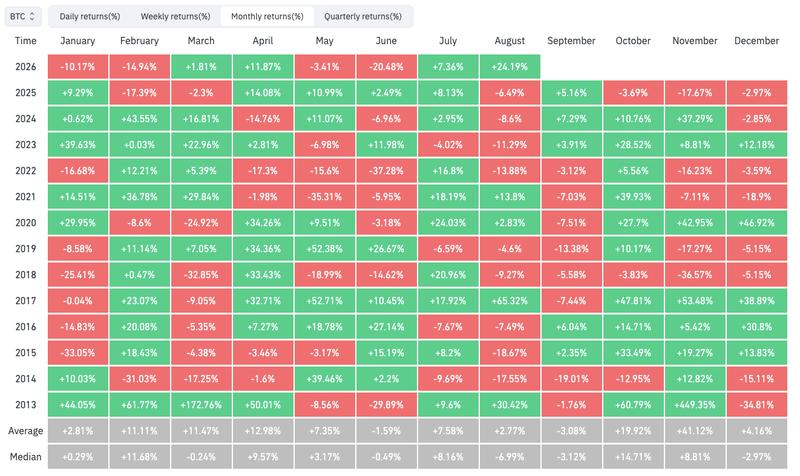
Notwithstanding the largest recorded cryptocurrency short liquidation episode in history, purchasing activity has thus far proven insufficient to recapture key resistance above the $80,000 threshold, according to analytical assessments.
"Bitcoin is still hovering beneath the Macro Downtrending resistance, having upside wicked briefly beyond it," observed trader and analyst Rekt Capital regarding the current market situation in his latest X analysis.
"Still the pivotal resistance and by staying below it, Bitcoin continues its series of Macro Lower Highs."
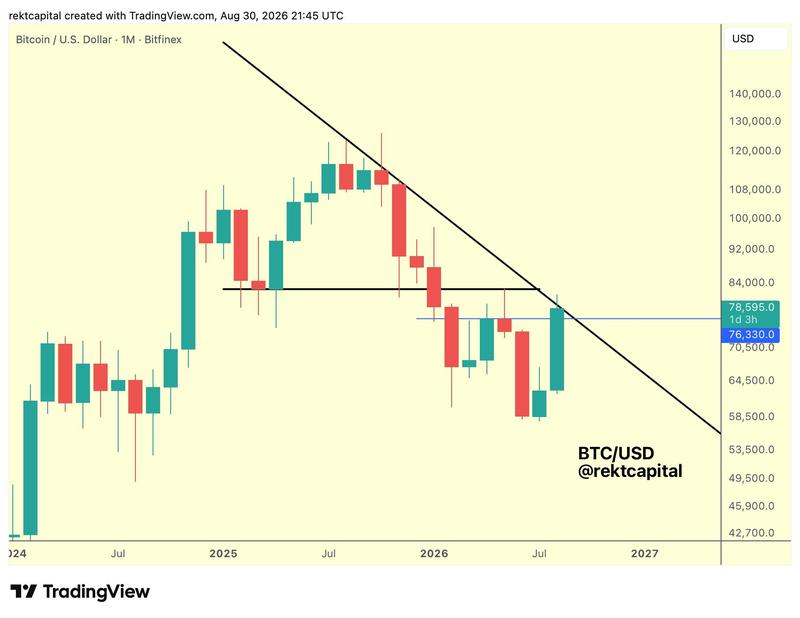
Rekt Capital contended that successfully breaking above this resistance level would carry significant ramifications for Bitcoin's four-year price cycle, as such a development would indicate that the most recent bear market proved shorter in duration than previous bearish cycles.
Beyond this trend line, however, supplementary resistance has already materialized due to increasing ask-side liquidity accumulation on exchange order books. As previously documented by Cointelegraph, this resistance extends to the $86,000 level, thereby necessitating even greater buying momentum to accomplish a sustainable breakout.
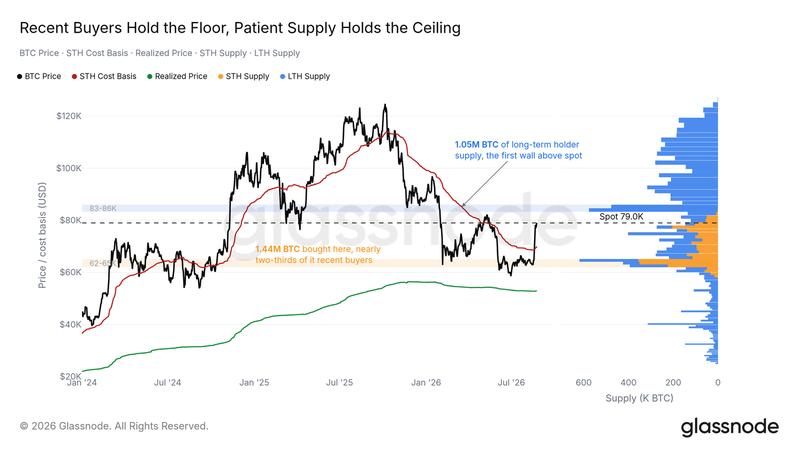
"Every overhead structure we track now sits between $81K and $86K; that band is where the recovery's demand meets its test," Glassnode stated in research published last week.
Substantial buyers viewed as critical to BTC price advancement
Glassnode's calculations indicate that 1.05 million BTC held by long-term holders maintain a cost basis ranging between $83,000 and $86,000. The long-term holder classification refers to wallet addresses maintaining a specific quantity of BTC without executing sales for six months or longer.
In supplementary research findings released this week, onchain analytics platform CryptoQuant emphasized the prospective influence of high-volume investors entering September. According to its data, these entities drove purchasing demand throughout the month, while smaller-scale investors engaged in profit-taking activities or market exits after their positions returned to breakeven levels.
"From 1–30 August, wallets with 100+ BTC added about 60,000 BTC. Wallets with 1–100 BTC sold about 33,000. Wallets under 1 BTC sold about 14,000," the platform wrote in a Monday blog post.
"That split is the month. Large holders absorbed the breakout. Smaller holders used the rally as an exit."
CryptoQuant added that the assessment of large-investor accumulation patterns would necessitate reevaluation should those entities begin liquidating recently purchased supply below the $80,000 price level.