European OKX Platform Introduces USDT-to-USDC Migration Tool for MiCA Compliance
European users now have access to a voluntary transition pathway from Tether's USDT as the region's MiCA regulations transform the stablecoin landscape.
A new one-directional conversion tool has been introduced by OKX Europe, enabling users to deposit USDT and transform it into USDC, providing a compliant transition pathway as the European Union's Markets in Crypto-Assets (MiCA) regulations restrict access to the world's most widely-used stablecoin.
In a company statement provided to Cointelegraph, the platform explained that this functionality permits users to deposit Tether's USDt (USDT) directly into their OKX Europe accounts and exchange these tokens for USDC (USDC), which stands as one of the most prominent stablecoins accessible within the European Union's MiCA regulatory structure.
Given that Tether has not pursued authorization to distribute USDT under MiCA regulations, numerous European cryptocurrency platforms have been compelled to impose deposit restrictions, remove trading pairs, or transition customer holdings into regulation-compliant alternatives following the European Union's complete implementation of the framework on July 1.
According to OKX Europe, this functionality targets users whose current platforms have ceased accepting USDT or intend to automatically migrate their holdings. The platform emphasized that users can complete these conversions at their own pace and discretion, without being subjected to platform-mandated deadlines.
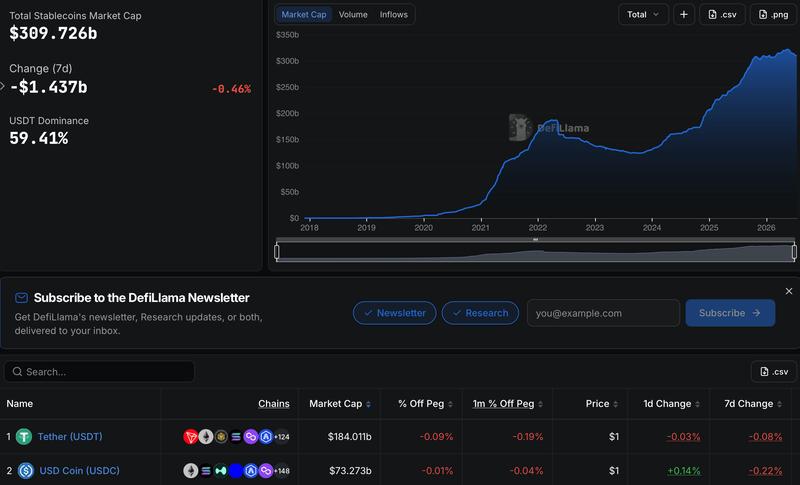
This development emerges despite USDT maintaining its position as the leading stablecoin on a global scale. Data from DefiLlama indicates that Tether commands approximately 59% of the stablecoin market, which is valued at nearly $310 billion, with a market capitalization hovering around $184 billion, while Circle's USDC holds roughly $73 billion in market value.
Under its MiCA licensing, OKX Europe provides services to users throughout 30 European Union and European Economic Area nations.
Why did Tether reject MiCA?
Tether has maintained its position not to pursue MiCA authorization for USDT, despite the fact that this decision has led numerous European cryptocurrency platforms to remove or limit access to the stablecoin. As the EU's regulatory structure began implementation in late 2024, trading platforms throughout the region have been transitioning their user bases toward alternatives that comply with MiCA standards.
Paolo Ardoino, CEO of Tether, has consistently voiced concerns about MiCA, contending that its reserve mandates introduce unwarranted risks for stablecoin providers by mandating that a percentage of reserves must be maintained with European banking institutions.
During a May 2025 conversation with Cointelegraph, Ardoino characterized the regulatory framework as "very dangerous when it comes to stablecoins," explaining that Tether opted against seeking authorization even while recognizing that USDT would probably lose backing on European trading platforms.
The organization has demonstrated minimal indication of altering its strategy. Through a July 2025 statement on X, Ardoino declared that Tether would only reconsider pursuing MiCA authorization "when MiCA becomes safer for consumers and stablecoin issuers."

In recent developments, Revolut, a digital banking platform, announced it would discontinue USDT support for users located in the European Economic Area and Switzerland, providing customers until Aug. 31 to either sell or withdraw their tokens before any remaining holdings are automatically converted to their base currency.