European Crypto Card Spending Reveals Shift to Daily Essentials Over Luxury Items
New transaction data from OKX Card reveals European users predominantly spend cryptocurrency on daily necessities like food and groceries rather than high-end purchases.
Transaction data released on Wednesday reveals that during its inaugural month, OKX Card users throughout Europe primarily utilized the payment solution for everyday expenses including food shopping, dining out, and other regular expenditures.
During the initial 30 days of availability throughout the European Economic Area (EEA), supermarkets and grocery stores represented 26% of total OKX Card transactions, while dining establishments including restaurants and fast food outlets combined comprised 18%, surpassing both travel expenses and online marketplace purchases, the data indicates.
The company stated that the analysis encompasses settled purchase transactions conducted using the OKX Card within the EEA from Jan. 28 through Feb. 26, covering the leading 20 merchant categories based on transaction count, volume or unique users.
An OKX spokesperson informed Cointelegraph that the dataset encompasses all EEA markets where the card has been launched, and that this data snapshot reflects the "majority of daily spending behaviors and any high-value outliers," encompassing categories like utilities, while peer-to-peer transfers were excluded from the analysis.
The data from OKX reveals distinctive national spending patterns beneath the overall averages. In France, as one example, bakery transactions constitute 5% of all OKX Card purchases versus 2% throughout the broader EEA, underscoring the nation's strong boulangerie and café culture.
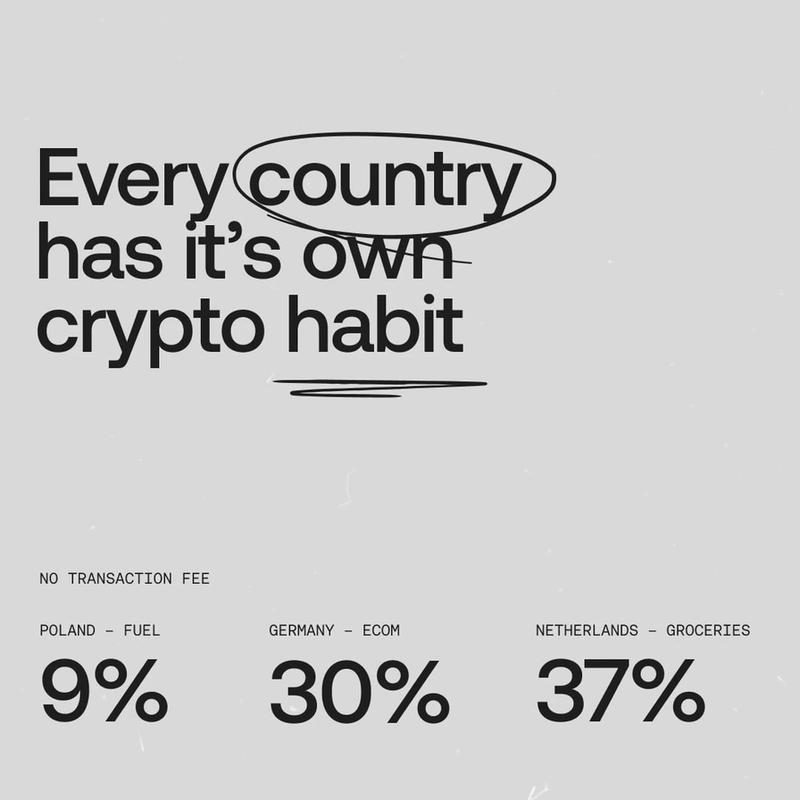
Within Germany, 30% of all transactions took place on online marketplaces, exceeding twice the EEA average of 13%, whereas the Netherlands documented 37% of transactions occurring in supermarkets, representing the highest grocery spending proportion in the entire dataset.
Poland demonstrates a notable pattern of small-value, physical point-of-sale usage, with 16% of OKX Card transactions happening at convenience stores and approximately 9% at fuel stations, both figures surpassing the EEA averages.
The spokesperson indicated that exchanging fiat currency for cryptocurrency in routine payments represents a relatively new consumer behavior, contending that the data contradicts the common perception of crypto cards being utilized primarily for luxury goods, and instead demonstrates groceries and coffee purchases made by "everyday people."
The company stated that variations at the country level predominantly mirror established cultural spending habits, but maintained they demonstrate that stablecoin-funded card payments are beginning to replace conventional cards in consumers' daily spending patterns, extending beyond occasional high-value purchases.
Part of broader trend in Europe
Wider market data indicates OKX is not an outlier in its observations, with additional crypto card providers operating in Europe documenting comparable patterns of low-value, routine transactions.
A 2025 Cex.io report discovered that approximately 45% of crypto card transactions throughout Europe involved amounts below 10 euros ($11.75) and that roughly 40% of such card spending occurred online, nearly twice the euro-area average proportion of online card payments which stands at about 21%.
Additional Brighty data previously reported by Cointelegraph in April demonstrated that Spain represented approximately 36% of retail transactions and 25% of overall volume in Circle's euro stablecoin EURC during 2025 through the first quarter of 2026, with an average payment size of roughly 49 euros ($58), suggesting stablecoins are currently being utilized there for routine purchases and peer-to-peer transfers.