Ethereum Ranks Among Most Efficient PoS Blockchains in Cambridge Energy Analysis
New Cambridge research reveals Ethereum's annual consumption stands at 7.87 GWh, securing the second-best position for market-value-adjusted energy efficiency among analyzed PoS networks.

Recent research from Cambridge has positioned Ethereum toward the more efficient end of the spectrum when measuring energy intensity across leading proof-of-stake (PoS) blockchain networks, despite the fact that the platform's total electricity consumption exceeds that of many other PoS networks examined in the analysis.
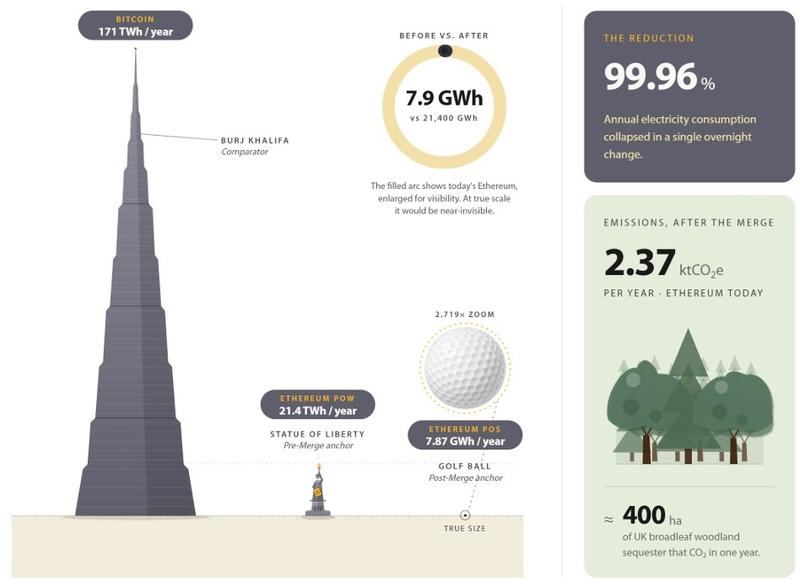
According to estimates from the Cambridge Centre for Alternative Finance, Ethereum's annual electricity consumption stands at approximately 7.87 gigawatt-hours (GWh). After adjusting these figures to account for market capitalization, the network demonstrates an energy intensity of approximately 33 kilowatt-hours (kWh) for every $1 million in market value, securing the second-most efficient ranking among the proof-of-stake networks evaluated in the study, with only BNB Chain performing better.
Among the PoS blockchains analyzed, Solana demonstrated the highest electricity consumption, registering approximately 13.48 GWh annually. When evaluated for energy intensity, Solana's figure reached approximately 283 kWh per $1 million of market capitalization, representing roughly 8.5 times the energy intensity of Ethereum, while the collective consumption of all networks included in the comparative analysis totaled about 38 GWh.
This report represents one of the most comprehensive evaluations to date of Ethereum's environmental footprint following the Merge upgrade, offering policymakers and institutional investors more up-to-date data for evaluating blockchain network sustainability and environmental impact.
New estimates map Ethereum's energy use
The Cambridge team conducted measurements of electricity consumption by Ethereum nodes at the wall socket level, testing 20 different combinations of the network's primary software clients. Their findings indicated that a standard home-based setup consumed approximately 18 watts of power, whereas more robust workstation configurations consumed around 153 watts.
By analyzing Ethereum's distribution between residential nodes and professionally hosted infrastructure, the research team calculated an average power consumption of approximately 105 watts for each node. Cambridge's count identified roughly 8,522 discoverable full nodes operating on the network, with 64% of these nodes running within cloud or enterprise infrastructure environments and 36% operating on residential internet connections.
According to Cambridge's analysis, the remaining carbon emissions from Ethereum are now predominantly determined by the energy sources powering the electrical grids that supply its node operators. The research calculated that approximately 56.4% of the network's electricity consumption originated from renewable and nuclear energy sources, while the remaining 43.6% came from fossil fuel-based generation.
The transition of Ethereum from proof-of-work mining to proof-of-stake validation occurred through the Merge upgrade in September 2022. This upgrade eliminated the competitive mining model where participants utilized energy-intensive computational hardware, replacing it with validators who maintain network security through staking Ether tokens.
Following the completion of the Merge, energy consumption estimates demonstrated that the upgrade had decreased the network's electricity consumption by more than 99.9%, as the energy-intensive mining operations previously required to secure the blockchain were completely eliminated from the consensus mechanism.