Dollar-backed stablecoins pose heightened threats to developing nations, FSB annual assessment reveals
The Financial Stability Board's latest findings indicate that stablecoins pegged to the US dollar could leave developing nations vulnerable to macroeconomic disruptions and threats to financial system stability.

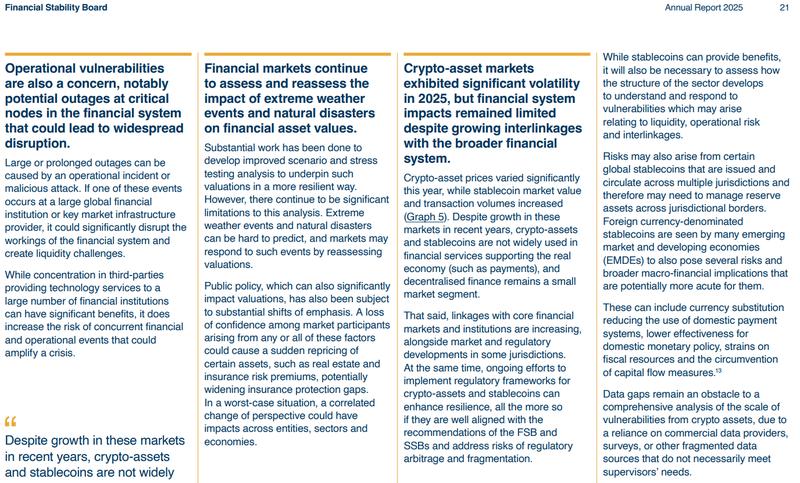
On Tuesday, the Financial Stability Board (FSB), an international financial monitoring organization housed within the Bank for International Settlements, issued a warning that stablecoins denominated in foreign currencies present both macroeconomic challenges and threats to financial system stability for developing economies and emerging markets.
Within its 2025 annual assessment, the FSB highlighted that stablecoins pegged to the US dollar that operate across various jurisdictions present risks that are "potentially more acute" for the financial stability of developing nations and emerging market economies.
According to the assessment, these risks may encompass the substitution of local currencies, diminished utilization of national payment infrastructure, weakened effectiveness of monetary policy tools at the domestic level, pressures on government fiscal capacities, and the bypassing of mechanisms designed to control capital flows.
The FSB emphasized that policymakers must continue evaluating how the stablecoin industry evolves to properly comprehend and address vulnerabilities connected to liquidity concerns, operational challenges, and connections with the wider financial ecosystem.
The assessment expands upon the FSB's 2023 worldwide regulatory framework addressing crypto asset operations and arrangements for global stablecoins, which underwent review by the board in 2025 and was found to continue exhibiting substantial gaps and inconsistencies when it comes to actual implementation.
The FSB came into existence in April 2009, replacing the Financial Stability Forum. G20 member nations established it following the 2008 financial crisis with the mandate to enhance the resilience of global financial systems.
Stablecoins still have limited real use
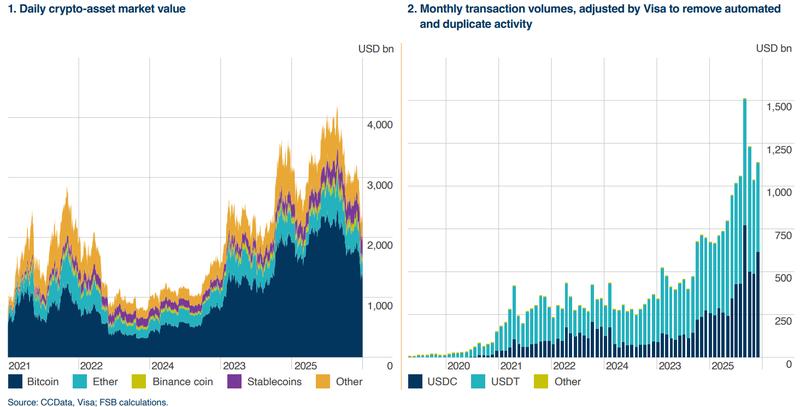
According to the FSB's findings in the assessment, both crypto assets and stablecoins continue to show limited penetration in practical economic applications such as payment systems.
"Despite growth in these markets in recent years, crypto-assets and stablecoins are not widely used in financial services supporting the real economy."
While the assessment acknowledged that stablecoins may deliver certain advantages, it emphasized that regulatory authorities must maintain ongoing surveillance of vulnerabilities associated with interconnections, liquidity concerns, and operational hazards, particularly as connections with mainstream financial markets and institutions grow stronger.
The FSB additionally identified other priority areas for attention in 2026, which include digital transformation related to crypto assets and ongoing surveillance of vulnerabilities within the stablecoin sector.
Additional priorities encompassed monitoring risks associated with private credit markets, financial intermediation outside the banking sector, international payment systems, and the execution of supplementary measures relating to preparedness for financial crises and the modernization of regulatory frameworks.