Digital bond platform in Hong Kong to connect with tokenization networks across region
The city will establish a digital asset infrastructure for tokenized bond issuance and settlement, alongside advances in stablecoin regulation and CARF implementation.

A new digital asset infrastructure will be established in Hong Kong within this year to facilitate the issuance and settlement of tokenized bonds, marking the city's strategic shift from experimental tokenization projects toward mainstream market infrastructure implementation.
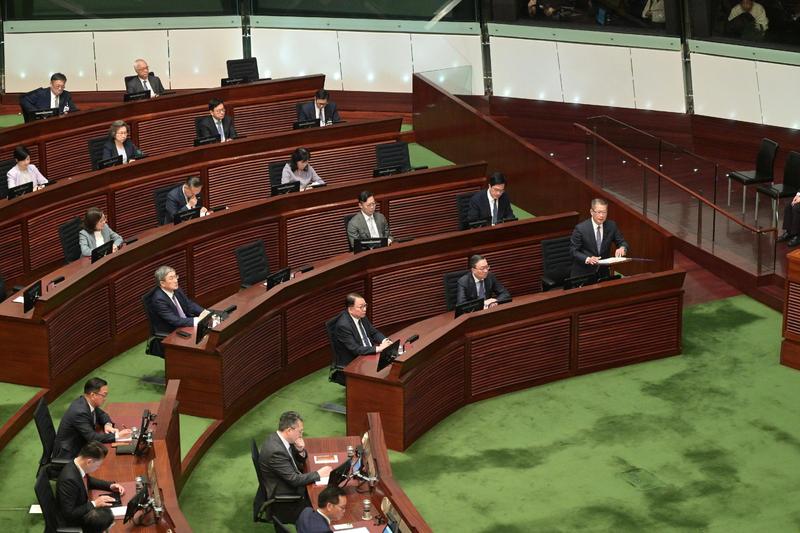
During his Budget speech for 2026-27 presented on Wednesday, Financial Secretary Paul Chan announced that CMU OmniClear Holdings, which operates as a subsidiary under the Hong Kong Monetary Authority (HKMA), will develop this platform with plans to expand its capabilities to encompass additional digital asset categories.
Integration with regional tokenization platforms is also planned for the system. According to Chan, the platform would be "gradually extended to other digital assets and linked with other tokenisation platforms in the region," emphasizing that this initiative would strengthen Hong Kong's position in the digital asset ecosystem.
This development positions tokenized bond settlement within the post-trade infrastructure operated by the HKMA, representing a shift away from experimental pilot programs toward fully integrated market-wide systems.
The territory has previously completed multiple issuances of tokenized government bonds. Chan noted that the government completed its third batch of tokenized bond issuance during the fourth quarter of 2025, with a total value of 10 billion Hong Kong dollars ($1.28 billion). He further indicated that the government intends to maintain a consistent schedule of tokenized bond issuances going forward.
Stablecoin licensing and broader rules
Chan has additionally announced that Hong Kong intends to grant its first batch of licenses for fiat-referenced stablecoins in March, with the initial round of approvals anticipated to be selective.
He stated that the government will continue supporting licensed issuers as they explore various use cases "in a compliant and risk-controlled manner."
On Feb. 2, Eddie Yue, Chief Executive of HKMA, revealed that the regulatory body is in the process of preparing to issue its first licenses for stablecoin issuers in March, noting that initial approvals are expected to be limited in number.
According to Yue, the review process emphasizes use cases, risk management frameworks, Anti-Money Laundering (AML) controls and the adequacy of asset backing.
The Budget speech from Chan also confirmed that the government will put forward legislation to create licensing frameworks for providers of digital asset dealing services and custodian services.
He noted that amendments to the Inland Revenue Ordinance will also be introduced to enable implementation of the Crypto-Asset Reporting Framework developed by the Organisation for Economic Co-operation and Development, bringing Hong Kong into alignment with international tax transparency requirements.
Liquidity push builds on earlier digital asset efforts
The development of this infrastructure follows other recent initiatives aimed at growing Hong Kong's regulated market for digital assets.
On Feb. 11, the Securities and Futures Commission granted permission to licensed brokers to provide digital asset margin financing services and introduced a regulatory framework for crypto perpetual contracts that is restricted to professional investors.
According to regulators, these measures are designed to enhance market liquidity while preserving appropriate risk management controls.
The initiatives detailed in the Budget for 2026–27 build upon this strategy by incorporating tokenized bond issuance and settlement processes into the city's fundamental financial infrastructure framework.