DeFi United Releases Technical Blueprint for rsETH Restoration Following $293M Kelp Security Breach
Following the $293 million Kelp security breach, DeFi United has released a comprehensive technical blueprint detailing how rsETH backing will be restored and exploit-related DeFi positions unwound.

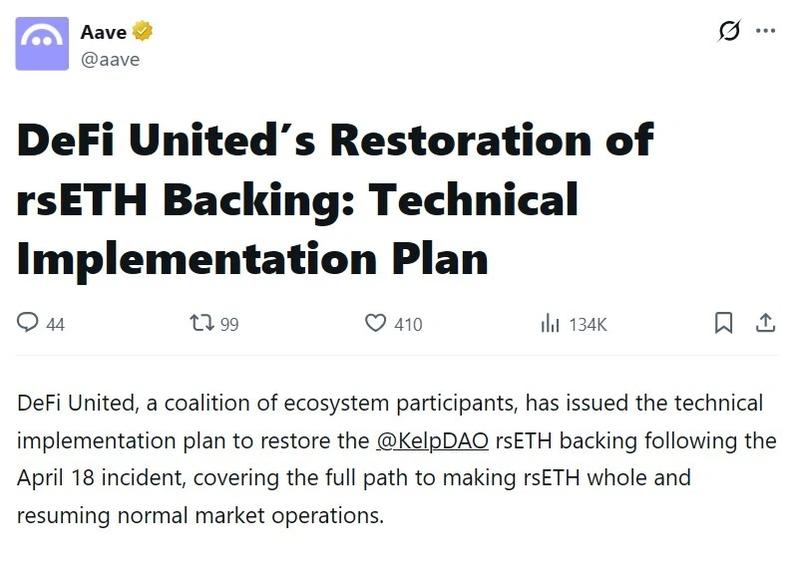
DeFi United, a recovery consortium associated with Aave, has released a detailed technical roadmap aimed at restoring backing for rsETH following the Kelp bridge security breach on April 18. The incident saw 116,500 rsETH, valued at approximately $293 million at the time of the exploit, released without the required corresponding burn on Unichain.
According to the plan, committed Ether (ETH) will be converted into rsETH through a tranche-based approach, with the resulting tokens deposited into the compromised bridge lockbox. This process is designed to enable the bridge to return to standard operations once full backing has been reestablished. According to Aave, both LayerZero and Kelp have also put in place enhanced security protocols ahead of the bridge's return to complete functionality.
Simultaneously, DeFi United has outlined plans to liquidate positions linked to the attacker across both Aave and Compound platforms in order to retrieve collateral and address market disruptions stemming from the breach. According to the group, seven wallet addresses connected to the exploiter continue to maintain active positions backed by rsETH on Aave and Compound, accounting for approximately 107,000 rsETH out of the total 116,500 rsETH that was released during the incident.
The suggested implementation sequence involves temporarily modifying the rsETH oracle pricing mechanism to facilitate controlled liquidation processes, transferring the recovered collateral assets to a multisig wallet controlled by DeFi United, restoring the oracle to its normal state, redeeming the rsETH tokens for ETH, and utilizing the resulting proceeds to eliminate deficits throughout the impacted markets.
This recovery initiative transitions the rsETH restoration effort from public pledges and verbal commitments into a structured technical implementation that relies on governance authorization, temporary modifications to oracle systems, and coordinated execution across multiple DeFi platforms. Although the framework is intended to successfully restore rsETH backing, its success depends on approval from various DAOs, finalized legal agreements, and the attacker refraining from interfering with the planned liquidation procedures.
Ethereum backers joined the recovery effort
This technical roadmap builds upon previous initiatives aimed at obtaining funding commitments and governance backing for the rsETH restoration project.
Earlier this week on Monday, Ethereum co-founder Joe Lubin and Consensys became participants in DeFi United, pledging up to 30,000 ETH toward the recovery initiative. Additionally, Sharplink, an Ethereum treasury company that is publicly traded, joined the effort in an advisory capacity to assist with structuring the recovery framework.
That same Monday, Aave Labs submitted a formal request to the Arbitrum DAO seeking the release of 30,765 ETH that had been frozen by the Arbitrum Security Council in response to the exploit, with those funds to be directed to DeFi United.
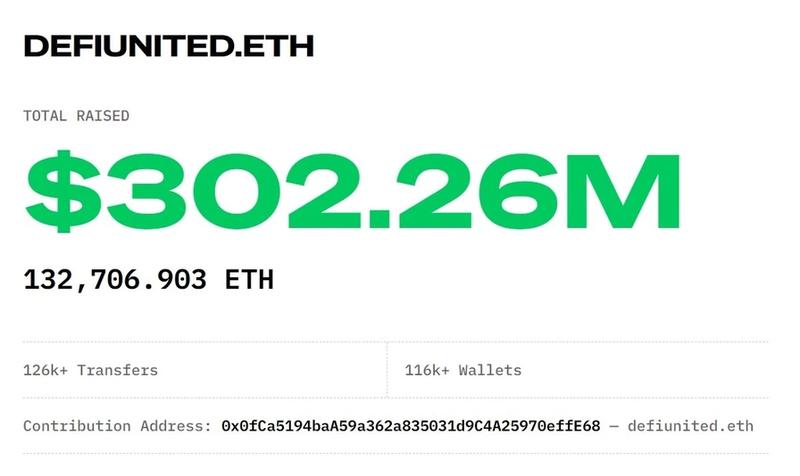
By Tuesday, the official DeFi United website displayed a total of $302.26 million in funds either raised or committed to support the recovery operation, equivalent to 132,706.903 ETH, although certain commitments are still pending final DAO approval votes and complete execution.