DeFi Assets Could Surge to $2.7 Trillion by 2030 Through Tokenization: Standard Chartered
By 2030, decentralized finance assets could climb to $2.7 trillion, according to Standard Chartered's projection, fueled by tokenization and native cryptocurrency expansion.
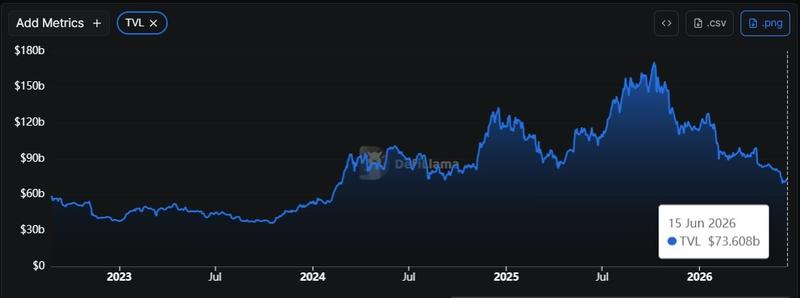
By the close of 2030, decentralized finance (DeFi) could see assets under management expand 37-fold to reach $2.7 trillion, according to projections from Standard Chartered.
This substantial growth would be propelled by a combination of tokenized real-world assets (RWAs) and cryptocurrency-native assets flowing through onchain protocols, according to Geoff Kendrick, who leads digital assets research at Standard Chartered, in a research note published on Monday.
I think the next opportunity for generational wealth in digital assets is going to come via the DeFi protocols. I estimate that the amount of tokenized assets active in DeFi will 37x by the end of 2030.
Geoff Kendrick, Standard Chartered
Kendrick noted that currently, just 3% of stablecoins and 10% of tokenized RWAs are being utilized within DeFi ecosystems. His projections indicate the proportion of tokenized assets deployed in DeFi will climb to 30% by the conclusion of 2030, up from approximately 3.5% at present.
This projection highlights increasing institutional confidence that tokenization has the potential to funnel additional capital into the DeFi sector. That said, achieving the $2.7 trillion milestone would necessitate rapid expansion of onchain assets alongside a nearly ninefold increase in the percentage of tokenized value flowing through DeFi protocols.
In earlier forecasts, Standard Chartered predicted that tokenized RWAs excluding stablecoins would reach $2 trillion by the close of 2028, with the bulk of this projected market comprised of tokenized money-market funds and US equities.
Although Standard Chartered anticipates that tokenized assets will channel considerably more activity into DeFi platforms, certain industry researchers have issued warnings that tokenization alone does not ensure liquid or integrated markets.
Chris Kim, CEO of Axis, previously shared with Cointelegraph that deploying the same asset across various blockchains and in different formats can result in fragmented liquidity, discrepancies in pricing and elevated transaction costs, which restricts the ease with which tokenized assets can be exchanged despite overall market value expansion.
Ondo Finance's sales director for Europe, the Middle East and Africa, Oya Celiktemur, also remarked at Paris Blockchain Week in April that tokenizing an illiquid asset does not "magically" make it liquid.
Uniswap seen as a potential hub for tokenized markets
According to Kendrick, Uniswap has the potential to become a central trading platform as increasing volumes of tokenized assets transition onchain. He pointed to the decentralized exchange's substantial scale, established brand recognition and proven track record of functioning through various crypto market cycles.
These characteristics could prove especially valuable to traditional financial institutions, Kendrick noted, which are expected to place high priority on security and dependability when introducing tokenized RWAs into the DeFi ecosystem.
If Uniswap can commercialise enough and create significant enough TradFi partnerships to scale, its market cap-to transaction fees multiple is likely to increase, narrowing the gap with Coinbase.
Geoff Kendrick, Standard Chartered