CryptoQuant Data Reveals EUR Transactions Represent Just 1% of Binance Spot Trading
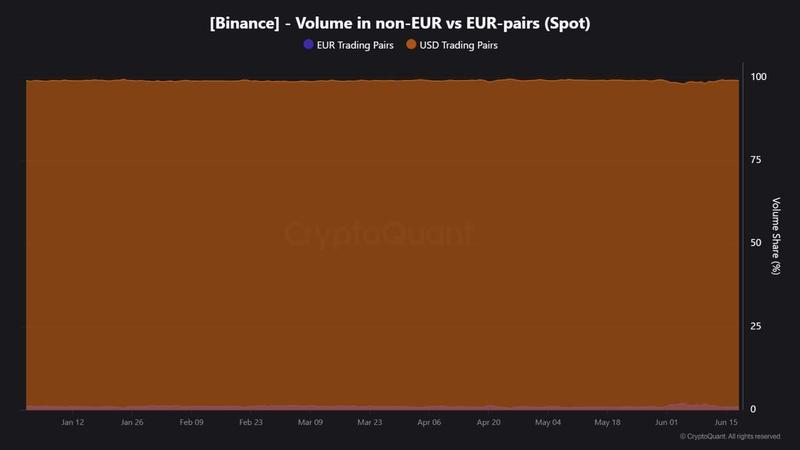
Data from CryptoQuant indicates that trading denominated in euros comprises approximately 1% of spot trading volume on Binance, while the platform navigates regulatory challenges before MiCA's July 1 compliance date.

Trading activity denominated in euros represents just a minor portion of Binance's overall operations, while the platform grapples with questions surrounding its ability to obtain European authorization under the Markets in Crypto-Assets Regulation (MiCA).
Approximately 1% of Binance's spot trading volume consists of euro (EUR) pairs, according to what CryptoQuant analyst Maartunn shared with Cointelegraph.
Binance's inflows remain globally distributed, which may limit the impact of potential MiCA-related setbacks,
Maartunn said, pointing to the exchange's diversified user base across regions.
These figures emerge amid reports suggesting that Greek regulatory authorities are poised to deny Binance's request for licensing before MiCA's transitional compliance date of July 1, a decision that may create challenges for the platform's continued service to European Union customers.
Binance ranks among Europe's biggest crypto exchanges
Despite the fact that EUR-denominated transactions constitute merely 1% of Binance's worldwide spot trading volume, the platform continues to facilitate euro trades worth hundreds of millions of dollars.
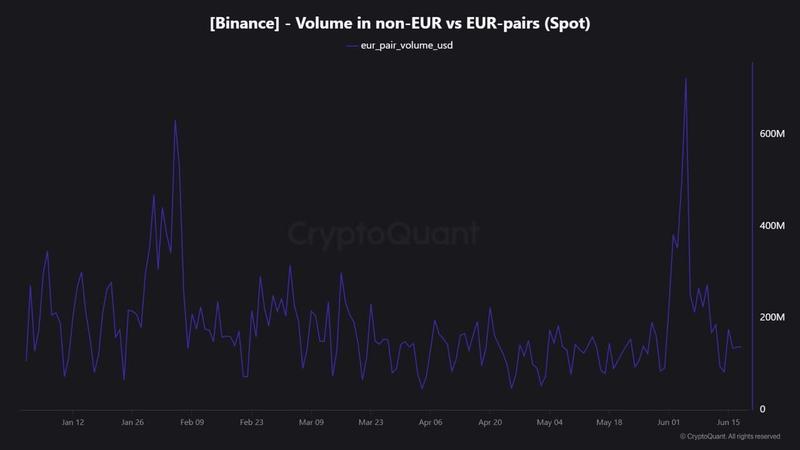
Data from CryptoQuant shows that Binance's EUR-pair trading volumes on a daily basis have fluctuated between approximately $100 million and $250 million throughout 2026, with some instances recording spikes exceeding $600 million.
A December 2024 analysis published by Kaiko revealed that Binance, together with Bitvavo, Kraken and Coinbase, was responsible for over 85% of the total euro-based cryptocurrency trading activity.
In contrast to Binance, Bitvavo, Kraken and Coinbase represent major trading platforms that have already obtained MiCA compliance approval, enabling them to provide services throughout the EU utilizing the framework's passporting system.
83% of CASPs have yet to receive a MiCA license
The regulatory questions facing Binance emerge during a period when numerous crypto asset service providers (CASPs) continue to adjust to MiCA's compliance standards.
Based on calculations derived from European Securities and Markets Authority (ESMA) information referenced by market analyst Merlijn Geurds, approximately 210 companies out of over 1,200 entities functioning under pre-MiCA registration frameworks have successfully acquired complete authorization under the updated regulatory regime.
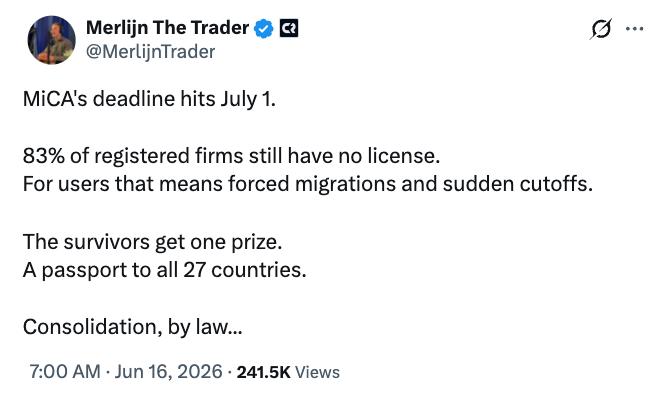
In conversation with Cointelegraph, Geurds explained that the disparity demonstrates the expense and intricacy associated with regulatory compliance, which demands governance frameworks, compliance mechanisms and operational protections that numerous smaller organizations do not possess.
The result is consolidation by design. A smaller group of well-capitalized, licensed players gets a passport to all 27 states, while a long tail faces forced migrations or cutoffs.
Geurds said
Cointelegraph reached out to Binance requesting commentary regarding the scale of its European operations and the possible ramifications of MiCA-related regulatory constraints but had not obtained a reply at the time of publication.