Cryptocurrency Tokens Associated with Trump Experience Sharp Declines Following Democratic Midterm Victory
Among the top 100 cryptocurrency tokens, TRUMP and WLFI experienced the most significant losses following Democratic victories in the midterm elections, even as Bitcoin and Ether saw positive movements.
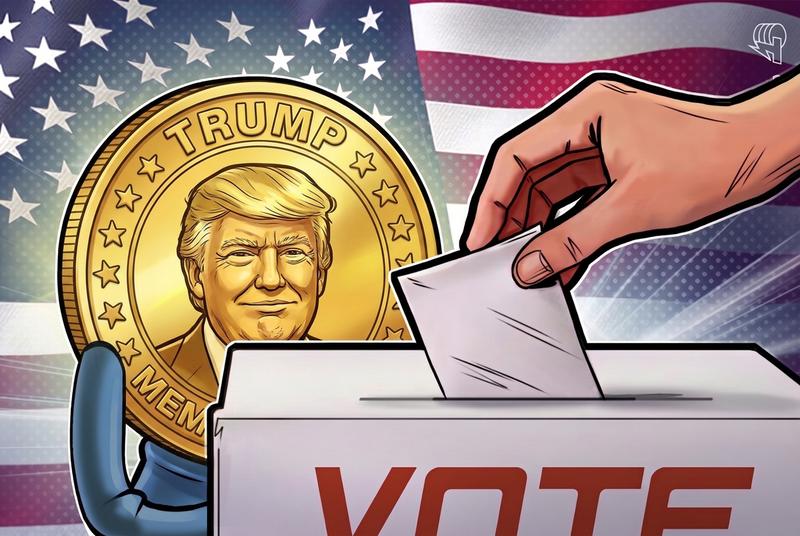
On Wednesday, digital assets connected to US President Donald Trump experienced the most substantial losses among the top 100 cryptocurrencies in the wake of the US midterm elections, prompting concerns about their viability even as the wider cryptocurrency market experienced an upswing.
Data from CoinMarketCap captured at approximately 5:32 p.m. UTC showed Official Trump (TRUMP) declining 17% during a 24-hour period to reach $1.33, whereas World Liberty Financial (WLFI) experienced a drop exceeding 7% to settle at $0.047. The president's official memecoin TRUMP was introduced in January 2025, while WLFI serves as the governance token for World Liberty Financial, a decentralized finance (DeFi) initiative backed by the Trump family that launched in 2024.
These downward movements came on the heels of a series of Democratic election victories, which included unexpected triumphs in Texas, during Tuesday's midterm elections, resulting in the party seizing control of both the House and Senate from the Republicans.
The electoral outcome could potentially create obstacles for Trump in advancing his cryptocurrency agenda while simultaneously increasing scrutiny of his family's cryptocurrency business ventures. According to analysts, these losses also spark debate regarding whether political sentiment by itself can sustain demand for tokens linked to Trump.
Politically-linked tokens decline as Bitcoin, Ether experience growth
According to data from CoinMarketCap, Bitcoin (BTC) experienced an increase of more than 4% during a 24-hour period, reaching approximately $80,500, while Ether (ETH) saw a 6% climb to $2,433. Additional major cryptocurrencies similarly experienced upward trends, with BNB increasing 3%, XRP advancing 2.6% and Solana (SOL) posting a 2.5% gain. The cryptocurrency market as a whole expanded 3.4% to reach $2.69 trillion.
In the meantime, the downward trend affected other tokens connected to the Trump family, including the MELANIA memecoin, which is associated with First Lady Melania Trump. MELANIA experienced a decline of nearly 13% over the 24-hour timeframe to approximately $0.066.
An additional token bearing the name of Vice President JD Vance (VANCE) also experienced a drop of nearly 12%, despite the absence of any verified official association with the vice president.
The declining values were additionally evident throughout the wider political memecoin sector, with the total market capitalization of this category dropping more than 16% during the day to reach $477 million. Data from CoinMarketCap indicated that trading volume surged 123% to $437 million.
An increasing divergence sparks persistent questions
In an interview with Cointelegraph, Benjamin Sarquis Peillard, founder and CEO of Cap, a DeFi platform specializing in stablecoin yields, explained that investors seem to be evaluating politically connected tokens in a manner distinct from other cryptocurrencies.
Bitcoin and other established assets respond to a combination of liquidity, institutional flows and macroeconomic conditions, while politically linked tokens can be more sensitive to shifts in expectations around Washington. Even as the broader market recovers, those tokens may face selling pressure if investors begin reassessing their risk exposure.
Benjamin Sarquis Peillard, CEO of Cap
Although the selloff might represent a short-term response to the electoral outcomes, Peillard noted that the "longer-term question is what supports demand for these tokens beyond their association with a political figure."
The CLARITY Act and what lies ahead
Apart from the market's response, the electoral results additionally cast doubt on the prospects of US cryptocurrency legislation, including the presently stalled Digital Asset Market Clarity Act, more commonly known as the CLARITY Act.
This legislation, designed to create a regulatory framework for digital assets, was unable to progress in the Senate earlier in the year following its failure to secure the required 60 votes. Democrats had advocated for more robust ethical provisions and protections against conflicts of interest related to Trump's cryptocurrency endeavors – additionally, four Republicans voted against advancing the legislation.
The midterm results introduce a new layer of regulatory uncertainty, particularly around the pace and direction of digital asset legislation. For politically linked tokens, that uncertainty can have a more immediate impact because investor sentiment is partly tied to expectations around the political environment.
Benjamin Sarquis Peillard
Although the cryptocurrency sector continues to receive both support and opposition from lawmakers across both parties, the impact of the election results on cryptocurrency legislation remains uncertain.
According to Peillard, for the broader industry, the "more important question is whether Congress can establish a durable regulatory framework that provides clarity regardless of which party holds power."