Crypto PACs Deploy 2024 Playbook in Ohio's Midterm Contests
Ohio's Senate and gubernatorial races face scrutiny over possible conflicts of interest as cryptocurrency-focused Super PACs back Republican contenders ahead of the 2026 election cycle.

A political action committee (PAC) with ties to the digital currency sector has announced support for a contender in Ohio's Senate contest, a development that appears to echo strategies employed during the 2024 United States election cycle.
According to a Wednesday announcement, Sentinel Action Fund, an organization describing itself as the "only conservative Super PAC advancing pro-crypto candidates and supporting pro-crypto innovation," declared its backing of Republican Jon Husted in the current campaign to secure Ohio's US Senate seat.
Ohio Governor Mike DeWine appointed Husted in January 2025 as JD Vance's replacement, following Vance's election as vice president in the 2024 contest alongside US President Donald Trump. Husted continues to compete against several Republican rivals before Ohio's May 5 primary, while former Senator Sherrod Brown prepares to battle Ron Kincaid in the Democratic primary.
Jessica Anderson, President of Sentinel Action Fund, pointed to Brown's record of having "stood in the way of pro-innovation policies when it comes to digital assets" when explaining the PAC's decision to endorse Husted.
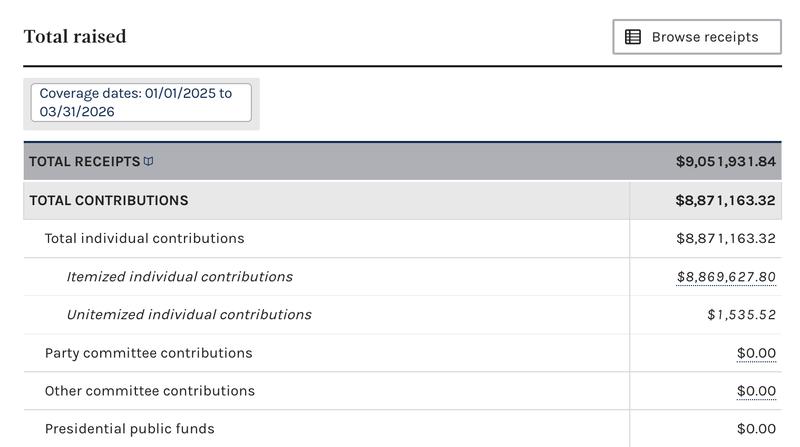
While Federal Election Commission (FEC) records filed through Tuesday revealed no expenditures favoring Husted in 2026, the PAC along with its affiliated organization, Right Vote, committed to deploying over $8 million throughout the Buckeye state. Financial disclosures showed the Sentinel Action Fund collected approximately $9 million between January 2025 and March 2026, with notable donations including $750,000 from the Solana Policy Institute, a digital asset advocacy group, and $250,000 from Multicoin Capital, a crypto investment firm.
The entry of the PAC into Ohio's political landscape may function as an indicator for how cryptocurrency-aligned organizations will deploy resources in forthcoming US elections. During the 2024 election cycle, PACs backed by crypto interests poured over $40 million into the US State to bolster Republican Bernie Moreno's successful campaign to defeat Brown, who had publicly voiced numerous criticisms of cryptocurrency.
Brown, despite losing his position, declared in August his intention to seek Senate office once more. Moreno's seat will not be contested again until 2030.
Ohio Senate race isn't the only one in the state focused on crypto
Vivek Ramaswamy, who previously competed as a Republican candidate for US President and serves as one of the supporters behind Bitcoin (BTC) treasury company Strive, has entered Ohio's race for governor.
After initiating his campaign in February 2025 subsequent to leaving Trump's Department of Government Efficiency (DOGE), Ramaswamy backed initiatives aimed at establishing a strategic BTC reserve within Ohio.
Disclosure: A member of the immediate family of Staff Editor Robert Lakin has contributed to the campaigns of Ohio Democratic gubernatorial candidate Amy Acton and Ohio Democratic Senate candidate Sherrod Brown in amounts less than $200.
Nevertheless, numerous detractors have identified the Republican candidate's financial disclosure documents submitted on April 6 as illustrations of potential conflicts of interest.
Financial records revealed Ramaswamy maintains a 10% ownership position in Strive and stands to potentially gain from appreciation in the company's Bitcoin portfolio value should Ohio's treasury pursue cryptocurrency investments, a decision he would wield considerable authority over as the state's governor. According to Wednesday data, Strive's holdings totaled approximately 13,768 Bitcoin, valued at more than $1 billion.