Crypto industry consolidation gains momentum as BitMEX closes its doors
The closure of BitMEX, a pioneering cryptocurrency derivatives platform, signals the conclusion of an era while industry experts highlight increasing regulatory expenses, market centralization, and migration to licensed exchanges.
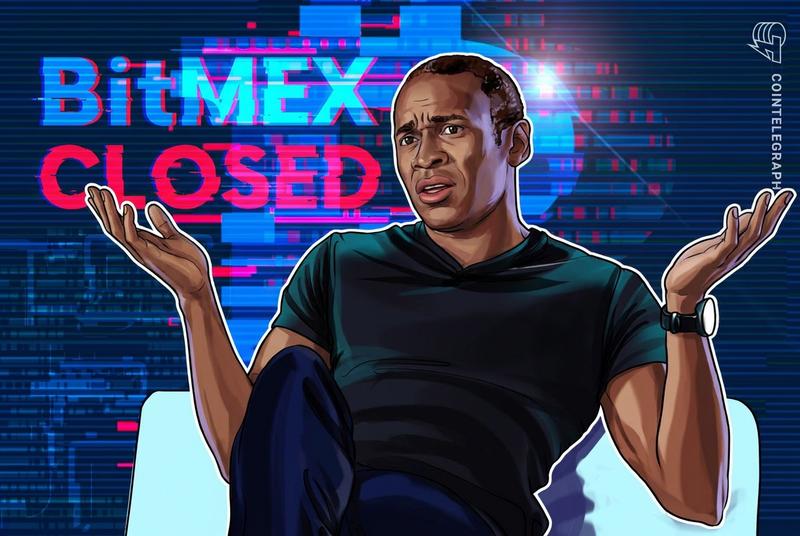
The impending shutdown of BitMEX, a cryptocurrency derivatives trading platform, is raising new concerns about whether the digital asset sector is transitioning into an accelerated consolidation period, with industry observers highlighting the concentration of market dominance and escalating regulatory expenses that are putting pressure on smaller trading venues.
Despite BitMEX's role in pioneering perpetual swaps—which evolved into a fundamental component of cryptocurrency derivatives markets—its daily Bitcoin futures trading volumes started deteriorating in approximately May 2021 and failed to return to the 2020 daily highs of $1 billion to $5 billion, based on information from CryptoQuant.
Roshan Dharia, an adviser specializing in restructuring, explained to Cointelegraph that the platform's closure demonstrates structural challenges confronting medium-sized centralized trading venues, where trading liquidity has progressively aggregated among the sector's dominant entities while the costs of meeting regulatory requirements keep climbing. His statement emphasized:
The top five platforms now control an estimated 80% of global spot volume, leaving mid-tier and regional exchanges with shrinking margins and no viable path to scale... The headwinds are structural, not cyclical.
The fall of BitMEX
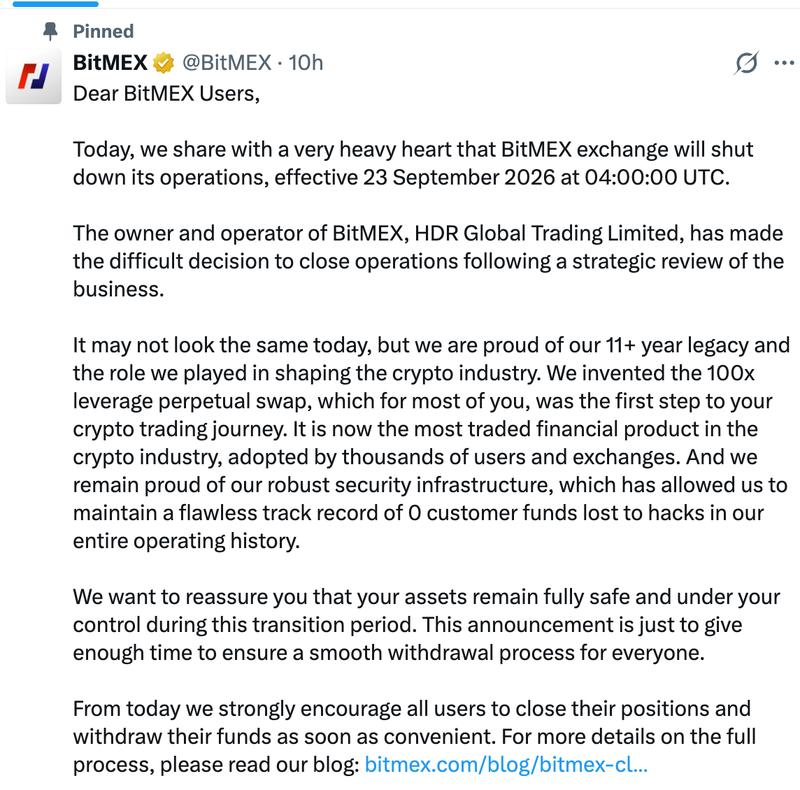
The cryptocurrency derivatives trading platform BitMEX, which was established in 2014 by founders Arthur Hayes, Ben Delo and Samuel Reed, made an announcement on Thursday regarding its impending closure. The cessation of trading activities is set for Sept. 23 after a strategic evaluation conducted by its parent entity HDR Global Trading.
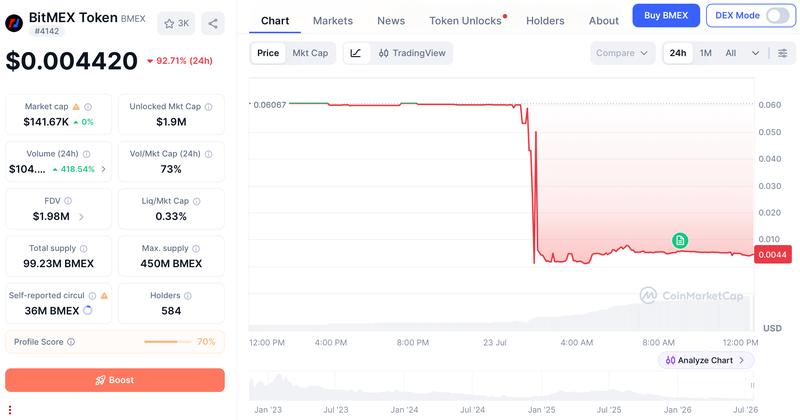
News of the platform's closure additionally set off a dramatic decline in the value of BitMEX's native utility token, BMEX, which experienced a devastating fall exceeding 90% following the exchange's disclosure of its intention to cease operations.
The shutdown disclosure followed an extended period of eroding market position. According to CoinGecko's rankings, BitMEX occupied the ninth position among derivatives trading platforms in August 2023 with just 0.9% of total trading volume. Fast forward to 2025, and the platform had disappeared entirely from the analytics firm's list of the top 10 perpetual contract exchanges, even while yearly perpetual trading volume throughout those leading platforms surged 47.4% to an unprecedented $86.2 trillion.
The rise of regulated competitors
BitMEX achieved market prominence through its provision of offshore perpetual derivatives products many years prior to comparable instruments becoming accessible via regulated trading platforms. In the current landscape, these identical financial products are progressively being made available through licensed exchanges operating in regulatory frameworks including the United States and the United Kingdom.
Within the United States market, Coinbase introduced perpetual-style futures contracts via a Commodity Futures Trading Commission-regulated platform in May following the receipt of no-action relief approval from the regulatory body. The CFTC additionally granted authorization for Bitcoin perpetual futures to Kalshi. Subsequently in June, Kraken entered the space with CFTC-regulated perpetual futures products available to qualifying US customers through its recently obtained Bitnomial exchange platform.
This regulatory evolution has not been limited to United States borders. During the current month, Coinbase obtained a UK investment services license that enables the company to broaden its derivatives offerings in preparation for the nation's forthcoming cryptocurrency regulatory framework.