Crypto experts unlock wallet supposedly worth $1 billion — discover only $10 inside
Experts in cryptocurrency recovery explain the methods used to retrieve access to forgotten wallets, passwords and seed phrases — though recovery proves useless when the funds never existed to begin with.
Back in 2021, Chris Brooks, a specialist in cryptocurrency recovery, received contact from a client who went by the name Rusty. According to Rusty, he and two business associates had been awarded 5,000 Bitcoin through legal proceedings, a sum valued at approximately $53 million during that period.
A Zoom meeting was quickly arranged to go over the details of the situation.
"Three individuals joined the video call, and one of them displayed his mobile device. The screen showed roughly $53 million sitting in a Bitcoin address," recalls Brooks, who serves as founder and chief executive of Crypto Asset Recovery.
According to the trio, they had the capability to extract up to $300,000 weekly, but their goal was to access the complete sum. Their proposition was straightforward: if Brooks and Charlie, his son, would travel to Georgia and assist in unlocking the wallet, the men would ensure they became millionaires.
Father and son purchased airline tickets immediately and departed the following day.
During a meal together, Rusty, standing 6-foot-3 and an Army veteran, disclosed that the wallet held more than just the 5000 BTC.
"Rusty took out his mobile phone and displayed a billion dollars worth of ETH. That moment made me think, all right, there's something extremely strange happening here."
The group then traveled approximately one hour by car to a strip mall that belonged to one of the men, where they entered a rear office and received notebooks filled with numerous recovery seeds. Brooks and his son dedicated the entire day to accessing wallets.
Their discovery amounted to roughly $10 worth of Bitcoin.
Brooks was unable to determine whether the wallets provided to them had ever actually contained the BTC or ETH that Rusty insisted he possessed. The pair also never received compensation for their airplane tickets.
Brooks currently believes Rusty had been targeted by fraudsters who had managed to persuade him that he controlled a substantial crypto fortune that didn't actually exist.
The experience served as an important early education for their cryptocurrency recovery venture.
In some cases, cryptocurrency gets lost. In others, it's the wallet that goes missing. Other times, passwords are forgotten.
And on occasion, as it happens, the funds were simply never present in the first place.
Lost access to crypto doesn't necessarily mean permanent loss
When it comes to wallet recovery professionals, the phrase "lost crypto" can actually refer to multiple distinct scenarios.
These specialists aren't extracting Bitcoin directly from the blockchain; instead, they're retrieving the data required to gain access to an already-existing wallet.
Even if an individual has discarded a hardware wallet, can't recall a password or has misplaced portions of their seed phrase, these circumstances don't automatically mean the actual cryptocurrency has vanished.
"When you're missing some words, it's frequently possible to recover them."
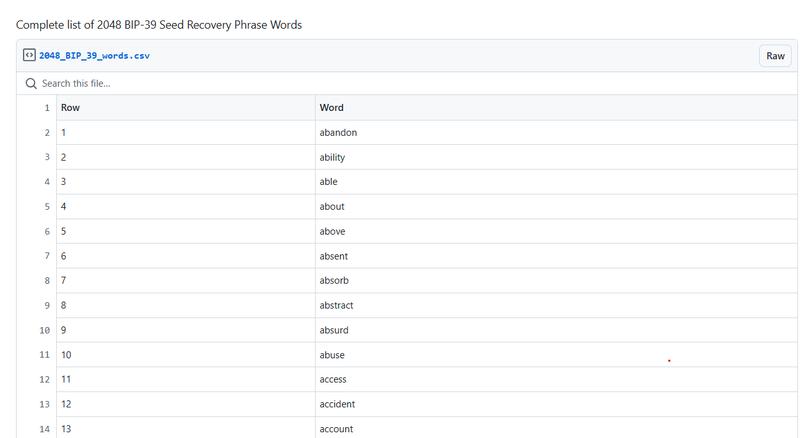
The BIP39 seed phrase standard utilized by Bitcoin draws from a dictionary of 2,048 words, which means that when someone retains knowledge of most words, specialists can often conduct systematic searches through the remaining potential combinations. The smaller the number of missing components, the more feasible the recovery puzzle becomes.
Password retrieval can function along similar principles.
According to Krauss, ReWallet successfully retrieved a 20-character password that was safeguarding approximately $3 million by conducting reverse engineering on a defective password generator.
Different cases rely less on technical vulnerabilities and more on comprehending the way a specific individual constructs their passwords.
This involves questioning clients about their personal inclinations such as preferred cuisine and destinations, the names and birth dates of their children, significant life events or cherished memories.
In a particular instance, he describes how a client remained certain she had incorporated her children's names, only to recall later that the password was in fact a telephone number associated with a neighborhood delivery company:
"She couldn't explain why initially, but after reflection, she understood, oh yes, it was due to receiving a package at the shop that day and thinking, all right, this would make an appropriate password."
Additional complexity arises from passphrases
Tom Bennet, an educator focused on Bitcoin who has examined wallet security extensively, notes there exists another especially perplexing classification: the passphrase.
"An incorrect passphrase won't generate an error message; instead it completes successfully and displays a zero balance."
Therefore, it's possible to possess the accurate seed phrase and input it properly, yet still believe your BTC has disappeared.
"Passphrases lack any safeguards to prevent user mistakes; there's no dictionary of 2,048 approved words, no checksum verification. Therefore if you've lost your passphrase, it becomes essentially the same inquiry again: what level of randomness did your passphrase have? When it's sufficiently random, there's frequently no method to retrieve it."
Regarding lost or damaged hardware wallets, even possessing the damaged device doesn't always provide much assistance. When the wallet's backup seed phrase remains intact, the keys can typically be restored using another device.
This explains why recovery professionals don't always require the original hardware, but rather sufficient information to reconstruct access to the keys.
Recovery might also involve correcting errors instead of retrieving a lost wallet. Cryptocurrency transferred to an incorrect blockchain, such as BNB sent to Ethereum, could potentially be recoverable when the destination wallet falls under the user's control.
According to Brooks, Crypto Asset Recovery has received contracts to unlock over 3,000 wallets owned by approximately 1,500 individuals, and has successfully cracked passwords for roughly 63% of these cases.
In some situations, it's genuinely lost forever
Nevertheless, a firm limitation exists. Bennet explains:
"When your seed is genuinely random and you lose it entirely, your Bitcoin has disappeared."
This represents one of the essential compromises inherent in self-custody. A Bitcoin wallet lacks a bank-style recovery mechanism or a central authority capable of verifying your identity and reinstating your account.
Lucien Bourdon, a Bitcoin analyst employed at hardware wallet manufacturer Trezor, expresses it with even greater directness. When the wallet backup has been lost and the wallet holding the keys becomes inaccessible, "recovery companies are powerless to assist." His warning:
"If such recovery were possible, the wallet would be vulnerable to cracking, and self-custody would be fundamentally undermined."
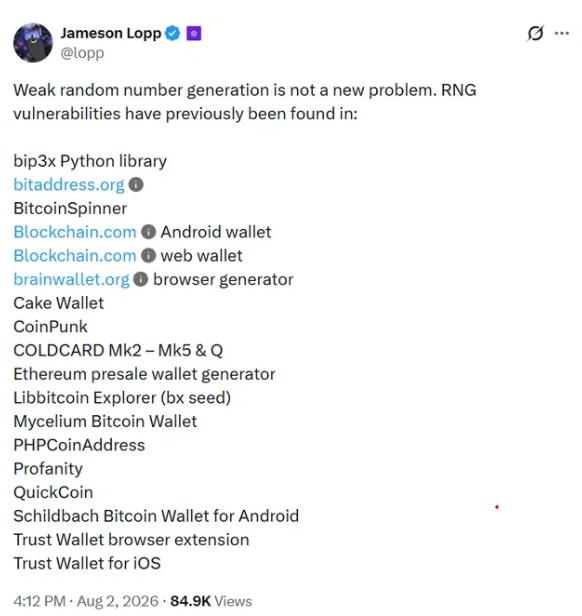
Due to randomness, cryptocurrency wallets render guessing a private key essentially impossible. In the recent incident involving the Bitcoin hardware wallet Coldcard, a firmware defect compromised seed randomness on certain wallets, rendering the seeds vulnerable to brute-force attacks even without physical access.
However, when a truly random seed or private key has been entirely destroyed, the sheer quantity of potential combinations becomes insurmountable.
Krauss indicates that recovery professionals can sometimes identify technical approaches to wallets that owners had believed were irretrievably inaccessible, and that outdated wallet software, damaged files, inadequately generated passwords and hardware weaknesses can all present unusual possibilities:
"Don't abandon hope in edge cases."
Some recovery specialists operate as scammers
An uncomfortable paradox exists within the recovery industry.
The individual who might successfully help you regain access to your cryptocurrency requires the exact same information that grants anyone access to those funds.
A seed phrase differs from a password that can be modified after exposure. Anyone possessing the required wallet backup can frequently control the assets.
This makes selecting a recovery specialist a security choice in its own right. Bourdon advises:
"Should you choose to proceed, conduct thorough research. Search for companies with a genuine track record and testimonials you can verify from real customers. Confirm that they charge based on success instead of requiring upfront payment. And transfer your assets to a fresh wallet with a new backup immediately upon regaining access."
He advises users to also maintain skepticism toward any unexpected messages asserting that someone can retrieve their funds.
According to Krauss, additional red flags include individuals pressuring users to communicate via WhatsApp or reaching out from personal email services like Gmail, requesting upfront payments or instructing them to create accounts at an exchange.
Recovery companies that charge a proportion of successfully retrieved funds operate within normal practice; however, paying money in advance to someone promising to recover a wallet should trigger serious concerns.
Brooks gained another valuable insight from the Rusty incident.
Although cryptocurrency recovery may appear to be a purely technical profession, an individual who believes they control millions or billions of dollars can also present a security threat.
Crypto Asset Recovery has discontinued the practice of traveling to meet clients face-to-face as they did with Rusty. The organization now manages cases through remote processes, with sensitive wallet data handled via automated and air-gapped systems.
Brooks reports that approximately 71% of the wallets they successfully unlock hold less than $100, and the firm doesn't impose a fee for asset recovery below that threshold.
If there's a single piece of knowledge he wishes cryptocurrency users possessed regarding asset recovery, it's the following:
"Understand exactly what a recovery seed represents and the reasons they're critical. That's the most straightforward method to guarantee you'll never need to contact us."