Crypto-Backed PAC Celebrates Primary Victories Despite $2M Florida Setback
A cryptocurrency-focused PAC financed advertisements backing one Democratic and two Republican candidates who emerged victorious in their primary contests, with an Alaskan Republican also poised to move forward.

Five candidates received advertising support from the cryptocurrency-focused political action committee (PAC) Fairshake during Tuesday's primaries, with four successfully winning or advancing to the next stage—a possible indicator of the sector's growing impact heading into the 2026 midterm electoral contests.
Candidates from both major political parties who benefited from advertising campaigns financed by Fairshake's sister organizations, Protect Progress and Defend American Jobs, secured victories throughout three states on Tuesday. The combined expenditure from these PACs reached approximately $3.6 million across congressional contests in Wyoming, Florida, and Alaska.
In Florida's 23rd congressional district, Lois Frankel, a Democrat, secured re-election following Protect Progress's investment of over $150,000 in favorable advertising. Meanwhile, Defend American Jobs allocated a total of $1.5 million toward promotional advertisements backing Wyoming Representative Harriet Hageman's US Senate bid, Sydney Gruters seeking Florida's 16th congressional district seat as a Republican, and Nick Begich running as a Republican for Alaska's at-large congressional district. Primary victories were achieved by Hageman and Gruters, with Begich anticipated to progress in Alaska.
These four victorious candidates are positioned to encounter opposition during the November 2026 midterm elections, however, a Democratic contender in Florida's 24th district prevailed despite facing over $2 million in attack advertisements financed by Protect Progress. With 34.4% of votes cast, Oliver Gilbert emerged triumphant over his opponents Kendrick Meek and Shevrin Jones in a contest that highlighted questions regarding the cryptocurrency sector's political reach.
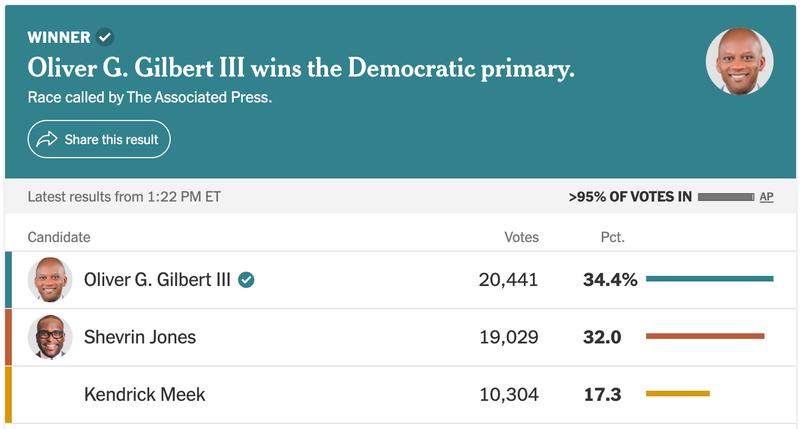
A Miami Herald article published Aug. 12 quoted Gilbert characterizing the Protect Progress advertisements as "crypto con artists trying to buy a Democratic primary" orchestrated by "[Donald] Trump's tech billionaire buddies." The publication noted that fabricated Miami Herald headlines appeared in the ads, distorting Gilbert's actual policy stances, although a PAC representative maintained that "the underlying facts in our ad are true."
Fairshake PAC, which according to January reports maintained a war chest totaling $193 million, financed in excess of $130 million in advertisements during the 2024 electoral cycle supporting candidates deemed favorable to cryptocurrency interests while targeting those who criticized the sector or voted against its priorities. By June, the committee's spending on 2026 midterm races had surpassed $82 million.
During his victory address Tuesday evening, Gilbert made no reference to either the cryptocurrency sector or the advertising campaign. Geoff Vetter, spokesperson for Fairshake, stated the PAC was "just getting started building the largest pro-crypto Congress in history" in the aftermath of primary results from the three states and additional candidate successes in 2026.
Makeup of next Congress to impact crypto market structure law?
The US House of Representatives and Senate remain in recess through September, at which point the Senate has scheduled consideration of a cloture motion regarding the Digital Asset Market Clarity (CLARITY) Act, proposed legislation designed to create comprehensive regulatory frameworks for digital assets. Despite the bill's passage through the House in July with bipartisan backing by a 294-134 margin, numerous Democratic senators have advocated for enhanced ethics requirements connected to cryptocurrency investments by the Trump family.
The composition of US Congress could transition from Republican to Democratic control based on results from crucial races in the 2026 elections, contests potentially swayed by organizations such as Fairshake. Representatives elected this November will have authority to either facilitate or obstruct crypto-related legislative measures, including CLARITY, should the current congressional session fail to take action on the proposal prior to 2027.