Coinbase backs ProShares ETF designed to manage stablecoin reserve holdings
A major cryptocurrency exchange has placed an undisclosed sum into ProShares' Treasury-oriented ETF developed for the post-GENIUS landscape while legislators weigh the question of yield-generating stablecoin products.

Major cryptocurrency platform Coinbase has placed capital into a stablecoin-oriented money market fund from ProShares, wagering that appetite for reserve-management solutions for stablecoins will expand following the recent passage of the GENIUS Act, which establishes formal guidelines for the asset types permitted to support dollar-pegged digital tokens.
The cryptocurrency exchange Coinbase (COIN) revealed on Tuesday that it had committed an unspecified sum to the ProShares GENIUS Money Market ETF (IQMM), a fund engineered to contain assets that meet the reserve requirements for payment stablecoins as outlined in the Guiding and Establishing National Innovation for US Stablecoins (GENIUS) Act.
Under the GENIUS Act framework, stablecoin issuers must ensure their tokens are supported by highly liquid assets, which include cash holdings, deposits at banking institutions, and Treasury securities with short-term maturity dates. The IQMM fund was developed to offer market participants access to these categories of reserve assets via a publicly available traded fund format.

The IQMM fund, which made its debut in February, maintains an exclusive portfolio of short-duration US Treasury securities and instruments classified as cash equivalents that mature within 93 days or fewer. ProShares has indicated that this represents among the earliest exchange-traded funds developed with a specific focus on stablecoin reserve administration.
The digital currency exchange stated that this capital deployment corresponds with its expanding stablecoin operations and treasury management functions. Given its position as a key infrastructure partner for Circle's USDC (USDC), Coinbase maintains a strategic interest in broadening the availability of regulated, highly liquid investment options for the administration of stablecoin reserve portfolios.
CLARITY Act hangs in the balance as stablecoin yield debate intensifies
When the GENIUS Act became law in June 2025, it represented a significant turning point for stablecoin regulation in the United States, yet legislators continue to deliberate on more comprehensive reforms addressing the structure of cryptocurrency markets.
Central to this ongoing legislative effort stands the Digital Asset Market Clarity (CLARITY) Act, which seeks to create regulatory frameworks governing markets for digital assets while clarifying the jurisdictional boundaries of federal oversight bodies. The proposed legislation picked up speed after legislators added fresh provisions addressing stablecoin yield capabilities, triggering a more expansive conversation around the question of whether companies issuing stablecoins should have permission to distribute interest payments on stablecoin balances.
The proposed legislation moved forward through the Senate Banking Committee during the previous month, positioning it for consideration by the full Senate chamber. That said, advancement has been inconsistent, as certain Democratic legislators advocate for enhanced ethics requirements and conflict-of-interest safeguards connected to digital asset activities.
During May, White House crypto adviser Patrick Witt indicated that administration representatives were aiming for the timeframe surrounding the July 4 Independence Day holiday to push forward legislation addressing crypto market structure. Nevertheless, uncertainty persists regarding whether legislators can achieve that targeted deadline given continuing points of contention.
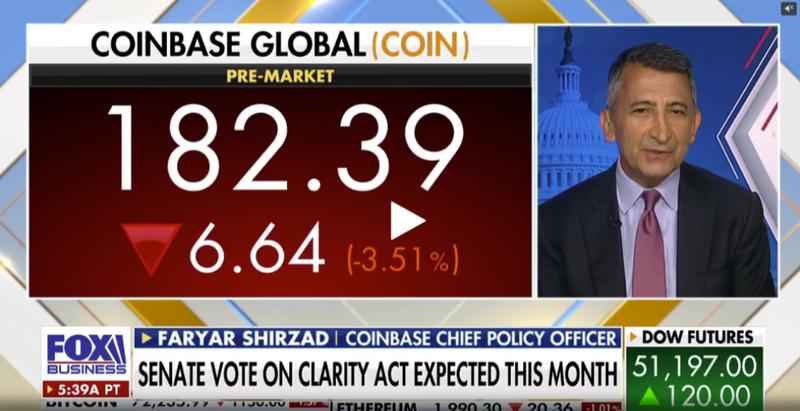
A substantial portion of the opposition originates from the traditional banking sector, which has maintained vocal resistance to the proposed legislation. During the previous week, Jamie Dimon, CEO of JPMorgan, stated that banking institutions would mount opposition to the bill as currently drafted, contending that permitting cryptocurrency companies to provide yield on stablecoin deposits would establish an asymmetric competitive environment between traditional banks and digital asset enterprises.