CLARITY Act's Ethics Provisions Would Prohibit US Government Officials from Token Creation Through 2029
Senator Cynthia Lummis confirms the legislation's ethics requirements would encompass cryptocurrency projects launched by US presidents, specifically those associated with Donald Trump.

The proposed legislative text for the Digital Asset Market Clarity (CLARITY) Act has been made public by Senate Republicans, featuring ethics-focused provisions that would prevent all federal government officials in the United States — President Donald Trump included — from creating or endorsing any form of digital asset.
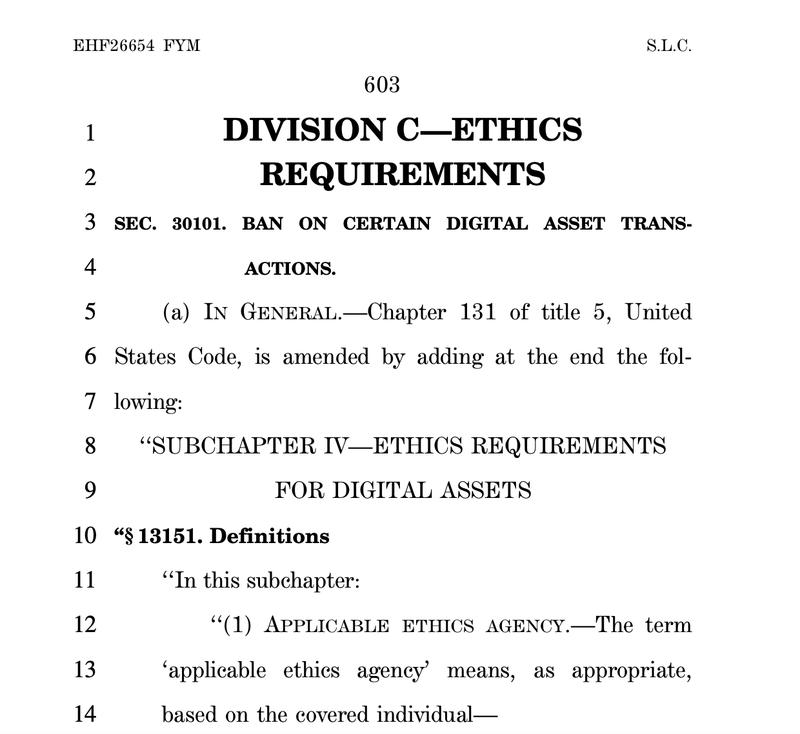
As stated by Senator Cynthia Lummis, among the bill's primary supporters, these ethical guidelines would extend to Trump as well, who has encountered considerable resistance from congressional members regarding his accumulation of over $1.4 billion throughout 2025 from cryptocurrency-related business activities. This prohibition on government officials would remain in effect temporarily, with an expiration date of Jan. 20, 2029 — coinciding with the conclusion of Trump's second presidential term.
Enforcement of this prohibition will primarily fall under the jurisdiction of the US Attorney General instead of state-level authorities. As of this Wednesday, Todd Blanche, Trump's previous personal lawyer and acting AG, remained in the queue for a Senate confirmation vote to assume leadership of the Justice Department.
I wouldn't support the bill if that's the language. But we'll keep working from that floor to reach an agreement that holds us all accountable.
Senator Angela Alsobrooks in a Tuesday statement to Politico
The CLARITY Act, currently pending a possible Senate vote before it would move back to the House of Representatives and potentially to Trump for signature, requires backing from multiple Democratic legislators to achieve the necessary 60-vote threshold. Numerous Democrats have stated unequivocally that they will refuse to support any legislation lacking robust ethics language designed to confront what several have characterized as the president's "crypto corruption."
Will enough Democrats sign onto the bill?
Of particular note, the temporary prohibition outlined in CLARITY's ethics sections does not seem to extend to the children of government officials. Trump's three sons all serve as co-founders in the family's World Liberty Financial cryptocurrency enterprise, while two of them established American Bitcoin, a Bitcoin (BTC) mining operation.
This bill applies one ethics standard to everyone, including the President of the United States, and backs it up with real enforcement, real penalties, and a Department of Justice mandate to act. This is not talk.
Senator Cynthia Lummis on behalf of the US Senate Banking Committee's subcommittee on digital assets
According to reports, Senate Majority Leader John Thune intends to bring CLARITY to the Senate floor for voting during the upcoming week, irrespective of whether sufficient Democratic support has been secured for passage.
[E]thics is far from the only thing at stake. The Senate has added a full disclosure regime, an entire illicit finance section, and improved spot market regulation [...] The Senate has a real chance to pass durable, bipartisan market structure legislation.
Solana Policy Institute President Kristin Smith in reaction to the CLARITY text