BTC Tumbles Under $79K Amid Macro Concerns: Will Bond Market Exodus Provide Relief?
Bitcoin confronts macroeconomic challenges and diminished appetite for bullish leverage, though bond market capital flight presents optimistic prospects.

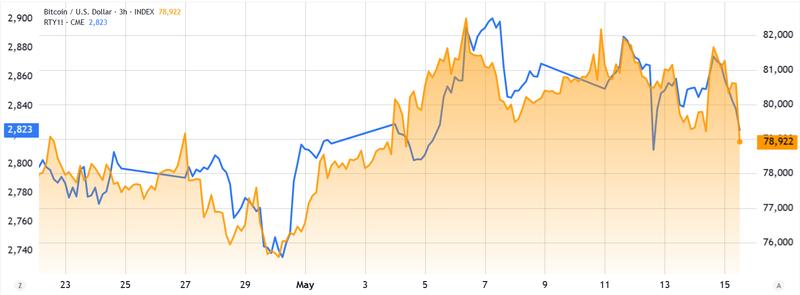
Bitcoin (BTC) experienced a significant decline on Friday after being rejected at the $82,000 level during the previous trading session. The digital asset's recent price action has demonstrated strong similarities to movements in the US small-capitalization equity index, suggesting that broader macroeconomic conditions are the primary catalysts behind the plunge beneath $79,000.
The market uncertainty triggered a widespread sell-off across fixed-income securities. Paradoxically, this development might pave the way for Bitcoin to initiate a prolonged bullish rally throughout the upcoming weeks.
Key takeaways:
- Strong correlation with US small-cap equities combined with a lack of appetite for bullish leverage positions expose Bitcoin to broader macroeconomic vulnerabilities.
- Capital exodus from fixed-income markets may eventually channel fresh liquidity toward Bitcoin over the medium-term horizon.
Bitcoin surrenders $80,000 threshold as elevated oil prices and recession concerns mount
The US small-capitalization equity index focuses on companies outside the top 1,000 largest firms, thereby eliminating heavy exposure to technology sector concentration. Crucially, these smaller companies present elevated risk profiles stemming from comparatively modest earnings and reduced financial resilience when confronting deteriorating market environments.
Additionally, borrowing costs for these smaller enterprises typically run higher, rendering them particularly vulnerable to fluctuations in interest rate policies.
The tight correlation observed between Bitcoin and the Russell 2000 Index suggests that Bitcoin is presently being treated as a risk-on asset rather than functioning as a protective hedge.
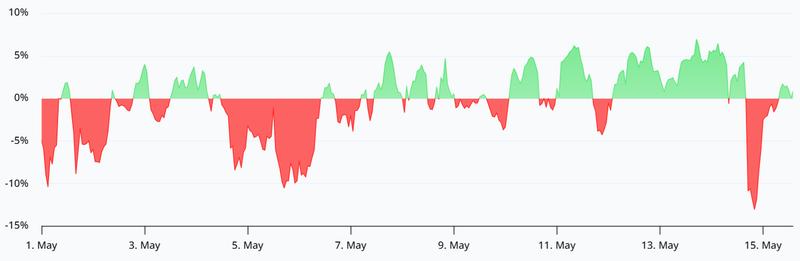
The funding rate for Bitcoin perpetual futures contracts turned sharply negative on Thursday before stabilizing near 0% on Friday. Appetite for leveraged long positions has been largely nonexistent, with the metric hovering below the neutral 6% benchmark throughout the preceding two weeks. Repeated efforts to pierce the $82,000 resistance level failed to generate trader conviction, indicating persistent skepticism regarding additional upside potential.
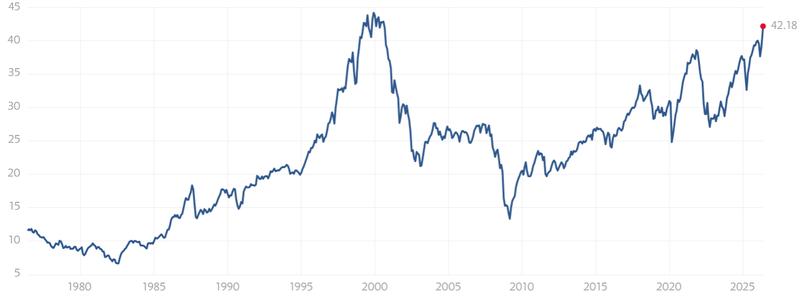
Market participants may have chosen to trim their positions in advance of the weekend trading period, which represents a rational response given the uncertainties surrounding the ongoing conflict in Iran. A pervasive sense of heightened risk dominates the marketplace as the equity market trades merely 5% beneath the peak valuation reached during the dot-com bubble of January 2000, based on the 10-year S&P 500 inflation-adjusted Shiller price-to-earnings ratio.
Strength within the technology sector propelled the Nasdaq 100 Index to a record high on Thursday. Nevertheless, the positive sentiment dissipated on Friday following lackluster outcomes from the US-China Summit held in Beijing. Tangible agreements regarding import tariff reductions remain absent, with only commitments to expedite US agricultural product exports "over the next three years," according to The Guardian.
Capital flees bond markets, creating near-term market turbulence
Furthermore, China's foreign ministry purportedly declared that the conflict in Iran "should never have happened" and "has no reason to continue." Crude Brent oil quotations surged to $106 from $99 recorded one week earlier, applying additional upward force on inflationary pressures. This price action has prompted investors to abandon government bonds, anticipating that central banks will probably be compelled to inject liquidity to prevent an economic downturn.
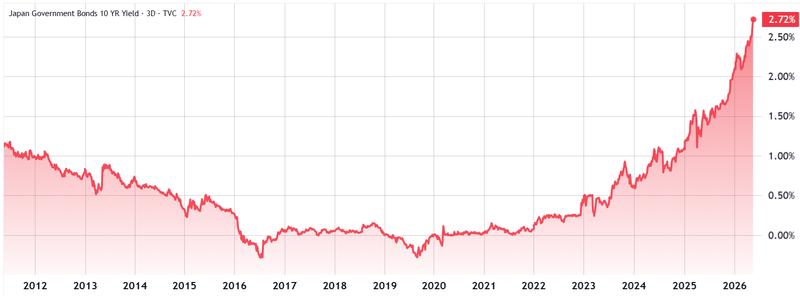
Returns on the 10-year government bond climbed to their most elevated levels in more than two decades. A comparable pattern emerged across Eurozone 10-year bond yields, which escalated to 3.18%, representing the highest point in 15 years. Capital departing from fixed-income securities will inevitably pursue returns in alternative markets. Consequently, the unstable economic landscape could potentially deliver advantages to Bitcoin across the medium-term timeframe.
At present, Bitcoin's near-term price fragility can be attributed to its tight correlation with small-cap US equities, an absence of demand for leveraged BTC long positions, the ongoing war in Iran and anxieties surrounding a potential economic crisis.