BTC Rebounds From Fresh 2026 Lows: Could Weakening US Equities Drive Bitcoin Further Down?
The path back to $60,000 for Bitcoin faces obstacles including massive ETF withdrawals, options market bearishness, and equity markets heavily weighted toward artificial intelligence stocks.

Key takeaways:
- Escalating withdrawals from spot Bitcoin ETFs combined with options expiry weighted toward puts signal weakening institutional appetite.
- The risk-reward balance now favors technology equities, forcing cryptocurrency market participants to look for catalysts outside of broader macroeconomic trends.
Bitcoin (BTC) experienced a 9% decline over a three-day period, reaching its weakest point since September 2024. The drop to $58,000 caused more than $1 billion worth of bullish BTC leveraged trades to be liquidated. While Bitcoin managed a slight rebound to $59,500, market participants continue to feel apprehensive as both the S&P 500 index and gold completely reversed their earlier session declines.
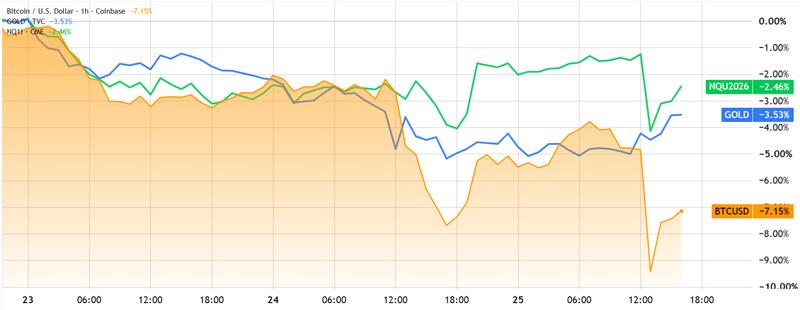
Thursday's market selloff coincided with the publication of the US Personal Consumption Expenditures index, revealing a 4.1% year-over-year rise in May. However, as Crude Brent oil retreated to $75 from $95 merely one month prior, market participants gained increasing confidence that inflationary pressures had reached their zenith. Consequently, the capital liberated through reduced energy expenses is providing support to equity markets.
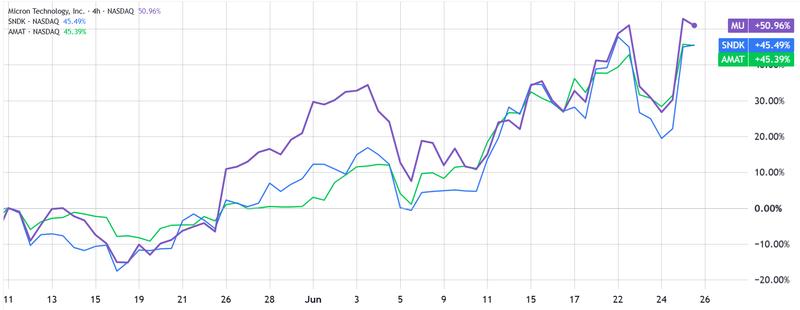
The technology industry continued to produce impressive results, with Micron Technology (MU) surging 16% following robust quarterly financial results and Sandisk (SNDK) experiencing an 18% rally in sympathy. Applied Materials (AMAT) climbed 10% due to its innovative chipmaking equipment. The sector's resurgent investor confidence also reflects the current US government administration's recent policy priorities.
Fixed income offers a more compelling hedge alternative
While Bitcoin doesn't compete directly with the artificial intelligence industry, market participants' assessment of risk versus reward has probably shifted in favor of equities. This transition occurred as the US government acquired a 9.9% position in Intel, announced $2 billion in funding for quantum computing companies, made federal lands available for data center development, and established a regulatory structure for "frontier models" deployment.
Market participants concerned about excessive AI sector valuations following Elon Musk's SpaceX (SPCX) shares dropping 32% from their high point can take solace in 5-year US Treasuries offering 4.15% yields. Interest in non-income-generating assets such as Bitcoin diminished as market participants now anticipate an 80% probability of US interest rate increases by December, compared to 68% one month prior, based on data from the CME FedWatch Tool.
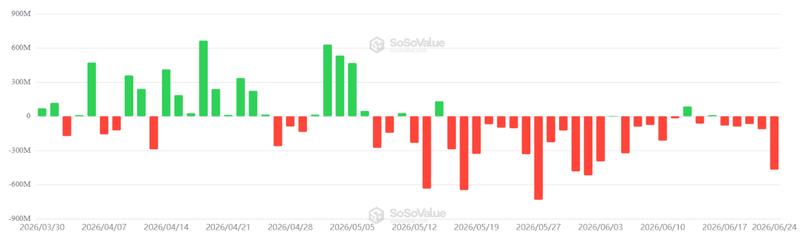
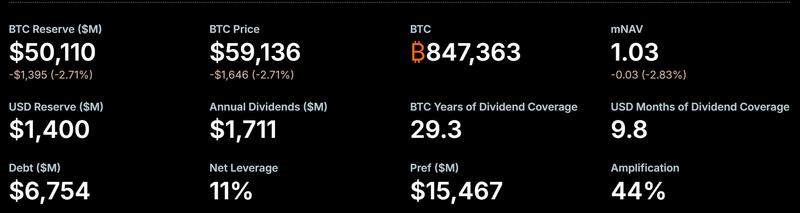
Bitcoin's attractiveness also suffered from the substantial $469 million in net withdrawals from spot BTC exchange-traded funds (ETFs) on Wednesday. This indicator functions as an important measure of institutional interest. Market sentiment deteriorated even more as Strategy (MSTR) currently holds a significant unrealized deficit following its purchase of $64.1 billion in Bitcoin starting in 2020.
Friday's approaching $13 billion Bitcoin options expiration strongly benefits put (sell) contracts. The majority of neutral-to-bullish trading approaches will probably end without value, considering that 78% of call (buy) options are set at $72,000 or higher. Open interest in put options on Deribit will surpass call options by $3.4 billion.
Bitcoin's price action demonstrates minimal correlation to equities given substantial ETF withdrawals, a bearish tilt in options expiry, and Strategy's growing unrealized deficits. Bitcoin market participants must now search for distinct catalysts independent of stock market momentum to ignite a reversal.