BTC Dips Below $71K Yet Bullish Market Indicators Remain Strong
While Bitcoin has fallen beneath the $71,000 threshold, bullish market dynamics persist thanks to continued spot ETF accumulation and Strategy's ongoing BTC purchases driving positive investor outlook.

Key takeaways:
Demand in the spot market via US-listed ETFs combined with Strategy's BTC accumulation continues to underpin Bitcoin's positive momentum.
Bitcoin bulls are maintaining low leverage positions, which minimizes the threat of cascading liquidations should prices decline an additional 5%.
Growing inflation worries are hurting fixed-income asset performance, potentially setting the stage for capital rotation from gold toward Bitcoin.
Bitcoin (BTC) experienced a 7% pullback following its approach toward the $76,000 mark on Tuesday. This decline came on the heels of weakness in US equity markets triggered by oil price spikes resulting from Israel's strike on Iran's most significant gas processing facility and the US producer price index exceeding forecasts.
Notwithstanding the recent price decline, evidence suggests that Bitcoin's positive momentum remains intact, particularly when examining how the S&P 500 and US Treasuries have performed amid deteriorating macroeconomic fundamentals. Furthermore, Bitcoin bulls have demonstrated restraint in their use of leverage, thereby minimizing the potential for cascading liquidations.
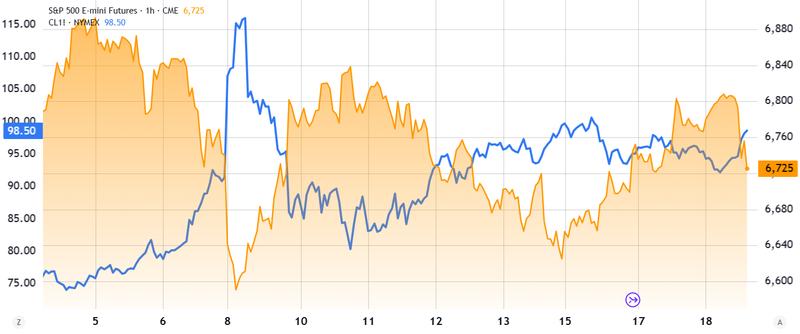
On Wednesday, the S&P 500 index was trading just 4% beneath its record peak despite recent disappointing US employment market statistics and persistent pressure stemming from the ongoing Iranian conflict. Data from the US showed continued jobless claims holding relatively stable at 1.85 million for the week that ended March 7. On Wednesday, US authorities announced that wholesale prices climbed 3.4% in February compared to the previous year, marking the most substantial increase seen in 12 months.
With oil prices climbing beyond $98, market participants grew increasingly certain that the US Federal Reserve would be unable to implement monetary policy easing during 2026. The CME FedWatch Tool indicated that the probability of interest rates remaining unchanged through September fell to 42% on Wednesday, down from 89% recorded one month earlier, based on implied probabilities derived from futures markets.
Bitcoin facing headwinds as extended conflict risks increase investors' risk aversion
Persistent inflation combined with the possibility of an extended military conflict diminished the likelihood of economic stimulus aimed at expansion, prompting investors to retreat from risk assets. Nevertheless, there is insufficient evidence to suggest that market participants are anticipating an immediate market collapse, at least when evaluating how interest rates are valued in relation to inflation forecasts.
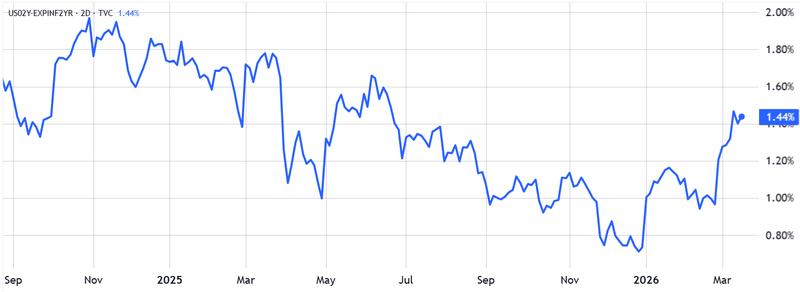
The yield on 2-year Treasury notes stood at 3.71% on Wednesday, whereas the Cleveland FED's 2-year inflation forecast registered 2.27%, producing an inflation-adjusted return of 1.44%. During episodes of severe market fear, elevated demand for government bonds typically produces returns approaching zero or turning negative. In contrast, diminished trust in US monetary policy can drive this metric to 2.5% or higher.
Should Bitcoin experience an additional 5% decline in coming weeks, there are no signs pointing to excessive leverage utilization from bulls, suggesting minimal risk of cascading liquidations. The recent upward momentum has been underpinned by spot market activity, particularly through accumulation by US-listed spot Bitcoin ETFs and Strategy's (MSTR) aggressive purchasing campaign.
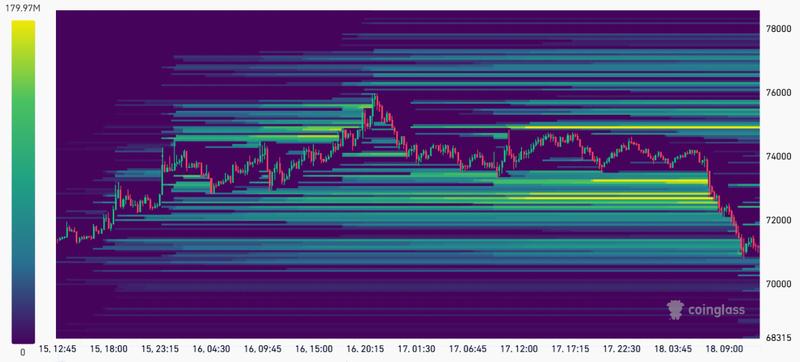
According to CoinGlass estimates, approximately $450 million in leveraged long Bitcoin futures positions would face forced liquidation if prices decline to $68,000, which accounts for under 1% of the total $49 billion in aggregate open interest. The funding rate for Bitcoin perpetual futures validates that bears are exhibiting excessive confidence as demand for leveraged short positions has risen.
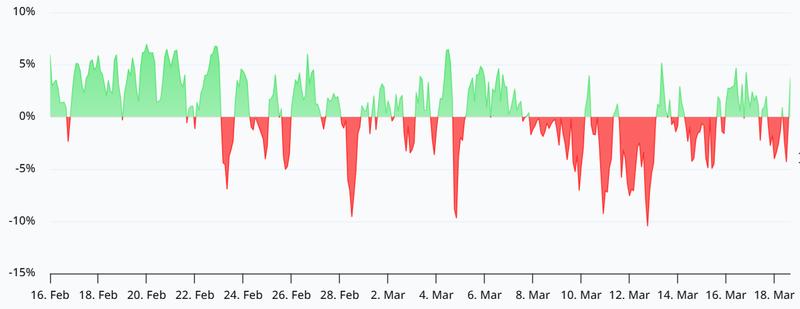
When the funding rate turns negative, it indicates that short position holders are paying fees to maintain their positions. Significantly, this metric remained beneath the neutral 6% to 12% threshold even during Bitcoin's surge past $76,000, supporting the argument that spot market demand is driving momentum instead of speculative activity in derivatives markets.
The price of gold retreated to $4,900 on Wednesday, demonstrating signs of fatigue after maintaining levels above $4,800 throughout four weeks. A potential rotation away from gold investments could serve as the catalyst for a sustained Bitcoin rally, particularly as inflation concerns continue to diminish expected returns from fixed-income securities. In summary, there is minimal evidence suggesting that Bitcoin's current bullish momentum has weakened.