Bitcoin Traders Eye Bank of Japan Policy Meeting: Could Rate Hike Trigger Another Selloff?
Historical market patterns indicate that the Bank of Japan's scheduled rate-hike announcement next week could substantially influence Bitcoin's market trajectory.

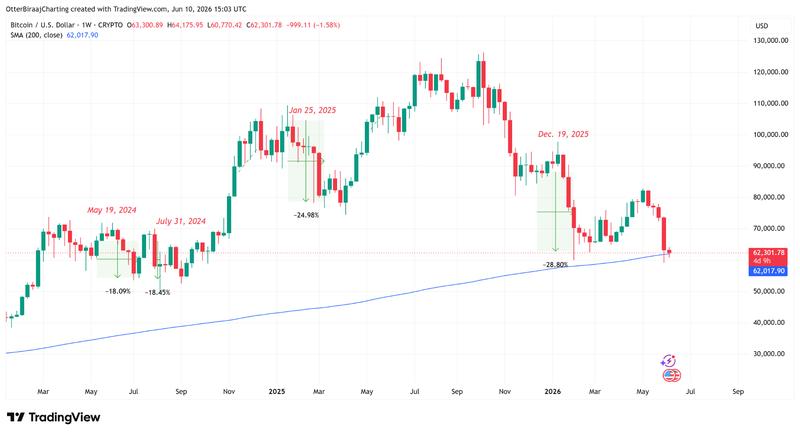
Throughout 2024, Bitcoin (BTC) has experienced four significant price corrections following interest rate increases implemented by the Bank of Japan (BOJ), with price drops spanning from 18% to 28%. This historical pattern draws fresh scrutiny to the upcoming BOJ policy announcement scheduled for June 16.
Current market indicators suggest multiple factors exerting downward pressure on BTC, with large holder distribution patterns and cryptocurrency exchange deposits potentially wielding greater influence than Japan's central bank monetary decisions.
BOJ hikes and Bitcoin drawdowns: Will history repeat?
The correlation between BOJ monetary policy and Bitcoin pricing has attracted considerable attention due to the fact that every rate hike since Japan abandoned its negative interest rate framework has been accompanied by substantial downward price movement.
In the aftermath of the March 19, 2024, rate increase, Bitcoin experienced an 18% correction. The rate adjustment on July 31, 2024, was followed by an 18.5% price decline.
Following the rate hike on Jan. 24, 2025, Bitcoin dropped approximately 25%, whereas the Dec. 19, 2025, policy adjustment preceded a 28% price drawdown.
When examining all four instances together, Bitcoin's mean decline registered at 22.4%.
These price corrections did not materialize under uniform market circumstances. The March 2024 downturn came after Bitcoin's surge to fresh all-time highs amid the spot Bitcoin exchange-traded fund (ETF) launch cycle. The July 2024 selloff emerged after several months of sideways price action beneath peak valuations and aligned with the dramatic unwinding of the yen carry trade, which impacted international financial markets.
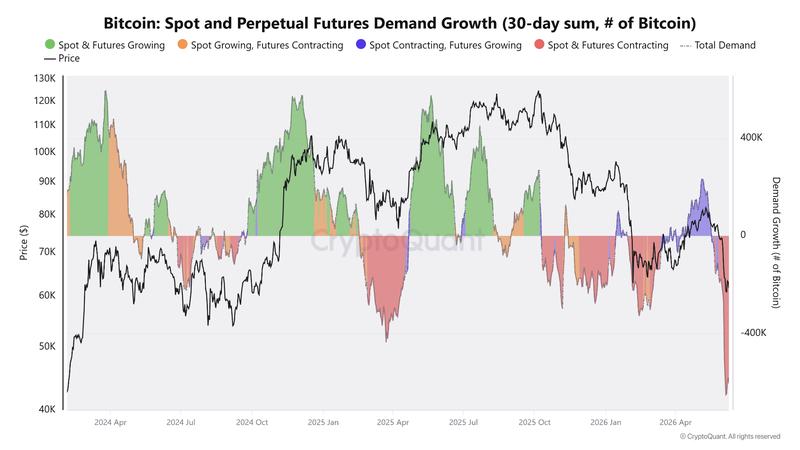
The January and December 2025 price declines materialized after prolonged upward trends and intervals of declining growth for both BTC spot and futures 30-day market demand.
The connection between BOJ monetary decisions and Bitcoin performance is frequently attributed to the yen carry trade mechanism. Over multiple years, market participants borrowed Japanese yen at minimal interest rates and channeled that liquidity into assets offering superior returns, including equities and digital currencies.
When the BOJ implements rate increases, certain carry trade positions face unwinding pressure, creating headwinds for risk-oriented assets. The July 2024 rate hike aligned with one of the most significant carry-trade reversals in recent history and a pronounced selloff throughout international markets, extending beyond BTC alone.
The impact of this specific dynamic appears diminished at present. The BOJ has elevated rates to 0.75% from -0.1% since March 2024, while Japan's 10-year government bond yield has advanced to 2.68% from 0.63% during the identical timeframe.
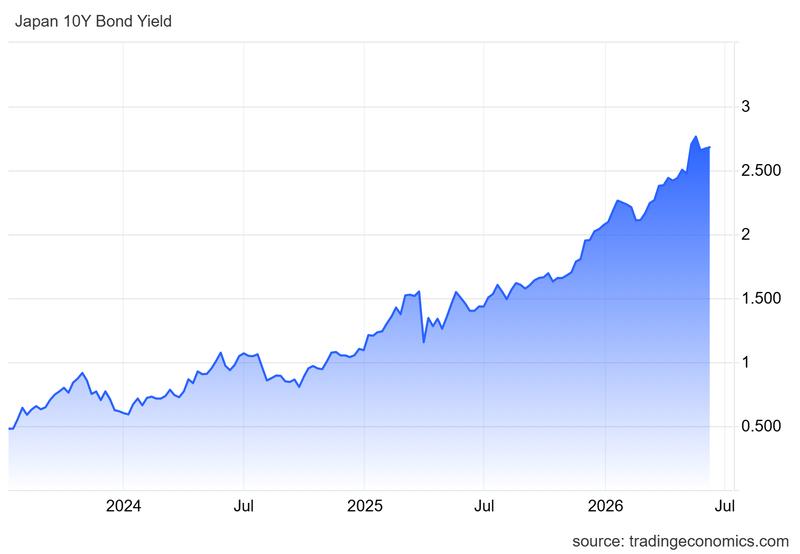
Given that Japan's funding costs have already elevated substantially from the negative-rate period, every subsequent rate increase constitutes a more modest policy adjustment compared to the BOJ's original departure from exceptionally accommodative monetary conditions. The June 16 policy meeting would represent a continuation of the current tightening trajectory rather than marking the initiation of a fresh cycle.
Similarly, market analyst Cryptic Trades observed that anxieties surrounding a renewed yen carry-trade unwinding are exaggerated, contending that Japan has successfully transitioned away from its deflationary monetary framework in 2024. The analyst added,
"The Yen Carry Trade has been dead ever since 2024. It is also a BIG nothing burger for the markets."
BTC whales add to the pressure
Although the BOJ policy meeting represents a macroeconomic event warranting trader attention, blockchain data reveals a more direct source of selling pressure.
Crypto analyst MorenoDV highlighted that Binance has observed increasing BTC deposits from addresses containing 100–1,000 BTC and 1,000–10,000 BTC since the market downturn commenced in early June. Consequently, the exchange's 30-day whale deposit aggregate has surged to $6.6 billion.
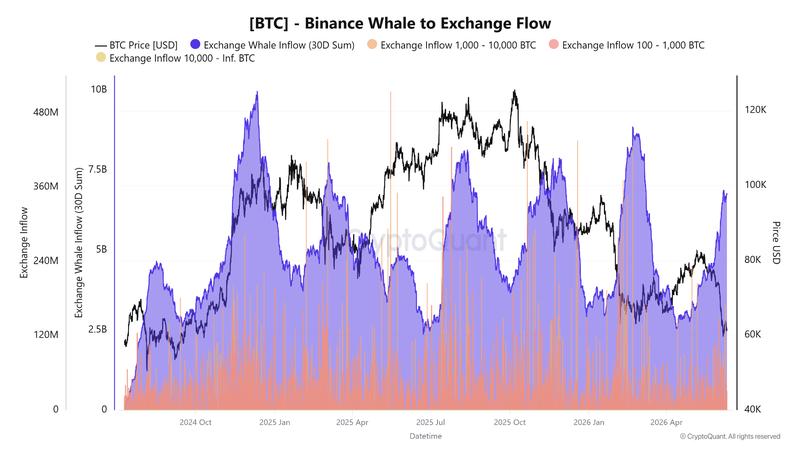
This selling pressure is already evident in realized transaction activity. Short-term and long-term large holders have collectively crystallized over $2.5 billion in losses throughout the price decline, demonstrating that certain major stakeholders have proactively decreased their market exposure.
Short-term large holders appear especially susceptible to additional selling. This group is currently holding approximately $16 billion in unrealized losses following a brief return to profitability lasting roughly 10 days in early May. These holdings now hover near cost-basis levels, establishing a potential supply source during price recoveries. MorenoDV said,
"Taken together, these three readings describe the stress profile of a late-stage bear market: capitulating whales, distribution into weakness, and a fragile short-term cohort with its finger on the trigger."