Bitcoin Network Sees 10% Mining Difficulty Reduction in Historic Adjustment
The Bitcoin mining difficulty experienced its second-most significant downward adjustment of 2026 on Sunday, coming after a similar 11% reduction that occurred in February.

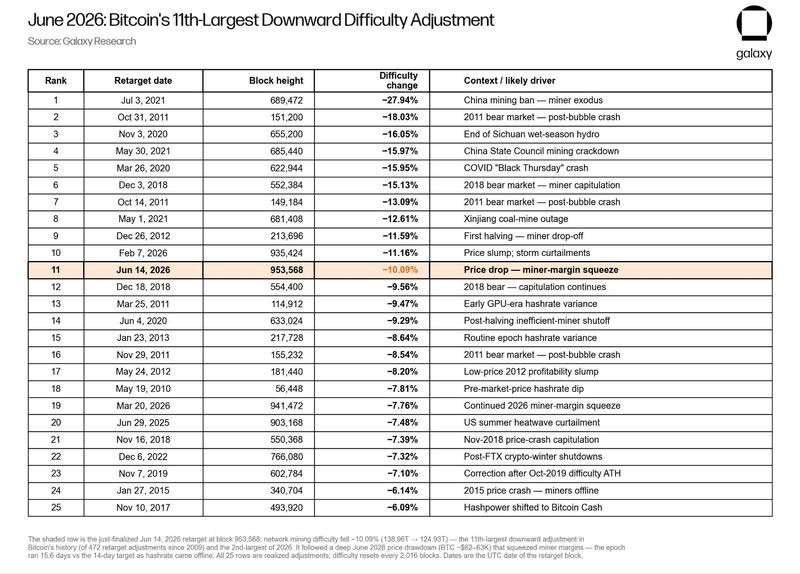
On Sunday, Bitcoin's mining difficulty experienced a 10.09% reduction, representing the network's eleventh-most significant downward adjustment in history and providing some relief to cryptocurrency miners facing challenging market conditions.
According to Galaxy Research, the mining difficulty decreased from 138.96 trillion to 124.93 trillion at block 953,568 on Sunday, representing 2026's second-largest reduction and marking a 20% decline from the peak levels recorded in November.
Bitcoin (BTC) has experienced approximately a 15% price decline during June so far, resulting in what Galaxy described as "squeezed miner margins." The research firm noted that the epoch—the interval between mining difficulty adjustments—extended to 15.6 days, exceeding the standard 14-day period, as mining hashrate went offline.
The mining difficulty mechanism maintains consistent block production rates despite fluctuations in the total mining power operating on the network. This reduction indicates that Bitcoin miners will face less challenging conditions when mining blocks, since the declining hashrate translates to reduced competition among miners.
The total hash rate, representing the aggregate computing power dedicated to mining, currently stands at 886 exahashes per second (EH/s). This figure reflects a 12% decrease throughout June and represents a 23% drop from the October peak, based on data from Blockchain.com.
According to crypto trader Merlijn Enkelaar, the miners that continue operating are now generating approximately 9% more revenue per machine following this adjustment.
Bitcoin's mining difficulty experienced a more than 11% decline in February, attributed to storm curtailments and a 25% crash in BTC prices. The largest difficulty decrease ever recorded occurred in July 2021, following China's mining ban and the subsequent mass exodus of miners from the country.
The upcoming difficulty adjustment is anticipated on June 27, with Coinwarz forecasting a modest 1.69% increase that would bring the difficulty to approximately 127 trillion.
Hashprice returns to above $30
The hashprice, a metric that quantifies the expected earnings miners can generate from a given amount of hashrate, has risen 13% following the difficulty reduction and currently stands at $33 per Petahash per second per day, based on data from Hashrate Index.
This represents a significant threshold because it enables more mining operations to reach a gross breakeven point, as The Energy Mag noted in its Saturday report.
The publication noted that mining fleets operating efficient equipment will maintain profitability even at lower hashprice levels, whereas older-generation mining machines with higher electricity consumption costs are more likely to be shut down.