Bitcoin Mining Operations Gain Strategic Position in AI Data Center Market, Bernstein Reports
According to Bernstein, cryptocurrency miners are gaining a competitive advantage in providing electrical power and data center infrastructure for artificial intelligence applications due to grid infrastructure challenges and increasingly stringent permitting requirements.

Cryptocurrency mining companies are positioning themselves as key players in the artificial intelligence infrastructure ecosystem due to their ownership of substantial electrical capacity and data center facilities that have become progressively harder to obtain, a recent analysis from Bernstein indicates.
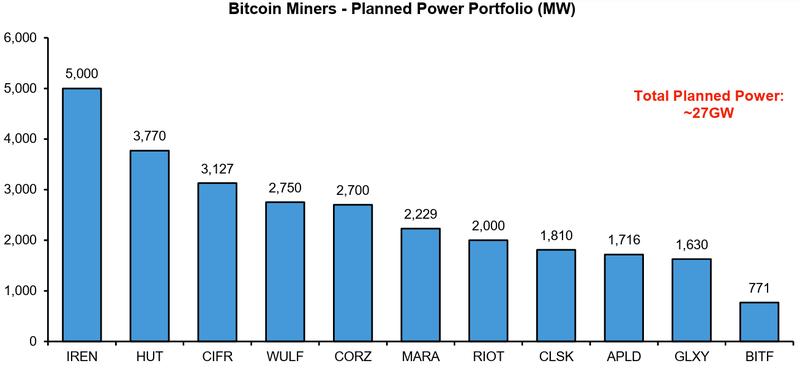
Research analysts Gautam Chhugani, Mahika Sapra, Sanskar Chindalia and Harsh Misra project that publicly listed cryptocurrency mining firms possess control over more than 27 gigawatts of future power infrastructure and have revealed over $90 billion in artificial intelligence partnerships encompassing 3.7 gigawatts alongside hyperscalers, neocloud companies and semiconductor manufacturers.
A research document from RAND published on April 29 projected that the United States will introduce roughly 82 GW of supplementary net available electrical capacity through 2030.
Bernstein's analysis indicates that electrical power availability, as opposed to semiconductor chips, has evolved into the principal constraint preventing the expansion of artificial intelligence data center infrastructure. Electrical utility companies may require upwards of four years to authorize new connections to the power grid, including in jurisdictions favorable to data centers like Texas.
The median waiting time to secure a GW of power is nothing less than ~50 months across states, and even in politically friendly states such as Texas, the utility is following a batch review process to navigate the interconnect queue and resource load
Bernstein analysts
Increasing regulatory oversight and community resistance toward large data center developments are compounding these postponements, providing cryptocurrency miners with a competitive edge since they already maintain grid-connected infrastructure and possess expertise in operating high-density computational environments.
A shift in miner economics
According to Bernstein's analysis, cryptocurrency mining operations are progressively expanding into AI infrastructure development as they pursue alternative revenue sources in the aftermath of the 2024 halving event, which decreased mining compensation and compressed profitability.
The analysis noted that numerous mining companies have expanded beyond their conventional concentration on Bitcoin generation to establish AI data center facilities and high-performance computing operations.
A recent case in point is Soluna Holdings, which documented a 58% growth in first-quarter revenue, propelled mainly by its data center hosting operations, whereas cryptocurrency mining represented a reduced proportion of overall revenue.
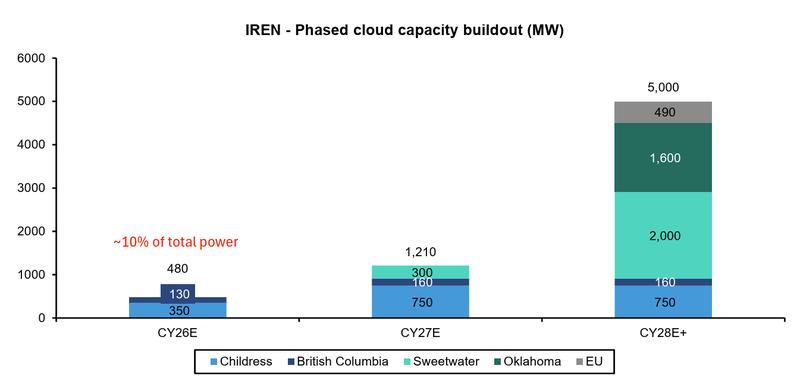
Bernstein has additionally identified IREN as a prominent illustration of this transformation. The research firm noted that IREN is strategically positioned to convert a substantial portion of its operations toward AI infrastructure development in light of its multibillion-dollar partnerships with Microsoft.