Bitcoin Could Rebound to $75K: Key Catalysts Explained
Market participants face difficulty pinpointing whether cryptocurrency prices have bottomed out, yet concerns over market liquidity, artificial intelligence sector valuations, and Bitcoin mining resilience may drive BTC toward $75,000.

Key takeaways:
- Past performance indicates Bitcoin frequently delivers superior returns during trade conflicts and monetary expansion phases, even when initial macroeconomic sentiment appears pessimistic.
- Sustained mining operations and a transition toward net long exposure in CME futures contracts indicate institutional investors are accumulating positions at lower price points.
Market participants trading Bitcoin (BTC) are experiencing heightened nervousness following 18 consecutive days with prices remaining under the $75,000 threshold. Worry intensified after prices revisited the $64,200 mark on Monday, spurred by declining valuations across international equity markets. The implementation of higher baseline import duties at 15% by US President Donald Trump has amplified market uncertainty, prompting capital allocators to embrace more conservative positioning.
Although these developments may seem unfavorable upon initial examination, Bitcoin has demonstrated a track record of delivering strong performance during pessimistic macroeconomic transitions. Even more significant is the fact that market sentiment around risk is steadily stabilizing; operations in the Bitcoin mining sector have demonstrated strength, and institutional market participants leveraged the recent price decline to increase their holdings.
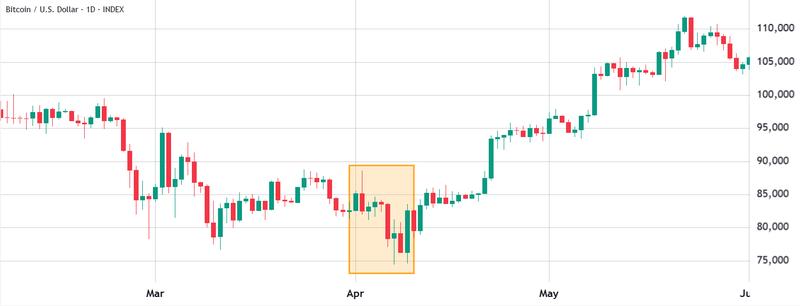
On April 2, 2025, the Trump administration enacted an executive directive implementing comprehensive "reciprocal tariffs" targeting virtually all international commerce partners. The circumstances intensified on April 9, 2025, when supplementary tariffs were levied against 75 nations, including a 34% assessment for China. This development aligned with Bitcoin reaching a five-month nadir at $74,600, which subsequently triggered a 38% price surge throughout the following month.
Market participants favor cash positions over Bitcoin amid heightened uncertainty
The instinctive response among market participants during uncertain conditions involves rotating capital into cash holdings and sovereign debt instruments. Notwithstanding its distinctive advantages, Bitcoin has yet to achieve widespread recognition as a safe-haven asset among mainstream investors. Nonetheless, after markets comprehend that governmental authorities may face pressure to deploy liquidity measures for economic stimulation, Bitcoin characteristically demonstrates outperformance.
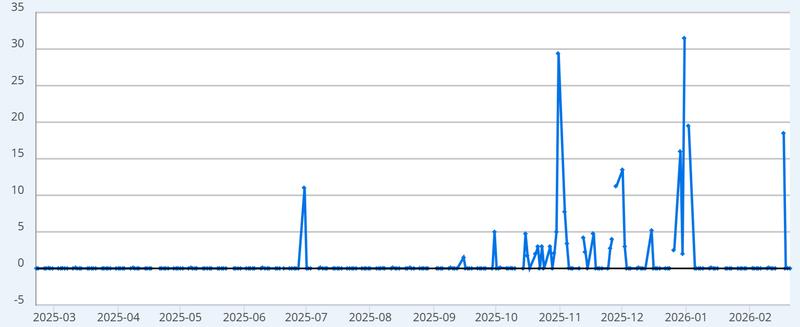
The US Federal Reserve (Fed) provides cash financing secured by Treasury collateral to ensure seamless operation of funding markets and settlement systems. This mechanism should not be interpreted as explicit monetary expansion, given it represents transitory balance sheet dynamics. Nonetheless, elevated readings in this metric—comparable to the $100 billion registered on March 16, 2020—have consistently coincided with inflection points in Bitcoin's price trajectory.
Indeed, the COVID-19 market collapse of 2020 initiated the commencement of a sustained multi-month uptrend, propelling Bitcoin to $42,000 from $4,400. As a result, critics who declared the digital asset had failed as a viable long-term holding while it remained 55% beneath its previous $19,900 peak during the May through July 2020 timeframe were ultimately disproven. An analogous scenario may materialize in 2026 should liquidity dynamics continue weakening.
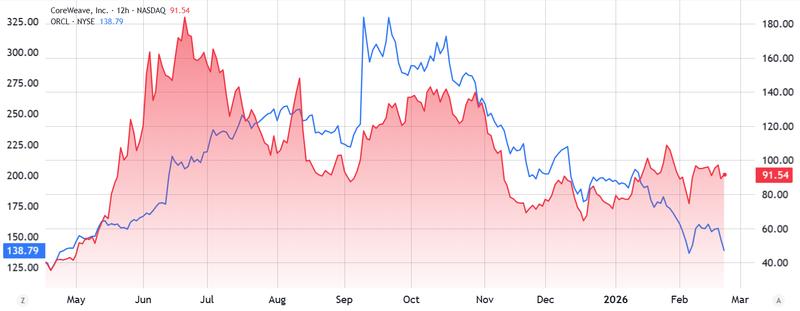
Nvidia (NVDA US) is expected to disclose quarterly financial results following Wednesday's closure of US equity markets. Outcomes from the semiconductor manufacturer will probably influence investor sentiment, especially amid mounting concerns about escalating technology sector leverage. Significantly, equity shares of Coreweave (CRWV US) and Oracle (ORCL US) have already declined more than 50% from their respective all-time highs.
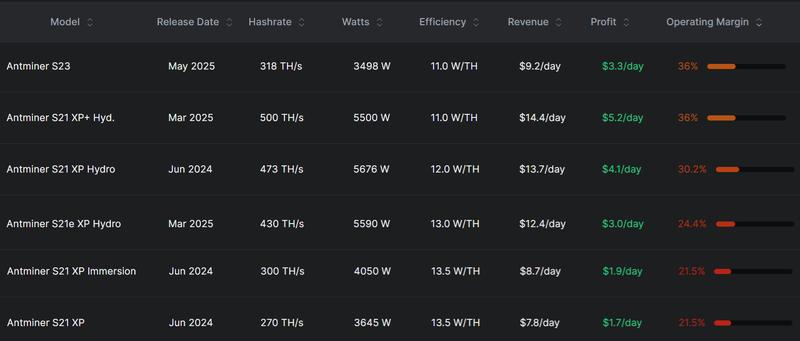
As operating conditions for enterprises supporting the artificial intelligence industry deteriorate, the withdrawal of capital from Bitcoin mining operations poses diminished threat given the network hashrate has completely rebounded from a 25% decline observed in January. Perhaps more crucially, ASIC mining equipment introduced during 2024 and early 2025 continues generating positive returns even when electricity costs reach $0.07 per kilowatt-hour.
The reduction of concerns surrounding a potential "miner death spiral" scenario may have contributed to fostering optimistic sentiment among professional investment managers. Substantial speculators, encompassing hedge fund operators, have transitioned from net short positioning to net long exposure within CME Bitcoin futures contracts, based on a CFTC filing released during the previous week. Market analyst Tom McClellan observed that two comparable historical transitions occurred before major Bitcoin price troughs.
Although no individual reversal signal can definitively establish whether the $60,200 price level reached on Feb. 6 represented the cyclical bottom, the convergence of mounting liquidity anxieties, apprehensions regarding overextended AI industry valuations, and demonstrated resilience throughout the mining ecosystem could propel Bitcoin's valuation back toward $75,000 within the immediate timeframe.