Bitcoin advocate Jimmy Song outlines case for 'cautious' approach to node client development
Song serves as co-founder at ProductionReady, a nonprofit organization dedicated to supporting open source Bitcoin software development and educational initiatives.

According to Jimmy Song, co-founder of ProductionReady, a nonprofit entity that provides funding for open source Bitcoin node software development and education, the Bitcoin (BTC) network requires a "conservative" implementation of Bitcoin client node software to maintain its fundamental monetary characteristics and bolster decentralization across the network.
Song explained to Cointelegraph that the organization maintains a "bias" that opposes substantial modifications to the code, except when such changes receive "overwhelming" backing from the broader community.
"The general principle is: if you're not sure a change makes the money better, don't make it," he said.
According to Song, ProductionReady plans to reinstate the 83-byte OP_Return data limit, which governs arbitrary, non-monetary data in Bitcoin transactions. He emphasized that limiting arbitrary data to keep node storage costs manageable is critical to maintaining network decentralization. He said:
"The more self-sovereign Bitcoin users are, the more decentralized and resilient the network becomes. That means keeping the cost of running a node low enough for ordinary people to do it."
Song elaborated, saying "When storage and bandwidth requirements grow, fewer people verify for themselves, and the network centralizes by default. A conservative client takes that tradeoff seriously."
Increasing the number of nodes while ensuring they remain accessible to typical users strengthens the Bitcoin network's security, minimizing the risk of fraudulent transaction submissions or scenarios where a small group of participants conspire to centralize control over the network.
Bitcoin Core 30 removes the OP_Return data limit, sparking major pushback
The topics of node storage capacity and onchain spam emerged as contentious issues throughout 2025 following a unilateral decision by Bitcoin Core developers to alter the 83-Byte data limitation in Bitcoin Core version 30, which represents the most recent major update to the reference implementation used for Bitcoin node software.
Despite facing considerable opposition from members of the Bitcoin community, the limit was modified to 100,000 bytes. To put this in perspective, the GitHub pull request page for the proposal shows it received approximately 4 times more downvotes than upvotes.
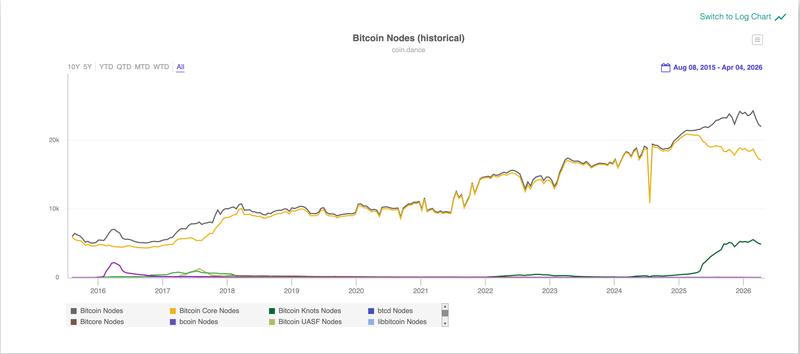
The launch of Bitcoin Core 30 occurred in October 2025, which catalyzed an unprecedented increase in the count of Bitcoin nodes operating Bitcoin Knots, an alternative implementation of the node client software.
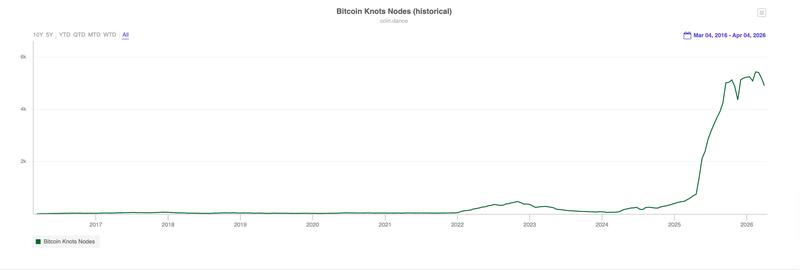
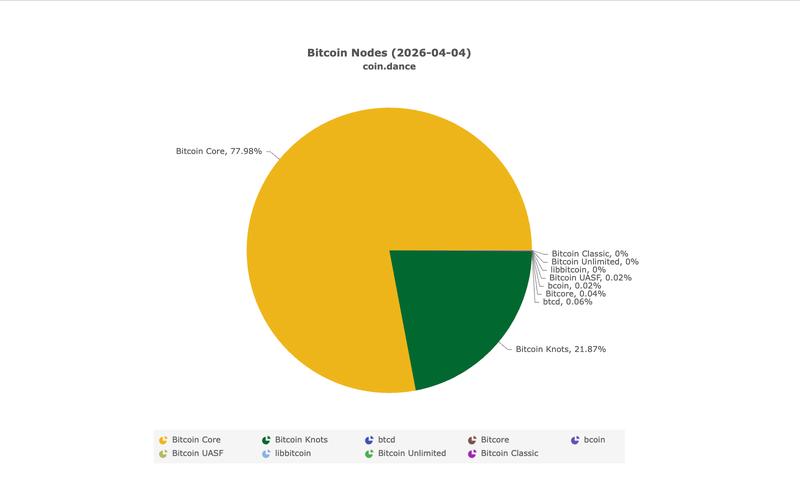
Coin Dance data indicates there are currently 4,746 Bitcoin Knots nodes, which accounts for more than 21.7% of all nodes operating on the network.
Before the announcement regarding the removal of the OP_Return function, approximately only 1% of the network was utilizing the Knots software in 2024.