Bipartisan Bill Proposes Federal Task Force to Combat Cryptocurrency Crime
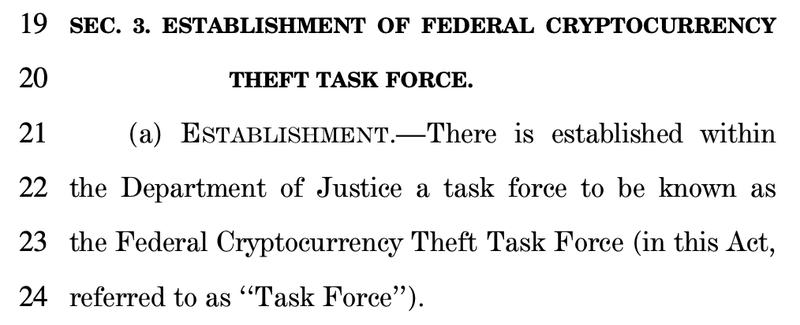
Members of Congress from both parties have put forward a bill establishing a task force under the Department of Justice dedicated to investigating digital asset theft, advancing blockchain forensic capabilities and coordinating efforts among law enforcement agencies.

Members of Congress have put forward new legislation designed to establish a task force under Department of Justice leadership, with the purpose of coordinating investigative efforts into digital asset theft, fraudulent schemes and additional crimes involving cryptocurrencies across multiple levels of law enforcement including federal, state and local agencies.
The proposed legislation designates the Justice Department as the principal federal coordinating body for investigations related to cryptocurrency theft, unifying various agencies such as the FBI, Homeland Security Investigations and the Financial Crimes Enforcement Network under the Treasury Department.
The legislative measure put forth by Lance Gooden, a Republican Representative, along with his Democratic colleague in the House, Josh Gottheimer, mandates that the task force establish optimal procedures for collecting evidence, conducting blockchain forensic analysis, tracing assets and supporting victims. The bill would additionally furnish training programs and technical resources to law enforcement entities at the state and local levels.
Based on data from the FBI's 2025 Internet Crime Report, American citizens disclosed cryptocurrency-related financial losses exceeding $11 billion over the past year.
The proposed task force would establish collaborative relationships with international law enforcement organizations for investigations spanning multiple countries and would deliver yearly reports to Congress detailing emerging threat patterns, obstacles in enforcement activities and potential recommendations for policy adjustments.
According to the bill's language, the legislation would not grant authority for additional regulation of digital asset markets, broaden the powers of federal agencies or establish new categories of criminal offenses, choosing instead to emphasize coordination between agencies that already hold responsibility for investigating crimes of a financial nature.
Crypto investigators turn to AI-powered analytics
The introduction of this proposed task force arrives at a time when blockchain intelligence companies are progressively implementing artificial intelligence technologies created to assist investigators in tracking stolen digital assets, detecting unlawful activities and examining intricate transaction patterns throughout digital asset networks.
During March, TRM Labs introduced Co-Case Agent, an artificial intelligence-powered investigative tool designed for crypto crime investigation and compliance operations. According to the company's announcement, the technology possesses capabilities to track the movement of funds, examine blockchain transaction graphs and recommend investigative approaches based on prompts written in natural language.
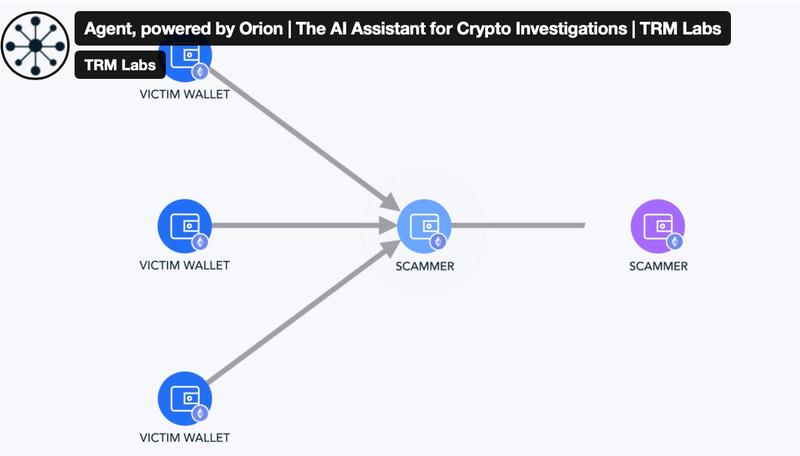
Chainalysis revealed comparable blockchain intelligence agents in the following weeks of that same month, indicating the technologies would become available throughout the summer months for investigative and compliance purposes. According to the company's statement, these agents were developed to assist users in tracking funds and collecting intelligence, particularly as criminals operating in the crypto space progressively leverage AI to expand the scale of their illegal operations.
The increasing emphasis on investigative technologies emerges amid ongoing substantial losses from crypto-related security breaches. Data from DeFiLlama indicates that hackers successfully stole approximately $630 million during April alone, representing the industry's highest monthly theft figure since February 2025.