Bernstein: Institutional players mark new chapter for prediction markets with landmark block trade
Block trades, tailored contracts and evolving US regulation are drawing institutional capital into prediction markets, a space currently controlled by retail participants.

The prediction market landscape is undergoing a transformation from platforms serving retail speculators toward becoming institutional-quality financial products, fueled by appetite for granular macroeconomic hedging and well-defined binary event outcomes, a May 4 Bernstein report indicates.
According to the report, institutional players are drawn to these markets primarily because they enable hedging against specific event-driven risks—including tariffs, electoral outcomes and geopolitical shifts—through contracts that settle based on straightforward yes-or-no results.
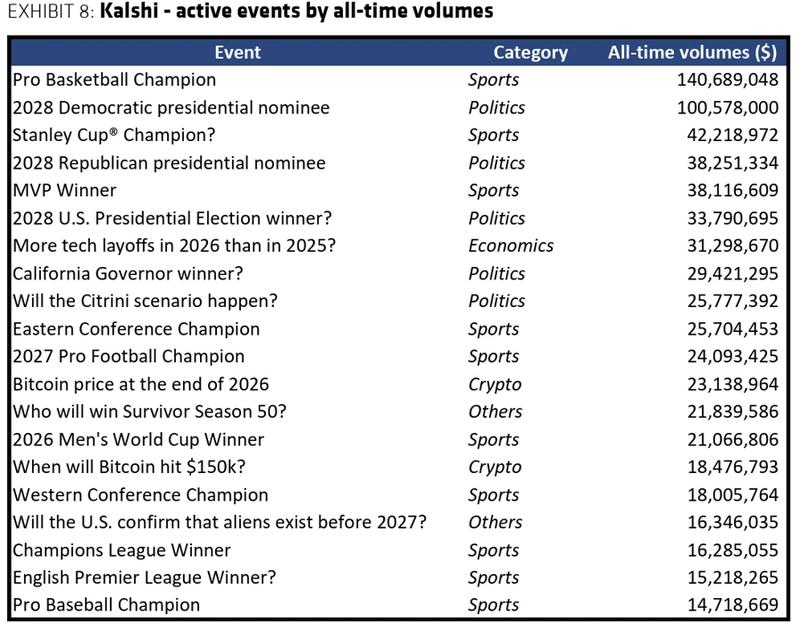
A significant development noted by Bernstein was the execution of the first customized institutional block trade on Kalshi in the prior week, representing an important benchmark. Block trades are characterized as large, privately negotiated transactions that are generally arranged between institutional parties.
Greenlight Commodities facilitated the transaction, which brought together a Houston, Texas-located environmental hedge fund with Jump Trading serving as the liquidity counterparty. The specialized contract was connected to the clearing price for California's carbon allowance auction in May, demonstrating the capacity of prediction markets to be customized for particular client requirements.
We believe the introduction of block trading and bespoke contracts could expand participation from institutional investors seeking targeted exposure to event risks.
Bernstein analysts
Additionally, Bernstein noted that the collaboration between Clear Street and Kalshi provides institutional participants with a compliant pathway to prediction market access, enabling them to trade these instruments alongside conventional assets such as equities and futures contracts.
Retail leads prediction markets as institutional interest grows
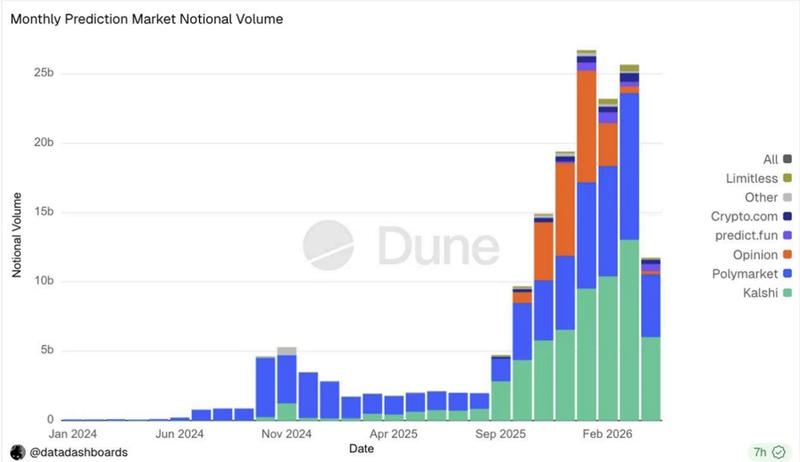
This movement toward institutional adoption stands out particularly because prediction markets continue to be predominantly powered by retail participation. Recent analysis from Bitget Wallet and Polymarket revealed that retail traders represented over 80% of the $25.7 billion in prediction market trading volumes recorded during March.
Increased institutional involvement has the potential to drive accelerated market expansion, with Berinstein forecasting that prediction markets may develop into a trillion-dollar sector before the decade concludes.
Regulatory developments in the United States are similarly influencing the sector's evolution, although the regulatory framework remains fragmented across different platforms.
Kalshi functions as a federally regulated marketplace under Commodity Futures Trading Commission oversight, whereas Polymarket obtained conditional regulatory approval in late 2025 to provide event-based contracts to US participants through compliant frameworks.