Aave weathered mass withdrawals totaling $8.45B, yet concerns about DeFi risks persist
Despite processing $8.45 billion in user withdrawals without imposing fund freezes, Aave's experience sparked renewed debate about concealed vulnerabilities in decentralized lending platforms.

An endurance trial that revealed capabilities and limitations
Rapid capital flight from any financial system typically exposes underlying fragilities that were previously hidden. Within conventional banking, such scenarios frequently trigger emergency credit facilities, restrictions on withdrawals or taxpayer-funded rescue packages.
The world of decentralized finance (DeFi) operates on different principles.
Among cryptocurrency's most prominent lending platforms stands Aave. During April 2026, the protocol experienced approximately $8.45 billion in user withdrawals following the KelpDAO rsETH bridge exploit, which sent shockwaves throughout DeFi markets.
The smart contracts powering Aave itself remained secure and uncompromised. Instead, pressure mounted from an external incident involving the rsETH bridge that impacted Aave through interconnected channels of collateral, borrowing activities and liquidity flows. While the protocol's fundamental logic kept functioning throughout, the episode encountered significant turbulence. Certain markets experienced acute liquidity constraints, requiring emergency mechanisms to limit further deterioration.
This complexity made the final assessment more nuanced. Although Aave prevented total collapse, the incident simultaneously demonstrated how rapidly stress can cascade through systems where assets, collateral backing and liquidity are tightly interlinked.
Stani Kulechov, Aave's founder, characterized the event as evidence that DeFi had achieved greater maturity. However, independent observers examining identical data arrived at more reserved conclusions.
Despite Aave's survival, numerous voices questioned whether merely enduring the crisis sufficiently addressed legitimate concerns regarding the genuine robustness of DeFi lending platforms.
Origins of the massive $8.45B withdrawal event
The strain on Aave did not originate from a direct attack on its infrastructure. Instead, it stemmed from the KelpDAO rsETH bridge exploit that occurred in April 2026.
Malicious actors successfully extracted approximately $292 million in rsETH value from KelpDAO's LayerZero bridge infrastructure. This breach triggered widespread uncertainty about whether certain rsETH tokens maintained full backing. These concerns propagated rapidly throughout the ecosystem because rsETH had been integrated across numerous DeFi applications, serving as collateral within Aave's various markets.
This situation generated immediate complications for Aave. When collateral connected to rsETH experienced declining confidence or valuation, lenders confronted potential bad-debt exposure. Market participants initiated fund withdrawals in attempts to minimize their vulnerability before circumstances deteriorated further.
These withdrawal activities subsequently intensified pressure on Aave's available liquidity. As increasing numbers of users extracted capital, particular markets reached elevated utilization levels. Put plainly, the majority of accessible liquidity had already been borrowed or removed, creating difficulties for certain users attempting immediate exits.
The situation illustrated how external asset complications can influence lending protocols despite their own security. Within DeFi ecosystems, assets frequently traverse bridges, lending markets and additional protocols. Disruptions in one segment can swiftly impact connected areas.
These dynamics gave the episode characteristics resembling a DeFi bank run. Users were not constrained by branch operating hours or bank approval processes for transfers. They possessed the ability to respond instantaneously. Yet the event simultaneously exposed a critical limitation: while users can attempt withdrawals at any moment, actual fund extraction remains contingent upon available liquidity and prevailing protocol conditions.
Did you know? History's most significant bank runs typically developed across days or even weeks. Within DeFi environments, comparable situations can materialize within mere hours because blockchain protocols operate continuously without closure, enabling users to transfer funds instantly from any global location.
Stani Kulechov's perspective: Protocol integrity maintained
Kulechov presented the incident as validation of Aave's structural resilience. From his perspective, the fundamental protocol performed according to its design specifications, even throughout a period of substantial stress.
This differentiation carries significance. While Aave avoided a protocol-level exploit, the surrounding markets nevertheless experienced considerable pressure.
As withdrawal volumes escalated, certain markets achieved complete utilization. This condition meant liquidity became scarce within those specific markets, complicating immediate withdrawal capabilities for some participants. Aave's risk management teams also deployed integrated controls, including emergency freezes and modifications to risk parameters, for damage containment purposes.
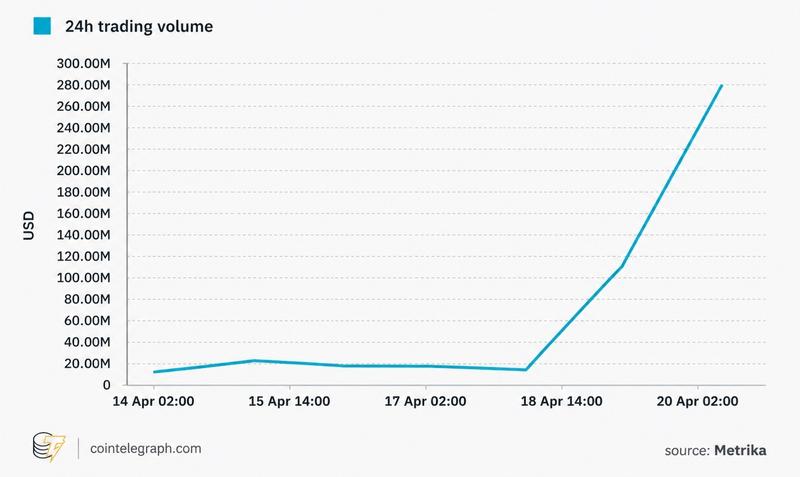
Viewed through this lens, Aave successfully navigated a significant real-world endurance test, though not without experiencing strain. Platform advocates highlight multiple characteristics that distinguish DeFi from conventional finance.
- Collateral positions are transparently visible on-chain.
- Risk configuration settings are publicly accessible.
- Liquidation processes adhere to smart contract rules.
- Protocol activity can be inspected by anyone in real time.
These attributes can mitigate certain information asymmetries that have historically contributed to banking catastrophes. However, they do not eliminate every potential risk. DeFi lending platforms can still encounter challenges stemming from external assets, bridge vulnerabilities, liquidity deficits and rapid user behavioral shifts.
For supporters, Aave's endurance demonstrated that transparent, rule-governed systems can maintain operations under significant pressure. For critics, the incident revealed that transparency by itself proves insufficient. DeFi systems can still require emergency interventions when liquidity stress propagates through interconnected markets.
Endurance does not equate to complete safety
Skeptics caution against interpreting the outcome as definitive proof that Aave's architecture is comprehensively safe. While the protocol survived, this does not indicate that every system component functioned optimally.
Stress events permit multiple interpretations. Robust design may partially account for Aave's performance, yet advantageous market circumstances may have also contributed positively.
External researchers observed that substantial exposure remains concentrated across numerous DeFi platforms. When a limited cohort of users controls exceptionally large positions, their decisions can influence the overall protocol's stability.
Concentration risk has persistently concerned traditional finance. Identical concerns apply within DeFi contexts.
Should multiple major borrowers simultaneously unwind their positions during market turbulence, the resulting impact could exceed current risk model projections.
Averting a crisis during this instance provides no guarantee of identical results during future events.
Did you know? Aave initially launched during 2017 under the ETHLend name. It subsequently underwent rebranding and evolved from a peer-to-peer lending marketplace into one of cryptocurrency's largest liquidity pool-based lending protocols.
Aave's approach to risk management
Aave extends beyond a simple lending platform. Throughout its evolution, it has incorporated multiple protective layers designed to mitigate broader risks.
Borrowers utilizing Aave can secure loans exclusively within established loan-to-value boundaries. Liquidation thresholds determine when collateral becomes eligible for sale. Supply caps restrict the volume of exposure that can accumulate around particular assets. Borrow caps limit the amounts users can borrow.
Isolation Mode assists in containing the impact of elevated-risk collateral. Efficiency Mode, commonly referred to as E-Mode, applies specialized settings for assets that typically exhibit correlated price movements. Governance structures, reinforced by specialist risk advisers, modify these parameters when circumstances require.
Throughout the recent withdrawal surge, these protective mechanisms generally operated as intended. Core protocol functionality persisted, though certain markets experienced strain. Utilization reached 100% within major pools, constraining withdrawal capabilities for some users.
Nevertheless, analysts contend that DeFi risk management requires continued advancement. Governance decision-making can still demand time, and risk models may lack sufficient agility during rapidly evolving events.
Stress testing frequently relies upon historical events, potentially overlooking novel categories of spillover risk. The genuine challenge transcends merely avoiding previous failures. It encompasses preparing for threats that have not yet materialized.
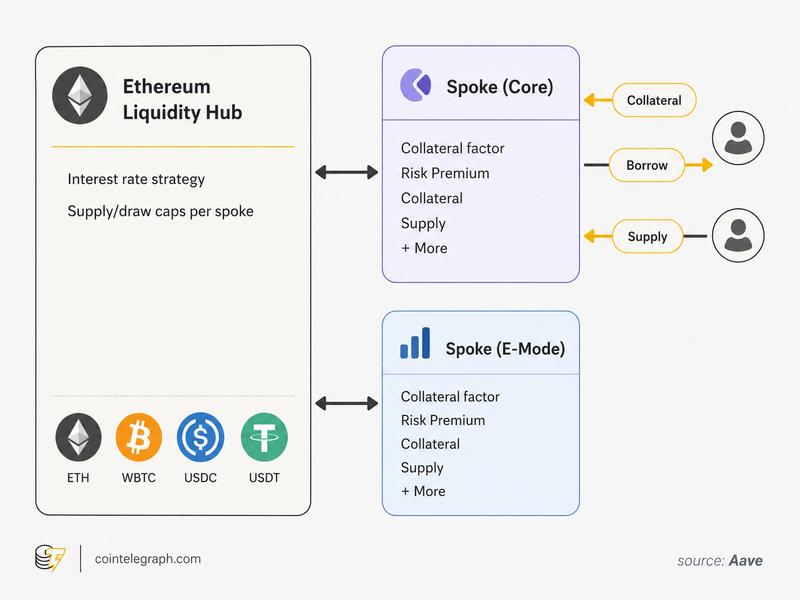
The concealed vulnerability of interconnected DeFi platforms
Among DeFi's most significant advantages lies one of its greatest vulnerabilities. The identical interconnections that provide utility can simultaneously introduce fragility.
Composability enables applications to integrate and collaborate seamlessly. Capital deposited into one protocol can facilitate operations within another. This characteristic accelerates new product development and can enhance system efficiency. Yet it simultaneously establishes additional linkages between platforms.
A loan within one platform may depend upon collateral sourced from another. That collateral might then underpin leveraged positions distributed across additional systems. Over time, this constructs an intricate financial network.
Under normal market circumstances, composability unlocks opportunities challenging to replicate within traditional finance. During stressful conditions, however, it can amplify the probability of problems propagating between platforms.
A platform's resilience cannot be evaluated in isolation. The overall condition of the broader DeFi ecosystem equally matters.
Did you know? Traditional banking institutions conduct periodic stress tests under regulatory oversight. Within DeFi, stress tests frequently occur unexpectedly within live markets, involving real users, genuine assets and no opportunity for rehearsal.
Key lessons for users
For depositors and investors, the episode serves as a crucial reminder. A protocol's scale and reputation should never be conflated with absolute safety. Users must comprehend the assets underpinning the protocols they engage with.
Governance proposals likewise merit careful scrutiny because they establish the protections surrounding deposited capital. Diversification remains important, even within DeFi environments.
For developers, the lesson proves equally unambiguous. They should architect systems for extreme scenarios and continuously challenge their fundamental assumptions. They must also acknowledge that transparency alone cannot eliminate broader systemic risks.
The incident demonstrates that resilience is most accurately assessed through repeated performance across multiple tests, not singular events. One stress test supplies evidence, yet it cannot provide certainty.
Aave succeeded in this trial, but uncertainties persist
Aave's capacity to process roughly $8.45 billion in withdrawals merits recognition. The protocol maintained functionality throughout one of the most substantial liquidity shocks DeFi has encountered.
The outcome holds importance, yet it should not be regarded as the conclusive assessment of Aave's risk characteristics.
Advocates interpret it as validation that transparent and open systems can survive panic without bailouts or emergency interventions. Critics, conversely, view it as an indication that concealed vulnerabilities may still lurk beneath the surface.
Both interpretations contain elements of validity.
Aave demonstrated that DeFi can endure substantial pressure. The greater challenge involves ensuring that this strength persists when the subsequent crisis arrives through an unanticipated vector.