The emerging reality of AI agents with cryptocurrency wallets
Cryptocurrency wallets could enable AI agents to track portfolios, construct transactions and execute payments, though protective measures will be essential.

Bridging AI and DeFi through autonomous agents
Throughout recent years, artificial intelligence has remained largely disconnected from direct participation in economic transactions. While AI technologies could respond to questions, condense text, generate visual content and assist with programming tasks, they lacked the capability to engage directly in financial operations. Human operators maintained control over critical functions: logging into accounts, validating decisions and authorizing fund transfers.
This division is beginning to dissolve.
An emerging generation of "agentic" artificial intelligence platforms is gaining momentum. In contrast to conventional chatbots that merely react to prompts, these autonomous agents possess the ability to establish objectives, leverage resources, compile information and execute operations. Engineers are progressively investigating methods for these agents to interface with cryptocurrency wallets.
The potential consequences could extend far beyond querying an AI assistant regarding Bitcoin valuations. An artificial intelligence platform could track a decentralized finance (DeFi) investment portfolio, structure transactions, process payments for online services, discover yield generation opportunities or execute financial directives during off-hours.
While the technology remains in its nascent phases, the necessary infrastructure is currently under development.
Evolution from chatbots to economic participants
Conventional AI platforms excel at processing information. They possess the capability to analyze extensive datasets, identify patterns and produce responses that mimic human communication. Nevertheless, they typically conclude their function by offering recommendations.
Agentic AI advances beyond these limitations.
Such platforms integrate logical processing, information retention and the capacity to engage with external resources. Rather than merely suggesting, "You should rebalance your portfolio," an autonomous agent could aggregate market intelligence, evaluate alternatives and construct the appropriate transactions.
Cryptocurrency infrastructure renders this transformation significant.
Unlike conventional banking frameworks, blockchain platforms operate continuously, maintain global accessibility and permit participation from anyone possessing a wallet. They are also inherently programmable. These characteristics make them exceptionally compatible with software agents requiring interaction with financial networks without constraints related to business hours, geographical boundaries or third-party intermediaries.
Did you know? The initial mainstream application of cryptocurrency by AI may not center on trading whatsoever. Agents could merely compensate for APIs, cloud computing resources and datasets, establishing an economy wherein software purchases services from alternative software.
Capabilities of AI agents equipped with crypto wallets
Notwithstanding the excitement surrounding autonomous agents, present-day capabilities remain constrained. The majority of AI platforms that engage with wallets continue operating under human supervision. Rather than possessing complete authority over assets, they typically function as assistants facilitating users through more intricate tasks.
A particularly valuable capability involves accessing blockchain data.
AI agents possess the ability to monitor wallet balances spanning multiple networks, examine DeFi positions, trace non-fungible token (NFT) collections, observe governance votes and identify anomalous activity. Users could request an agent to clarify their comprehensive exposure and potential vulnerabilities. This approach would minimize the requirement to manually inspect numerous interfaces.
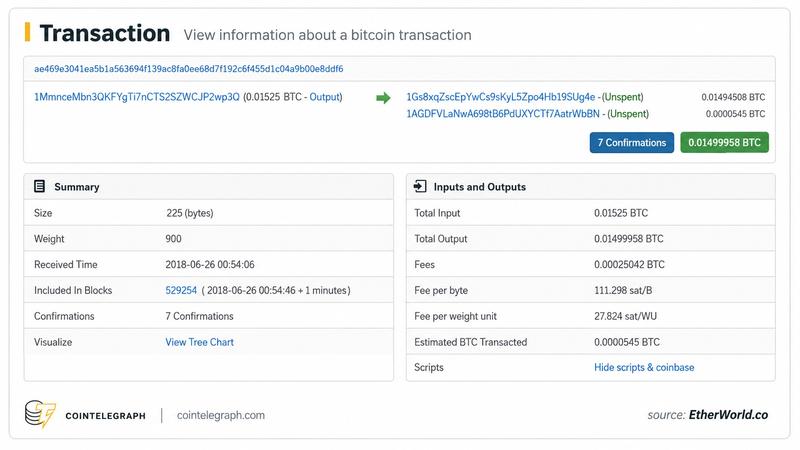
Agents possess the capacity to construct transactions as well.
As an illustration, an AI assistant could formulate the transaction required to exchange one token for another, compute gas fees, recommend the optimal execution timing or clarify staking procedures. The user would subsequently examine the specifications before providing confirmation.
This "human-in-the-loop" methodology is becoming popular because it merges efficiency with appropriate supervision.
Certain platforms are progressing past advisory functions.
Operating within established parameters, agents could autonomously execute repetitive purchases, modify treasury distributions, claim rewards or oversee subscription payments. They function within boundaries defined by users instead of exercising independent financial discretion.
Enhanced independence could emerge subsequently, but present priorities remain centered on regulated delegation instead of unrestricted authority.
Why cryptocurrency infrastructure may suit AI agents better than conventional finance
Conventional financial frameworks were constructed with human participation as the foundation. They were not engineered for autonomous software operations.
Account creation demands identity verification. Transactions frequently require intermediaries. Settlement processes can span multiple days. Numerous services operate exclusively during standard business hours and within particular regulatory jurisdictions.
Cryptocurrency functions distinctly.
Wallets rely on cryptographic authentication rather than direct connections to financial institutions. Settlement can occur within minutes or seconds, contingent on the network. Transactions execute around the clock and lack geographical restrictions.
For AI agents, this distinction holds importance.
A software application lacks identity documentation or the means to visit a brick-and-mortar bank. Nevertheless, it can engage with a blockchain utilizing cryptographic keys and programmatic instructions.
Consequently, blockchain platforms provide a financial ecosystem that accommodates machine involvement more organically.
This does not suggest traditional finance will become obsolete. Rather, cryptocurrency could function as a foundational layer enabling software agents to execute transactions with greater efficiency.
Did you know? Future agent wallets may operate similarly to parental controls. Rather than unrestricted access, users could establish daily expenditure limits, authorized vendors and emergency termination switches for their AI assistants.
Development of agent wallets
As engineers experiment with autonomous platforms, a novel category of infrastructure is emerging: agent wallets.
These differ from standard cryptocurrency wallets simply provided to an AI model without protections. Rather, they are engineered with explicit restrictions for delegated authority.
Agent wallets could incorporate expenditure caps limiting the amount an AI can transfer during a defined timeframe. They might additionally implement temporal regulations restricting activity to authorized periods.
These wallets may utilize transaction whitelists, permitting agents to engage exclusively with pre-authorized protocols or trading partners. Certain architectures enforce asset restrictions, prohibiting agents from possessing specific assets completely. Alternative designs employ multisignature configurations requiring human authorization prior to substantial transactions.
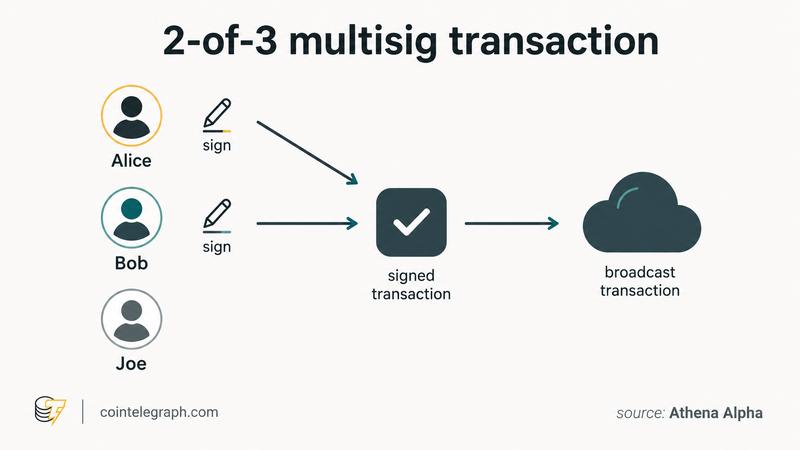
These protective measures acknowledge a fundamental principle: unregulated autonomy generates preventable hazards.
The objective is not eliminating human supervision. Rather, it involves minimizing routine complexity while preserving user authority.
The verification challenge: Confirming AI operations
Among the most substantial obstacles for agent-operated platforms is establishing trust. How can users validate that an AI executed the procedures it documented? Did it adhere to instructions precisely? Did it alter the outcome? Might external variables have influenced its logic?
This situation is where blockchain-based verification instruments may prove essential. A collaboration concentrating on constructing a blockchain-supported verification framework for AI agents could assist in resolving this challenge.
Rather than requiring users to trust an agent's assertions, platforms could generate cryptographic documentation demonstrating the operations performed, the circumstances involved and the outcomes achieved.
These documentation systems would establish a verifiable audit trail of machine conduct. In critical financial contexts, such evidence could become equally important as the transaction itself.
An AI agent declaring, "I completed the transaction," may prove insufficient.
Users and institutions may progressively demand documentation confirming that the transaction occurred precisely as directed.
Emerging threats when AI gains financial control
Granting software authority over financial operations introduces novel vulnerabilities. Even minor errors can yield genuine financial repercussions.
One area of concern involves transaction mistakes. An AI agent could misinterpret user directives, select an incorrect contract address or render suboptimal decisions based on incomplete information. Prompt injection attacks represent another vulnerability.
Malicious instructions concealed within websites, documents or applications could redirect an agent toward unintended actions. An instrument designed to assist users could be manipulated into generating damaging transactions.
The wallet infrastructure itself likewise becomes vulnerable to attack. Adversaries could attempt to compromise the credentials controlling agent functions, particularly if those agents manage substantial assets or institutional treasuries.
Vulnerabilities also penetrate into DeFi. Agents could engage with malicious smart contracts, authorize hazardous permissions or become victims of sophisticated fraud schemes that exploit automated decision processes.
A significant vulnerability is psychological instead of purely technical in nature. As AI platforms demonstrate increasing capability, users may develop excessive dependence on them and authorize recommendations without adequate scrutiny.
Automation can enhance productivity, yet it can simultaneously foster overconfidence.
Did you know? Although Bitcoin is frequently described as digital gold, stablecoins could emerge as the favored currency for AI agents since predictable valuations make budgeting and automated transactions considerably simpler.
The future likely involves restricted autonomy
A future wherein completely autonomous AI manages unlimited capital is improbable. Instead, the forthcoming phase will probably concentrate on bounded autonomy.
Humans establish objectives, configure explicit boundaries and determine expenditure thresholds. They designate approved trading partners and implement emergency termination protocols.
Agents subsequently manage routine operations within those constraints. They monitor market dynamics, enhance processes, generate documentation and administer recurring financial tasks.
This resembles the function of a junior financial coordinator. Responsibilities are delegated, yet complete independence is never provided.
As dependability advances and protective measures strengthen, those responsibilities could broaden. Nevertheless, substantive oversight will likely remain a fundamental component of the framework.
Will AI agents ultimately conduct transactions with each other?
Agents could additionally contract other agents for particular assignments. One platform might negotiate conditions, delegate analytical work and finalize payments autonomously through stablecoins or alternative digital assets.
Within this environment, wallets transform beyond value repositories. They function as machine identities capable of participating in digital economies. Nevertheless, significant questions persist.
Who bears liability when independent platforms agree to unfavorable conditions? How should conflicts be resolved? What legal recognition should machine participants hold?
Technology can advance rapidly, whereas institutions frequently evolve more gradually.