Quantum Computing Breakthrough: Scientists Project Viable Systems Could Arrive by 2030
A groundbreaking study from Caltech slashes the estimated number of qubits needed for quantum computing by a factor of 100, potentially bringing encryption-breaking quantum computers within theoretical reach before the decade's end.

Scientists from the California Institute of Technology have proposed a theory suggesting that operational quantum computers may need substantially fewer qubits than earlier projections indicated, potentially enabling the first fully functional quantum computer to become a reality within this decade.
In collaboration with Oratomic, a startup affiliated with Caltech, the research team reported that through minimizing the errors that "plague the primitive quantum computers of today," a working quantum computer could potentially be constructed using merely 10,000 to 20,000 qubits.
Previous estimates suggested that millions of qubits would be necessary to achieve a properly functioning quantum computer, according to Caltech's statement. Qubits represent the fundamental computational unit in quantum systems and serve as the quantum equivalent of classical computing bits for encoding binary information.
"The requirement for a reduced number of qubits suggests that quantum computers could theoretically become operational before this decade concludes," stated Caltech.
Moving atoms with optical tweezers
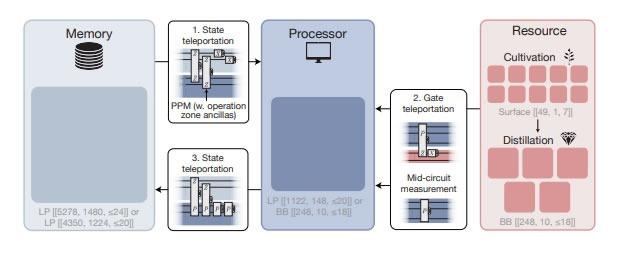
The theoretical breakthrough involves a proposed architecture for error-correction that utilizes "neutral-atom systems," a technology where individual atoms can be physically relocated and linked across substantial distances through the use of specialized lasers known as "optical tweezers."
"We are creating novel architectures for quantum processors based on neutral atoms that significantly lower the resource requirements for fault-tolerant quantum computing," stated Caltech's theoretical physicist John Preskill on Tuesday, further commenting:
"This progress makes me optimistic that broadly useful quantum computing will soon be a reality."
Manuel Endres, who holds a professorship in physics at Caltech and recently achieved the construction of the largest qubit array ever created, explained:
"Unlike other quantum computing platforms, neutral atom qubits can be directly connected over large distances. Optical tweezers can shuttle one atom to the other end of the array and directly entangle it with another atom."
This innovative technology enables the encoding of each logical qubit using as few as five physical qubits rather than the approximately thousand qubits demanded by traditional approaches, according to Caltech's findings.
"It's actually very surprising how well this works. It's what we call ultra-efficient error correction," Endres said.
Quantum frontiers closer than they appear
Oratomic announced plans to maintain close collaborative ties with Caltech's Advanced Quantum Computing Mission, continuing research efforts in quantum information processing with the ultimate objective of constructing the planet's first utility-scale fault-tolerant quantum computer.
This research emerges merely one day following Google's publication of a paper asserting that quantum computers might be able to compromise Bitcoin's cryptographic security in just nine minutes, requiring substantially less computational power than previous estimates suggested.
Additionally, in its paper released this week, Google encouraged cryptocurrency developers to begin transitioning blockchain systems to post-quantum cryptography, or PQC, immediately instead of delaying until actual threats materialize.
The previous week, the technology giant established a 2029 target date for its PQC migration initiative, cautioning that "quantum frontiers" may be nearer than they appear.