Kazakhstan introduces strategic framework for crypto mining linked to state digital reserve
New regulations in Kazakhstan will mandate cryptocurrency miners to comply with rigorous infrastructure requirements and contribute portions of mined digital assets to a government-supported reserve system.

As one of the globe's most prominent Bitcoin mining centers, Kazakhstan has greenlit a comprehensive regulatory structure for industrial-scale cryptocurrency mining operations that connects electrical power availability with mandatory contributions to a government-endorsed digital asset stockpile.
The Kazakh government gave approval to regulations governing strategic digital mining on July 18, according to a Wednesday report from Kazakhstan-based news source Zakon.kz, which referenced Government Resolution No. 638 that was made available through the PRG.kz legal information database.
The regulatory framework characterizes strategic digital mining as a system that provides mining operators with access to allocated electricity quotas at government-controlled rates in return for contributing a portion of their extracted cryptocurrency holdings to Astana Hub, a state-supported technology and innovation center.
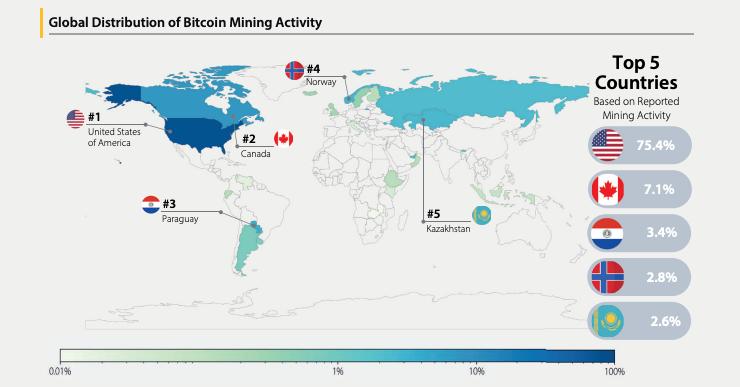
According to the Cambridge Digital Mining Industry Report released in April 2025, Kazakhstan held the fifth position worldwide in terms of Bitcoin mining operations.
New rules set higher bar for strategic miners
Within this newly established regulatory structure, mining companies pursuing strategic designation are required to satisfy demanding infrastructure criteria prior to obtaining governmental authorization.
Based on information from Zakon.kz, those submitting applications must possess a digital mining data facility with a capacity of no less than 150 megawatts (MW) and deploy mining equipment in which individual units deliver a minimum computational capacity of 150 terahashes per second (TH/s).
Additional regulatory stipulations mandate that mining operations maintain skilled technical personnel, establish repair and maintenance capabilities within their data center facilities, secure contracts with multiple internet service providers, and remain current on all mandatory tax obligations and additional financial payments. Implementation of the government resolution is scheduled to begin on Aug. 1, 2026, as reported by Zakon.kz.
Miners must transfer part of mined assets
Mining operations that receive approval are obligated to execute contractual agreements with the autonomous cluster fund operated by Astana Hub and procure electrical power from authorized energy generation firms under the provisions of this new regulatory structure.
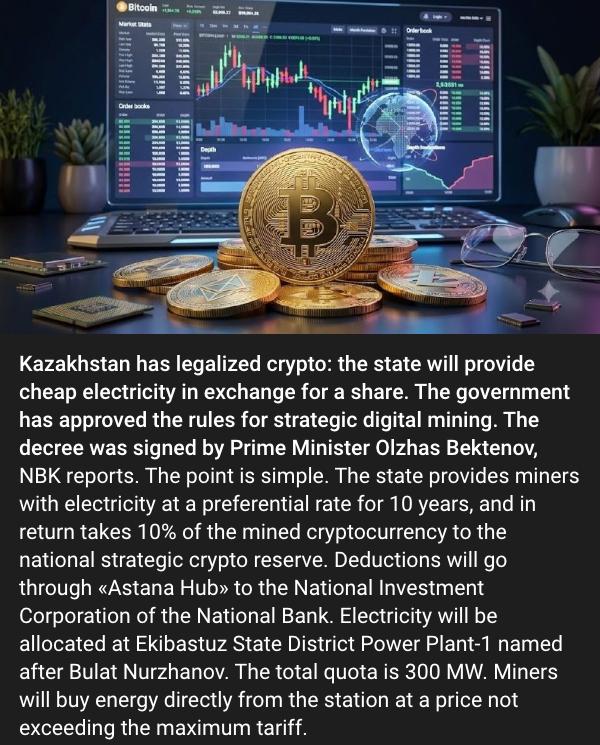
The regulatory framework mandates that mining entities transfer portions of their extracted cryptocurrency holdings to a reserve system, however, the regulations do not establish a specific percentage requirement. Reports from domestic media sources indicated a 10% transfer obligation, although Cointelegraph was unable to independently confirm this particular figure.
These latest mining regulations represent an expansion of Kazakhstan's comprehensive initiative to establish government-backed digital asset infrastructure throughout the nation. In September 2025, Kazakhstan initiated the Alem Crypto Fund, a state-sponsored investment vehicle dedicated to maintaining long-term digital asset reserves, with its initial investment comprising BNB acquired through a collaborative arrangement with Binance Kazakhstan.
The nation has simultaneously advanced toward broader cryptocurrency integration through regulated financial service offerings. In July 2026, Alatau City Bank partnered with Binance Kazakhstan to introduce Crypto Pay, a payment solution that enables customers to conduct cryptocurrency transactions via QR code scanning and point-of-sale terminal systems integrated with the banking institution's merchant acquisition infrastructure.