Cryptocurrency Exchange Coinbase Establishes Expert Panel to Evaluate Quantum Technology Threats to Digital Ledgers
An independent panel consisting of academic researchers and professionals from the industry will release documentation addressing cybersecurity threats and recommendations for software engineers, enterprises and end-users.

The cryptocurrency platform Coinbase has established an independent expert panel tasked with evaluating the potential impact that developments in quantum computing technology might have on the cryptographic systems employed by leading blockchain networks, such as Bitcoin and Ethereum.
Through a blog post published on Wednesday, Coinbase unveiled the advisory panel composed of specialists in the fields of quantum computing, cryptographic science, distributed computing systems and blockchain security, drawing expertise from both academic institutions and the private sector. The panel includes distinguished researchers from prominent universities, representatives from the Ethereum community and professionals from Coinbase itself.
The panel's responsibilities will include releasing publicly available research documents that evaluate the current state of quantum computing and its potential consequences for blockchain infrastructures, providing recommendations and best practices for software developers, institutional stakeholders and individual users, and delivering independent assessments in response to significant breakthroughs in quantum computing technology.
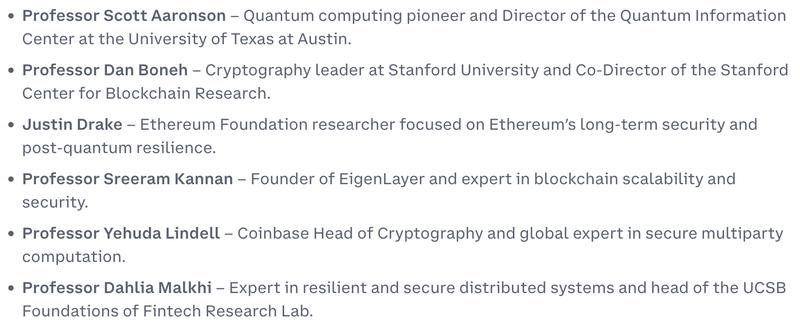
According to Coinbase, the advisory panel will function autonomously from the company's executive leadership and is designed to deliver research oriented toward the broader industry rather than functioning as an internal oversight committee. The panel is anticipated to release its inaugural position document in early 2027, presenting a foundational evaluation of risks associated with quantum technology.
The cryptocurrency exchange indicated that this initiative will proceed in parallel with internal projects aimed at upgrading Bitcoin address management and cryptographic key-handling infrastructure, in addition to longer-term investigations into cryptographic standards designed to withstand quantum attacks.
The ongoing debate in crypto over quantum computing
Quantum computing represents a computational paradigm that leverages quantum bits, commonly referred to as qubits, to execute information processing in manners that fundamentally diverge from traditional computing architectures and could potentially, when developed to adequate scale, present challenges to certain cryptographic methods currently employed to protect digital infrastructure.
While the technology continues to evolve, ongoing discussions within the cryptocurrency sector focus on the magnitude of potential risks it may introduce and the timeframe within which quantum computers might achieve the necessary level of sophistication.
Last Friday, Jefferies analyst Christopher Wood eliminated Bitcoin from his prominent "Greed & Fear" investment portfolio model, expressing apprehension that recent developments in quantum computing technology could compromise the digital currency's security foundations over the long term.
However, other voices within the cryptocurrency community have challenged this assessment of the timeline. On Dec. 18, Adam Back, a renowned cryptographer and co-founder of the Blockstream company, stated through a sequence of posts on X that although it makes practical sense for Bitcoin to become "quantum ready," quantum computing technology does not represent an immediate threat.
Back maintained that the technology is still in its infancy, forecasting no substantial risk emerging within the next ten years and asserting that even if cryptographic systems were partially compromised, this would not enable the theft of Bitcoin, since encryption does not constitute the network's fundamental security foundation.
This timeline evaluation was reinforced by Mark Thompson, co-founder and chief technologist at PsiQuantum, during an interview with the Financial Times conducted in November.

Thompson acknowledged that quantum computers of sufficient scale will ultimately possess the capability to compromise contemporary public-key cryptographic systems, but emphasized that the hardware infrastructure necessary to achieve this remains considerably beyond present-day technological capabilities.
Quantum computing systems with the power to execute such cryptographic attacks would probably necessitate tens of millions of qubits, Thompson explained, indicating that practical commercial and scientific applications of quantum technology would materialize substantially before any genuine threat to cryptographic security becomes reality.
Thompson contended that this incremental advancement would afford governments, corporations and blockchain networks adequate time to implement adaptations, including migration to cryptographic standards specifically engineered to resist quantum-based attacks. He said:
When you start to see people using quantum computers to solve really genuinely important problems, then you can think right, well maybe Q-day is actually five years away, maybe 10 years away. And that's when you should start to worry.