CONNECT Seoul highlights: Hayes predicts money printing surge as traditional finance embraces blockchain
Maelstrom's Arthur Hayes forecasts monetary expansion boosting digital assets, as CONNECT Seoul panels explore how traditional finance giants gain advantages in blockchain markets.

Cryptocurrency valuations stand to benefit from increased monetary expansion as US officials turn to money printing to fund artificial intelligence infrastructure and service national debt obligations, according to Maelstrom fund chief investment officer Arthur Hayes.
During a fireside discussion at Cointelegraph's CONNECT: Seoul Edition on Tuesday throughout Korea Blockchain Week, Hayes explained that AI firms require funding in the trillions to build necessary data center infrastructure, all while the market prices for their offerings continue to decline.
"They've not really given themselves a lot of options other than print money and make it less bad," he said.

Hayes further addressed the potential for China to transition away from what he characterized as an "austerity lite" approach toward more aggressive monetary stimulus measures, a shift he believes would reignite appetite for assets with limited supply.
Regarding Europe, he noted his attention to financial pressure points in France, particularly credit-default swap instruments linked to BNP Paribas alongside spreads on French sovereign bonds.
I think the money printing will essentially happen at some point, but that's sort of a slow motion train wreck happening underneath the surface.
The CONNECT event hosted by Cointelegraph in Seoul included panel discussions covering subjects from the migration of traditional financial services to blockchain networks to the emergence of stablecoins and cryptocurrency strategies for corporate balance sheets.
Traditional finance institutions leverage existing relationships in blockchain transition
Traditional banking institutions and asset management firms possess a built-in clientele that positions them favorably in blockchain-based markets, creating a competitive edge over organizations that need to build investor relationships from the ground up, Portal Ventures general partner Catrina Wang explained.
"Whoever owns the customer relationship owns the economics," Wang stated, referencing tech industry analyst Ben Thompson's concept of aggregation theory.

However, servicing their current client roster represents merely one aspect of the potential for financial institutions. R3 co-founder Todd McDonald emphasized that public blockchain networks additionally provide pathways to reach customers beyond the boundaries of institutions' existing networks.
Having built its operations around private financial networks using the Corda platform, R3 revealed a partnership in May 2025 designed to link institutions and their holdings to the public Solana blockchain.
You need to really go to where the customers are and where they will be in the future.
After gaining entry to these markets, investors must still determine allocation strategies and acceptable risk levels.
World Liberty Financial executive vice president of growth Justin Kugel noted that these decision-making processes are generating demand for intermediary services, contrary to cryptocurrency's founding vision of disintermediation.
"Maybe there's a reason why there are so many middlemen in TradFi," Kugel said.
According to Kugel, numerous users lack the desire to personally manage their holdings or evaluate individual investment opportunities, instead preferring the perceived security provided by centralized trading platforms.
Payment tokens gain traction while yield generation remains crucial
Franklin Templeton does not intend to launch a proprietary stablecoin and aims for its tokenized money market fund products to serve as a yield-generating complement to payment-focused tokens, Franklin Templeton senior vice president of digital asset client engagement Chetan Karkhanis revealed.
"Let us be the yield layer," Karkhanis said.
Subscriptions and redemptions for Franklin Templeton's fund products typically still necessitate traditional fiat currency, Karkhanis explained. While certain stablecoin conversion options exist currently, he emphasized the need for broader availability of such capabilities throughout the financial sector.
In June, Franklin Templeton unveiled a collaboration with MoonPay enabling qualified institutional investors to transfer between supported stablecoin assets and its tokenized money market fund products via blockchain-based transactions.
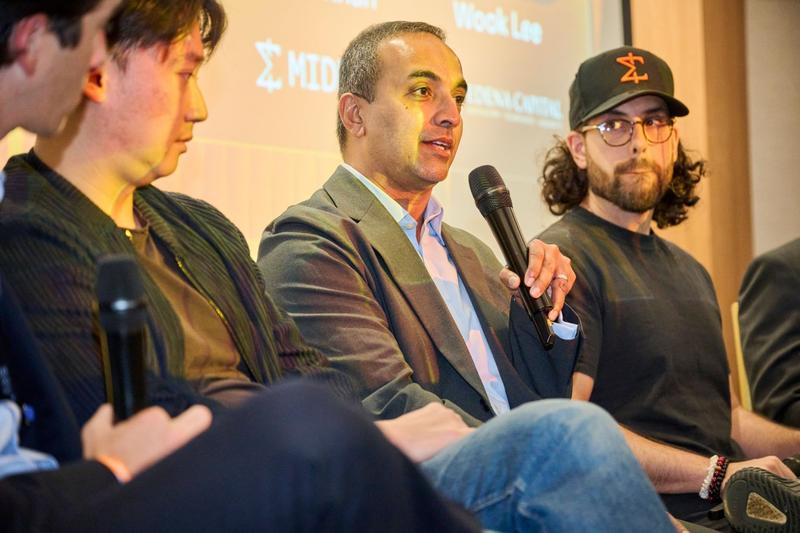
Codex co-founder and CEO Haonan Li, whose platform facilitates stablecoin-based foreign exchange, described increasing demand for stablecoin-enabled payments along commercial corridors linking Latin American and sub-Saharan African regions with Asia, where purchasers remit funds for manufactured products traveling in the reverse direction.
"The manufactured goods flow from east to west and funds flow from west to east," Li said.
Treasury strategies demand careful assessment of available liquidity
Organizations evaluating cryptocurrency treasury approaches require surplus capital that can be allocated for extended timeframes without interfering with routine operational needs, according to FinHarbor co-founder and CEO Ilya Podoynitsyn, a CONNECT partner.
"If you don't have that excess liquidity for doing that, you need to think very carefully before entering the market," Podoynitsyn said.
He cautioned against replicating another organization's approach without considering variations in financial statements, liquidity needs and acceptable risk parameters. Even seasoned financial management teams may not possess sufficient knowledge regarding blockchain-based liquidity management and transaction authorization processes, he added.
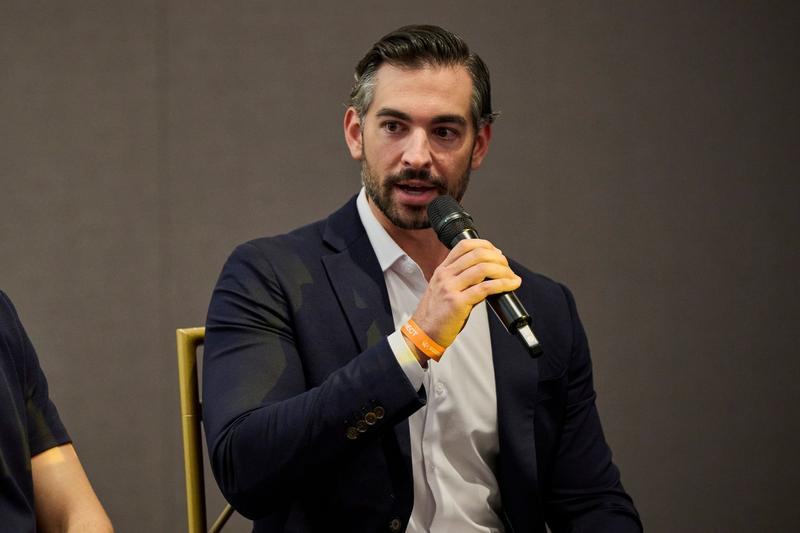
Panel participants also examined whether publicly traded treasury companies holding excess cash reserves should allocate those funds toward additional cryptocurrency acquisitions or share repurchase programs when shares trade below net asset value.
SharpLink chief development officer Michael Camarda, representing the Ethereum-focused treasury company, explained that share buybacks and direct Ether purchases both serve as methods for raising ETH holdings on a per-share basis.
Deploying cash for share repurchases distributes the company's current Ether position across a reduced share count, whereas direct Ether acquisitions expand the total cryptocurrency holdings.
Camarda noted that SharpLink's institutional shareholder base prioritizes ETH per share metrics, making buyback programs more appealing to that constituency, whereas retail investors respond more enthusiastically to publicity around substantial Ether acquisition announcements.
"They love headlines. They love numbers," Camarda said of retail investors.
Camarda disclosed that SharpLink has executed both Ether acquisitions and share repurchase programs to satisfy the preferences of both investor categories.