Bitcoin's Profitable Supply Nears 60% Mark as Analysts Warn of Potential Reversal
Despite BTC supply profitability climbing toward 60%, Bitcoin continues to fall short of meeting fundamental criteria necessary for a bull-market comeback, according to research from CryptoQuant.

Bitcoin (BTC) holders have returned to collective profitability, however blockchain analysis indicates it remains premature to validate a fresh bull market cycle.
Key points:
- While Bitcoin supply profitability shows signs of improvement, the upward trajectory needs to demonstrate sustainability before validating a genuine market rebound, according to CryptoQuant analysis.
- The percentage of supply in profit has now climbed to nearly 60%, rising from its 2026 minimum near 46% recorded less than 30 days prior.
- Blockchain losses among long-term holders persist as the dominant trend — presenting a warning sign amid bullish recovery expectations.
Bitcoin profitability indicators face potential for second failed breakthrough
Data from blockchain analytics service CryptoQuant shows that Bitcoin supply in profitable territory surpassed the 50% threshold during July.
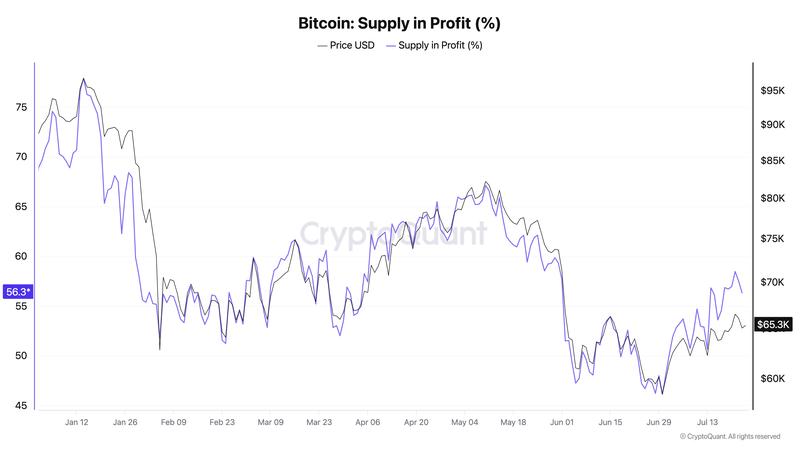
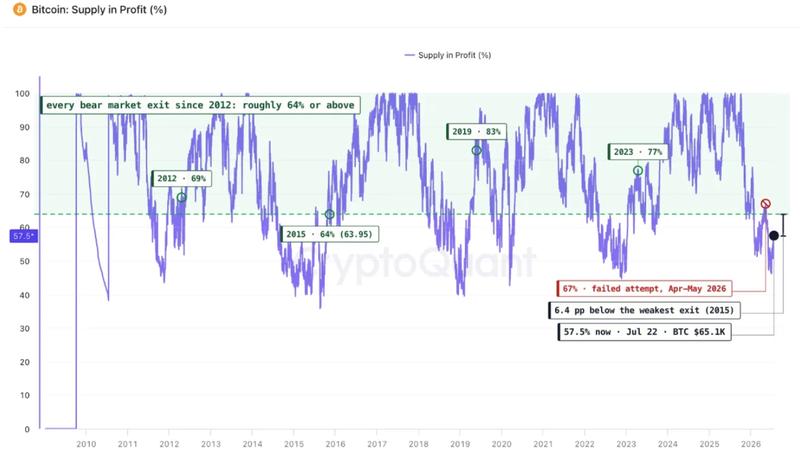
"The Supply in Profit (%) metric for Bitcoin, representing the portion of Bitcoin valued above its original purchase price, has risen to 57.5% as of July 22, climbing from 46.2% on June 30, which marked the 2026 low," explained CryptoQuant analyst thechessONCHAIN in their assessment.
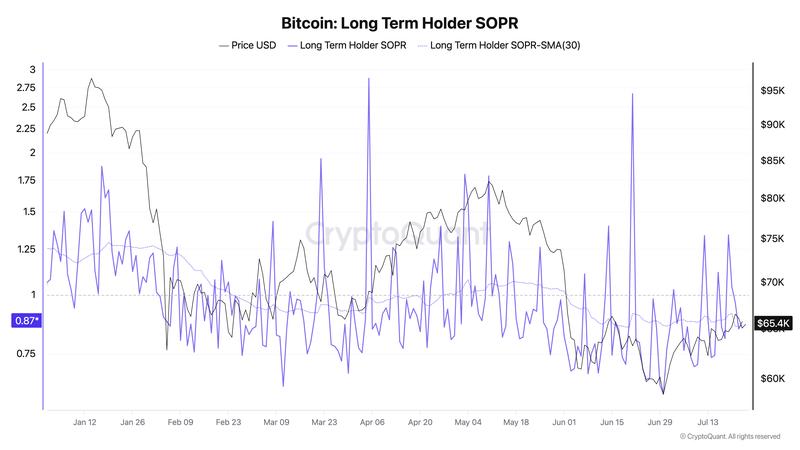
As approximately 60% of Bitcoin's circulating supply currently sits in profitable positions, the spent output profit ratio (SOPR) for long-term holders (LTHs) demonstrates concurrent improvement.
Long-term holders represent market participants whose Bitcoin holdings have stayed inactive for a minimum of six months. The SOPR metric calculates the ratio of LTH coins transferred on the blockchain at elevated prices compared to their prior transaction value. Readings exceeding 1 suggest coins are being moved on the blockchain predominantly in profit, whereas readings falling below 1 signal that LTH investors are transferring coins at losses, potentially signaling capitulation behavior.
According to thechessONCHAIN's analysis, historical bear markets have consistently concluded only when both the supply in profit metric and LTH-SOPR satisfy particular conditions.
The 30-day simple moving average (SMA) for LTH-SOPR must stay elevated above 1 without dropping beneath this threshold for extended weekly periods, simultaneously requiring total supply in profit to exceed 64%.
"During this market cycle, one unsuccessful breakout has already occurred: spanning from April 28 to June 1, the LTH-SOPR average maintained levels above 1.0 throughout 35 days, Supply in Profit climbed to 67%, and subsequently both indicators reversed downward," TheChessOnChain observed.
Following that period, the 30-day SMA for LTH-SOPR has remained beneath 1 for an extended duration exceeding 50 days.
Bitcoin investment comeback remains vulnerable
Previous Cointelegraph coverage highlighted that Bitcoin supply experiencing losses surpassed the 50% level during June, representing a benchmark that has historically served as a precursor to bear-market bottoms throughout past cycles.
This particular dataset also demonstrates consistent patterns across Bitcoin's bear market history, with the 50% loss threshold initiating the final phase leading to a BTC price cycle trough in earlier market cycles.
Meanwhile, market demand indicators present a contradictory picture, as lackluster spot-market participation contrasts with recovering institutional BTC investment flows.