Bitcoin Gains 1.6% While Jim Cramer Announces BTC Sale Amid Quantum Computing Concerns
Due to concerns surrounding quantum computing technology, the CNBC host revealed plans to liquidate his Bitcoin position, prompting cryptocurrency traders to invoke the well-known "inverse Cramer" phenomenon.

Jim Cramer, the CNBC "Mad Money" host and former hedge fund manager, has announced his intention to liquidate his entire Bitcoin position, citing concerns over quantum computing technology.
"I'm going to sell mine [Bitcoin]," Cramer stated on his Mad Money program Friday, pointing to quantum computing worries that had been brought up by IBM Chairman and CEO Arvind Krishna during an appearance on his show one day earlier.
On Thursday's broadcast, Krishna advised Cramer to become "paranoid" regarding the potential threat quantum computing poses to digital currencies within the coming three to four years.
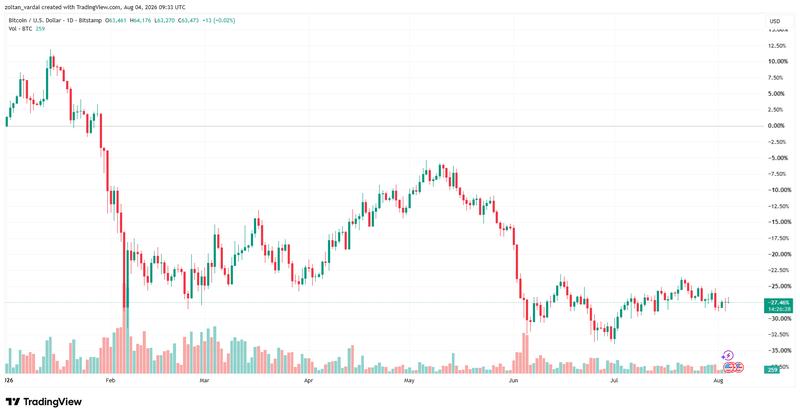
Bitcoin's (BTC) trading price increased by approximately 1.7% on Tuesday, pushing it above the $63,500 mark, though it remained down 27% year-to-date, based on data from TradingView.
A number of cryptocurrency traders welcomed Cramer's announcement, invoking the widely-recognized "inverse Cramer" meme and trading strategy, which humorously aims to profit by taking positions contrary to those recommended by the former fund manager.
"If Cramer is selling, it's time to start buying," commented Archie Spencer, founder of GRIT Trading Academy.
"Every time Cramer says sell, I add to my position. Been doing it since 2018. The inverse Cramer index remains undefeated," wrote pseudonymous crypto investor Bitcoin & Barbells.
Whale wallets start selling as trading activity declines
At the same time, major Bitcoin holders are offloading their positions amid declining liquidity in cryptocurrency markets.
Blockchain analytics platform Lookonchain reported that on Monday, the whale wallet identified as 'bc1qpt' moved its complete holdings of 16,400 Bitcoin, valued at approximately $1 billion, to a fresh wallet address after remaining dormant for seven months.
This large-scale transfer came soon after daily trading volumes for cryptocurrencies across the top 44 spot exchanges dropped to $15 billion last week, representing the year's lowest point in 2026, based on information from crypto intelligence platform Kaiko that was shared by the Kobeissi Letter.
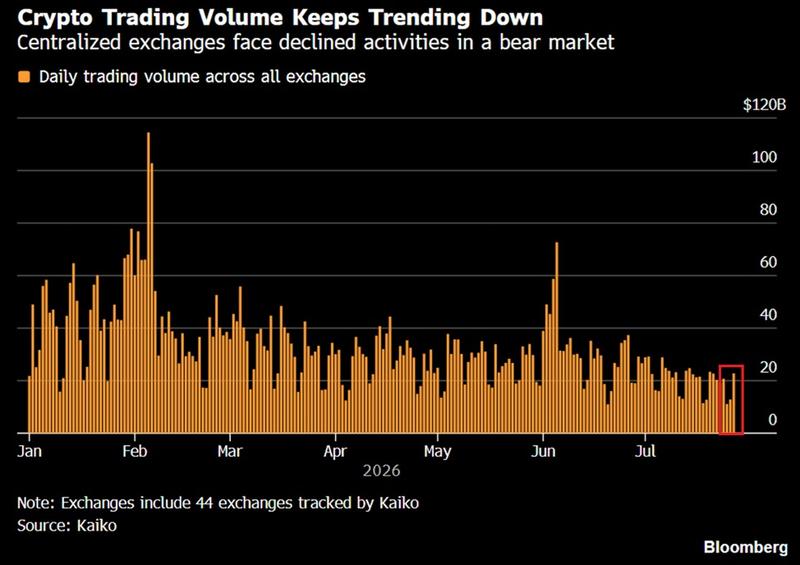
"This marks a -70% decline from January peak levels," the Kobeissi Letter noted in a Tuesday X post, further stating that "crypto market liquidity is drying up."
Industry watchers divided over quantum threat's timeline
Experts and observers within the industry remain split regarding when a quantum computing breakthrough might materialize. Last November 2025, Adam Back, CEO of Blockstream, stated that Bitcoin doesn't face any significant quantum threat for a minimum of 20 to 40 years.
By contrast, Bernstein analysts concluded in an April report that Bitcoin has roughly three to five years to implement a post-quantum security upgrade.
"Back's assessment is the more accurate and measured view: practical quantum threats capable of breaking Bitcoin's cryptography remain highly unlikely within the next decade," Lacie Zhang, research analyst at Bitget Wallet, told Cointelegraph.